
Asian Water Monitor Captured in Maryland: What Happened, How It Happened, and What Residents Should Know
A large nonnative lizard that briefly drew fear and curiosity across a Bowie-area neighborhood was captured after days of sightings and a tense pursuit. The animal involved has been identified in local news reports as an Asian water monitor, a species that is not native to the United States. In Maryland, this case is a reminder of the practical and legal dimensions of encountering exotic pets in suburban settings, and it provides concrete guidance on what residents can do if they see a similar animal.
How the lizard was discovered and identified in Maryland
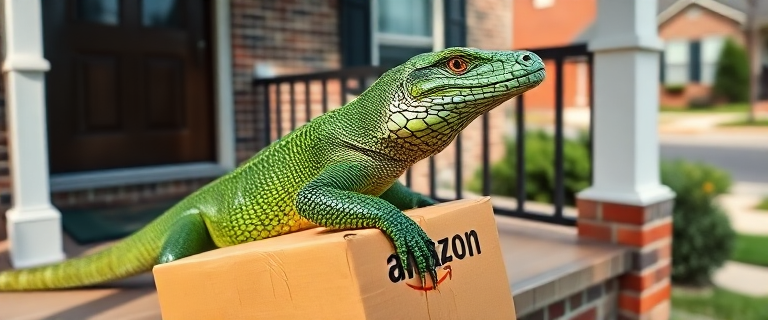
Neighbors first spotted the reptile on a doorstep and later observed it sunning on steps and a pillar near the home. The resident, Keshia Trafton, described the moment a delivery package became the stage for an unexpected visitor: the lizard was resting on top of an Amazon package before slipping away. Public reports indicated the animal measured about 3.5 feet in length at the time of initial sightings, a detail corroborated by local outlets.
To identify the animal, the family turned to community networks and local wildlife groups. Trafton posted on Nextdoor to see if neighbors recognized the lizard, which helped establish that this was an escaped or abandoned exotic pet rather than a native species. She also reached out to wildlife organizations, including Echoes of Nature and Baltimore Critter Society, which assisted with humane capture efforts. In the early days, Animal Control officials reportedly declined to respond immediately, adding to the sense of urgency and uncertainty for the residents involved.
For readers seeking a takeaway, the Maryland incident demonstrates how identification often begins with neighbors sharing observations, followed by coordination with nonprofit wildlife groups and local animal-control authorities. The situation underscores the importance of cautious, nonconfrontational action and reliance on professionals rather than attempting to handle an unfamiliar animal yourself.
The capture process and practical challenges
Trappers from Echoes of Nature arrived with humane gear to appeal to the animal’s needs, providing a crate and bait suited to an intelligent nonnative reptile. The lizard did not cooperate immediately; it evaded capture for several days. In a notable tactical adjustment, workers and residents used bricks to seal gaps around the exterior of the home to prevent the animal from slipping back inside. This brick-sealing step reflected the real-world, adaptive problem-solving that accompanies wildlife captures in residential settings.
After days of monitoring and multiple approaches, the lizard was finally trapped and collected by volunteers from Baltimore Critter Society. The animal’s clean hand‑off to a safe, humane facility marked a relief for the family and for the neighborhood, which had faced legitimate concerns about pets in the yard and on the porch. The account highlights the collaboration among volunteers, local animal control, and wildlife nonprofits in resolving a potentially dangerous situation without harm to the animal.
Legal landscape: Maryland versus Florida
In Maryland, monitor lizards are not automatically classified as dangerous animals, and a state permit is not generally required to own one. This alignment with Maryland law is cited in several public reports, though local jurisdictions may have additional rules regarding exotic animals. The incident in Bowie demonstrates how state rules interact with municipal ordinances in real-world scenarios: even where a permit isn’t required, owners must still comply with relevant local regulations and address safety concerns for neighbors and pets alike.
Florida presents a different regulatory picture. Permits are not required to possess water monitor lizards as personal pets, but owners must meet specific caging requirements. When these animals escape, authorities can impose penalties, including criminal citations, to deter irresponsible ownership. In the Davie case reported by the Florida Fish and Wildlife Conservation Commission (FWC), the owner who escaped with the animal received a criminal citation under Florida law. The lizard was eventually returned to the owner after the incident, but the legal consequence underscores that an escape is treated as a serious violation rather than a mere mishap.
Beyond ownership rules, Florida emphasizes the statewide commitment to preventing releases of nonnative species and to providing routes for safe surrender. The FWC’sDont Let It Loose campaign reinforces the moral and legal imperative not to abandon exotic pets. The agency also operates the Exotic Pet Amnesty Program, which allows owners to surrender animals without penalty, making it easier to find humane homes for pets that owners can no longer care for. The program runs through Exotic Pet Amnesty Days and year-round assistance via a dedicated Exotic Species Hotline.
Best practices for residents who encounter nonnative reptiles
When you spot a nonnative reptile in a residential setting, the safest course of action is to avoid handling the animal yourself. Contact trained professionals and local authorities as soon as possible. In Maryland, that means reaching out to the county animal control and to wildlife groups with experience in humane capture and care. In this Maryland incident, Echoes of Nature and Baltimore Critter Society played crucial roles in facilitating a humane capture and eventual rehoming.
Report the sighting through official channels designed to coordinate rapid response. In Florida, for example, sightings can be reported through the IveGot1 app, at IveGot1.org, or via the Exotic Species Hotline at 1-888-IVE-GOT1. This reporting infrastructure helps wildlife services respond quickly and allocate resources to capture, assess, and relocate the animal as needed.
Residents can also play a constructive role by communicating with neighbors. In this case, Nextdoor helped identify the animal’s status as an Asian water monitor, a species not native to the U.S. The social-network approach can speed up community awareness and alert authorities when movement patterns suggest a broader risk to pets or people.
Practical steps include securing outdoor pets indoors during sightings, checking for gaps or entry points around the home, and avoiding attempts to corner or lure the animal with improvised traps. If you cannot safely manage a situation, wait for trained personnel to arrive rather than taking matters into your own hands. The Maryland incident illustrates how a measured, professional response protects both people and animals.
Why rehoming and official programs matter
The incident in Maryland aligns with broader state and national guidance that emphasizes humane outcomes for exotic animals and the communities around them. Florida’s framework highlights two concrete avenues: the Exotic Pet Amnesty Program for surrender without penalty and the Don’t Let It Loose message to discourage releases. These mechanisms provide practical solutions for owners who can no longer care for a pet and reduce the likelihood of future releases that threaten local ecosystems and public safety.
What happened after the capture
Once captured, the lizard was placed under the care of local wildlife volunteers with the intent to rehome to an appropriate environment. The emphasis throughout was on humane treatment and responsible rehoming, ensuring the animal receives proper care and the community remains protected from potential risks associated with nonnative reptiles.
The community’s response—thanks to Echoes of Nature, Baltimore Critter Society, and Prince George’s County Animal Control—illustrates what responsible handling looks like when a nonnative pet escapes. The takeaway for residents is clear: report, do not intervene physically, and rely on trained responders who can remove the animal safely and legally.
Additionally, the homeowner offered a cautionary note about exotic pets: “If you really want a pet, get a dog, get a cat. Don’t get an exotic lizard because, you know, you’ve got to not only think of yourself; you’ve got to think of your neighbors if ever it gets loose.” This statement captures the broader public-safety message that drives the push for responsible pet ownership and appropriate surrender options.
Key takeaways for residents
Encountering a nonnative reptile in a suburban setting is undeniably alarming, but it is manageable when residents stay calm, prioritize safety, and contact professionals promptly. The Maryland case demonstrates the value of community collaboration, appropriate identification, and humane capture. It also highlights the importance of reporting through the right channels and using established programs to address pet ownership responsibly.
For those who want a concise action path: recognize the animal is nonnative, do not attempt to capture it yourself, contact local animal control and wildlife specialists, report sightings through official channels (such as the IveGot1 system where applicable), and consider the resources offered by programs like Florida’s Exotic Pet Amnesty Program if you must part with a pet. Remember that escapes can carry legal consequences and civil responsibilities, underscoring why surrendering an animal to the proper authorities is the most responsible choice.