
Tesla’s Unsupervised FSD on Customer Cars: Timeline, Requirements, and What It Means for You
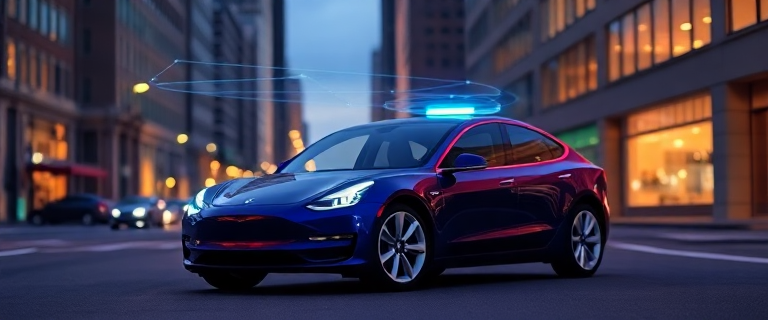
Tesla has set a target for unsupervised Full Self-Driving (FSD) to reach customer-owned vehicles around Q2 2027, tied to the rollout of FSD version 15 and the expansion of Tesla’s Robotaxi fleet. The plan is not a blanket unlock for all FSD-equipped cars; access will be gated by being enrolled in Tesla’s managed Robotaxi network and operating within defined geofenced areas. Hardware, fleet-management capabilities, and regulatory considerations all play a crucial role. This article lays out what is known, what remains uncertain, and how the timeline and constraints affect current FSD owners and prospective buyers.
Eligibility and hardware: who can qualify?
Current reporting indicates that unsupervised FSD for private cars will be limited to vehicles that meet Tesla’s hardware and fleet requirements. In particular, only cars with HW4 or newer are currently considered capable of unsupervised operation. HW3 owners have been told their computers cannot run unsupervised FSD, with no communicated upgrade path. Readers should verify their vehicle’s hardware version to determine eligibility and look for any official upgrade announcements. This gating is a critical barrier for millions of existing HW3 buyers and a major reason the rollout cannot be universal from day one. Note: Electrek has highlighted the HW3 limitation and the absence of a clear upgrade plan.
In addition to hardware, eligibility hinges on joining Tesla’s Robotaxi network and being within the company’s geofenced operations. The unsupervised capability would apply only to those enrolled vehicles inside Tesla’s managed fleet and geofenced zones, not to every FSD-equipped car nationwide.
Where will unsupervised FSD work first?
The initial rollout is described as limited to areas where Tesla already operates its Robotaxi service. Geofenced, fleet-managed operation will govern access, with the first wave centering on select U.S. metros. While reports mention Austin as a potential first city for unsupervised deployment (given its role as the Robotaxi birthplace), Tesla has not officially confirmed a priority city or a complete list of the first four Robotaxi cities. The practical implication is that your own city may not be eligible immediately, even if you own a supported car.
Current Robotaxi coverage is described as being in several metros, with zones that cover only small slices of each city. In practice, this means service will begin in tightly mapped, low-speed routes rather than broad, highway-heavy corridors. For example, the Bay Area operates Robotaxi vehicles that are supervised under California rules, indicating that safety drivers remain part of the operation there.
What FSD v15 is and how it relates to unsupervised access
FSD version 15 is the planned software milestone that unifies Tesla’s autonomy stack across Robotaxi and customer cars. Tesla plans to ship the same software that runs the Robotaxi fleet to customer vehicles as part of FSD v15. The critical implémentation detail is that the unified software is a prerequisite for unsupervised access, but activation will still be gated by geofences and fleet-management requirements. Elon-era promises increasingly reflect a staged approach: first, the Robotaxi fleet receives v15; then, customer cars follow; finally, unsupervised driving for enrolled vehicles could arrive in a later point release within v15. The Q2 2027 target is described as an internal estimate and not a locked commitment, reflecting the broader pattern of cautious, phased rollout rather than a nationwide unlock at once.
Importantly, the timeline for this target is intertwined with a hardware and compute expansion, since v15 increases neural network parameters from about 1 billion to 10 billion. The fleet will receive v15 before private cars, reinforcing the idea that this is a fleet-first, geofence-limited progression toward unsupervised personal-vehicle autonomy.
Robotaxi footprint and performance today
Tesla’s Robotaxi network is described as operating in six U.S. metropolitan areas, with most service areas limited to small portions of those cities. In practice, zones are narrow, and routes tend to be low-speed with limited highway access. The Bay Area currently requires safety drivers, reflecting California’s regulatory stance. The Robotaxi fleet is described as being small—Tesla says the fleet has reached nearly 2 million cumulative unsupervised miles by the end of Q3 2026, a figure that underscores the early stage of deployment. Third-party trackers indicated that fully driverless Teslas on the road numbered in the dozens, not hundreds of thousands. By comparison, Waymo has reported higher miles in certain markets, such as Orlando and Tampa, illustrating a competitive gap in scale. This context helps readers gauge how far the industry must travel before a broad, unsupervised rollout for customer cars is realistic.
What unsupervised FSD will (and won’t) do in the near term
Practical rollout reality matters for readers considering whether to wait or participate now. Initial unsupervised FSD will not be a broad, everywhere feature; it will be geographically constrained to Robotaxi geofences and within the fleet-management framework. No highways are expected in the first waves, and cross-town or long-distance unsupervised trips are unlikely within the geofenced rollout. The service also relies on the car being inside the defined zones, meaning a private car parked outside a zone would not autonomously drive itself. Tesla’s broader promise of driving anywhere, without supervision, remains a separate, longer-term possibility rather than the immediate near-term reality.
From a user perspective, this means readers should prepare for a staged experience: the first customers to gain unsupervised access will likely be those whose vehicles are enrolled in the Robotaxi network and operate within mapped zones with supervision where required (e.g., in California). Even then, the initial experience will emphasize low-speed driving and strict geofence constraints rather than open-ended autonomy.
Regulatory context and practical considerations
Regulatory hurdles play a meaningful role in the rollout timeline. California’s DMV framework currently requires safety drivers, and Tesla has faced questions about data sharing that influence permit decisions. Reports note that Tesla has not publicly applied for driverless deployment permits in California, which could delay broader expansion there. This regulatory backdrop helps explain why the initial unsupervised rollout is gated and geofence-limited rather than a nationwide rollout.
Competitive context: how Tesla stacks up
Tesla’s approach—unifying the software stack and deploying unsupervised capability within a Robotaxi-first, geofence-limited model—echoes the structure of rival robotaxi programs, which typically operate company-owned fleets in controlled zones. In practice, this means Tesla’s near-term plan resembles its rivals’ operating model more than the broad, personal-vehicle autonomy it once marketed. Waymo already operates in multiple markets with substantial miles, while Tesla’s driverless fleet remains much smaller in scale. These dynamics help explain the cautious, zone-focused rollout rather than an immediate nationwide unlock for every FSD car.
What this means for current FSD subscribers and potential buyers
For the roughly 1.74 million FSD subscribers, the near-term practical impact is limited. Supervised FSD continues to function with the driver responsible for the vehicle. The Q2 2027 milestone applies specifically to vehicles added to the Robotaxi fleet, not to every subscriber’s personal car left outside a geofence. This framing may disappoint some owners who expected unsupervised capability on their own cars once software improved. The takeaway is that access will be opt-in and limited to enrolled, geofenced vehicles rather than a universal unlock.
The hardware, compute, and capital backing the timeline
Unsupervised driving hinges on a combined software and hardware effort. Each FSD iteration has demanded more onboard computing and more training data, and Tesla has been increasing its AI chip spending in tandem with broader autonomy ambitions. The compute buildout spans not just cars but also mapping, fleet-management systems, and remote monitoring infrastructure. In the broader context of 2027 goals, capital expenditure matters: Tesla’s Q3 2026 results showed capex misses of about $3.2 billion, a factor that could influence the pace of mapping, software rollout, and fleet expansion—especially for a geofence-first approach that requires validated road networks and fleet coordination.
Predictions and signals to watch before Q2 2027
Keep an eye on several developments that would influence whether the Q2 2027 target tightens or shifts. Expect expansion of the Robotaxi footprint beyond current metros well before Q2 2027, since geofenced zones are a prerequisite for unsupervised access. Look for FSD v15 to ship first to supervised customer cars as part of a software-unification step, followed by unsupervised activation behind geofence controls. Regulatory and insurance questions around liability are likely to surface ahead of any broader rollout. And while Tesla tends to avoid direct, head-to-head marketing comparisons with rivals, market realities suggest the near-term path will resemble a zone-first model rather than universal personal autonomy. Finally, be prepared for the date to shift modestly as Tesla’s internal estimates evolve, given the language around “we suspect” rather than a firm commitment.
Frequently Asked Questions
What did Tesla actually announce about unsupervised FSD? Reports attribute a target around Q2 2027 for enabling unsupervised FSD on customer-owned vehicles added to Tesla’s Robotaxi fleet, as discussed by Ashok Elluswamy on the Q3 2026 earnings call.
Will every Tesla with FSD get unsupervised driving in Q2 2027? No. The initial rollout is limited to vehicles enrolled in Tesla’s Robotaxi network and operating within geofenced zones, not every FSD-equipped car nationwide.
Which cities will get unsupervised FSD first? Robotaxi operations are described as six U.S. metro areas, with no official public list of the exact zones within those metros. Austin has been highlighted by some sources as a likely first city, but there is no formal confirmation from Tesla.
Is Q2 2027 a confirmed date? No. Elluswamy described it as an internal estimate (“we suspect sometime around Q2 of next year”), not a firm commitment, and there has been no separate Tesla filing or press release confirming the date.
Does this affect supervised FSD users today? Not directly. Supervised FSD continues to operate as it does today, with the driver responsible for the vehicle, regardless of the Q2 2027 timeline for Robotaxi-fleet cars.
What is FSD 15, and how does it relate to this announcement? FSD 15 refers to shipping the same autonomy software stack used by Robotaxi and Cybercabs to customer cars, which is a step toward eventual unsupervised operation.
How did Tesla’s stock react to the news? Investor-focused outlets reported TSLA shares fell after the earnings call despite strong FSD-related revenue, reflecting investor caution about the autonomy roadmap and capital-expenditure considerations.
Why is unsupervised FSD limited to Robotaxi zones? The limitation appears to be driven by the need for mapped, validated zones and centralized fleet management before extending unsupervised capability beyond those controlled areas.
Why this framing matters
The shift is not merely about a date; it represents a structural change: unsupervised driving is being framed as a managed fleet capability within geofenced zones rather than a blanket unlock for every FSD car. This makes the near-term path narrower and arguably more achievable, even as it tempers expectations about personal-vehicle autonomy in the near term. For owners who expected universal, hands-off driving, the path now appears to run through enrollment in Tesla’s Robotaxi program and staying within defined zones, not a universal, ride-anywhere experience.
Practical takeaway for readers
If you’re evaluating whether to buy or keep an FSD-equipped Tesla, prioritize hardware compatibility (HW4 or newer) and confirm whether your car could join Tesla’s Robotaxi network in the first geofenced rollout. Expect access to be conditional, limited to specified zones, and dependent on regulatory approvals. Stay tuned for updates on which cities are included in the initial Robotaxi footprint, how revenue-sharing would work for owner-provided vehicles, and how the v15 software will be rolled out to private cars after the Robotaxi fleet begins operating with unsupervised access.