
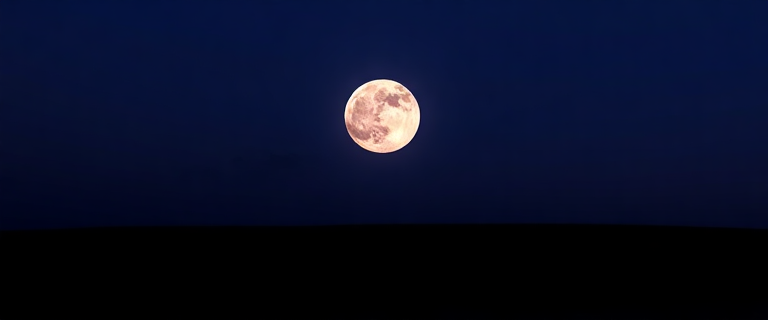
Moon Phase Today: Waning Gibbous
The Moon today is in the Waning Gibbous phase. Specifically, it is 63% illuminated, about 20.9 days old, and currently in the zodiac sign Cancer. These details reflect the ongoing ~29.53-day lunar cycle, with the current phase following the Full Moon. The next New Moon is scheduled for Monday, November 9, 2026.
Bottom line for skywatchers: today’s Moon is not full, but you can still see a bright, largely illuminated disk in the early-morning sky as it moves toward Last Quarter. The Moon’s current phase, age, illumination, and zodiac position matter because they influence what you’ll see tonight and in the coming nights as the terminator shifts across the lunar surface.
This Week in the Sky
To plan immediate skywatching, note the following near-term moonrise and moonset times (local times given for a mid-latitude observing location, with illumination estimated for 10 PM local time). The schedule below reflects the week surrounding today and highlights notable conjunctions visible in the early-m morning sky.
| Date | ||||
|---|---|---|---|---|
| Friday, October 30 | Waning gibbous (69%) | 9:53 PM | 12:45 PM | Moonrise near the western horizon after sunset; illumination trending downward. |
| Saturday, October 31 | Waning gibbous (58%) | 11:08 PM | 1:33 PM | Moon near the terminator; good timing for lunar features near sunrise shadows. |
| Sunday, November 1 | Waning crescent (47%) | 11:23 PM | 1:11 PM | Daylight saving time ends this morning; waning crescent visible before dawn; Last Quarter at 3:28 PM EST. |
| Monday, November 2 | Waning crescent (36%) | — | 1:41 PM | Motions near Mars and Jupiter past dawn; visible in the southeastern sky before sunrise. |
| Tuesday, November 3 | Waning crescent (26%) | 12:34 AM | 2:07 PM | Moon near Regulus in Leo; occultations possible for some regions. Early-morning visibility improves as the week progresses. |
| Wednesday, November 4 | Waning crescent (17%) | 1:44 AM | 2:30 PM | Moon with Venus near Spica in the early morning sky. |
| Thursday, November 5 | Waning crescent (10%) | 2:50 AM | 2:53 PM | Moon continues to thin as the dawn approaches. |
| Friday, November 6 | Waning crescent (5%) | 3:56 AM | 3:16 PM | Very thin crescent in the predawn sky; best viewed with a dark horizon. |
Notes: all times are in your local time zone; the Moon’s illumination is shown for around 10 PM local time. For more detailed, location-specific predictions, check a trusted skywatching app or a local astronomical almanac.
2026 Full Moon schedule and names
Below are the 2026 Full Moon dates with their traditional names. Times are listed in Eastern Time unless otherwise noted. Asterisks indicate Super Moons, defined as Full Moons near perigee (the closest point to Earth in the Moon’s orbit). A common standard is that a Super Moon occurs when the Moon is within roughly 90% of its perigee distance.
| Date | Time (ET) | Name | Notes |
|---|---|---|---|
| Saturday, Jan. 3 | 5:03 a.m. | ||
| Sunday, Feb. 1 | 5:09 p.m. | ||
| Tuesday, Mar. 3 | 6:38 a.m. | Total lunar eclipse | |
| Wednesday, Apr. 1 | 10:12 p.m. | ||
| Friday, May 1 | 1:23 p.m. | ||
| Sunday, May 31 | 4:45 a.m. | ||
| Monday, June 29 | 7:57 p.m. | ||
| Wednesday, July 29 | 10:36 a.m. | ||
| Friday, Aug. 28 | 12:19 a.m. | Partial lunar eclipse | |
| Saturday, Sept. 26 | 12:49 p.m. | Harvest Moon | |
| Monday, Oct. 26 | 12:12 a.m. | ||
| Tuesday, Nov. 24 | 9:54 a.m. | Super Moon | |
| Wednesday, Dec. 23 | 8:28 p.m. |
Notes on terminology: Super Moons are Full Moons near perigee, and the 90% distance rule is commonly used by major outlets. Beaver Moon is the traditional name for the November Full Moon. The asterisks mark Super Moons, as defined above.
The phases of the Moon in October 2026
October 2026 featured a Full Moon on Monday, October 26. The accompanying images illustrate day-by-day changes in the Moon’s appearance through October, with the Full Moon noted on the 26th. For skygazers, the phase progression shapes what you’ll see and when you’ll see it best.
The Moonrise and Moonset Schedule This Week (summary)
Moonrise and moonset times shift daily, and the Moon’s illumination is given for a reference time. The schedule here mirrors the weekly snapshot around today and is useful for quick planning of evening or morning observations.
| Date | Sunrise | Sunset | Moonrise | Moonset | Moon Phase |
|---|---|---|---|---|---|
| Friday, Oct 30 | 7:27 A.M. | 6:00 P.M. | 9:53 P.M. | 12:45 P.M. | Waning Gibbous (69%) |
| Saturday, Oct 31 | 7:28 A.M. | 5:59 P.M. | 11:08 P.M. | 1:33 P.M. | Waning Gibbous (58%) |
| Sunday, Nov 1 | 6:29 A.M. | 4:57 P.M. | 11:23 P.M. | 1:11 P.M. | Waning Crescent (47%) |
| Monday, Nov 2 | 6:30 A.M. | 4:56 P.M. | — | 1:41 P.M. | Waning Crescent (36%) |
| Tuesday, Nov 3 | 6:31 A.M. | 4:55 P.M. | 12:34 A.M. | 2:07 P.M. | Waning Crescent (26%) |
| Wednesday, Nov 4 | 6:32 A.M. | 4:54 P.M. | 1:44 A.M. | 2:30 P.M. | Waning Crescent (17%) |
| Thursday, Nov 5 | 6:34 A.M. | 4:53 P.M. | 2:50 A.M. | 2:53 P.M. | Waning Crescent (10%) |
| Friday, Nov 6 | 6:35 A.M. | 4:52 P.M. | 3:56 A.M. | 3:16 P.M. | Waning Crescent (5%) |
For more detailed, location-specific predictions, consult a trusted skywatching app. Times here are representative and may vary with your locale.
The Phases of the Moon
Moon phases describe how much of the Moon’s illuminated disk we can see from Earth as it orbits. The eight recognized phases proceed in this order: New Moon, waxing crescent, first quarter, waxing gibbous, Full Moon, waning gibbous, last quarter, and waning crescent. A synodic month—also called a lunation—spans about 29.5 days.
Although a Full Moon is exact only at a precise moment, it typically appears full for roughly three days to the naked eye. This perceptual effect matters because observers often plan around the visible fullness rather than the exact instant of fullness.
In addition to these general phases, there are special Moon-name traditions tied to each Full Moon, many rooted in Native American and colonial American histories. For example, the January Full Moon is called the Wolf Moon, the February Full Moon the Snow Moon, and so on, reflecting seasonal and environmental cues. A deeper dive into the names reveals how communities historically tracked time and seasonal change.
What to See on the Moon Tonight
During the Waning Gibbous phase, the Moon remains richly illuminated but with growing shadows along the terminator, which enhances surface relief and detail. To maximize your observation this week, aim for 3–5 prominent features well-positioned for viewing during this phase. The following features are good targets in the current geometry (coordinates approximate):
Albedo Feature (Diameter 73.44 km) at longitude 301.04°, latitude 7.39°; Sinus (316.50 km) at longitude 351.66°, latitude 12.10°; Crater (212.18 km) at longitude 304.89°, latitude −44.38°; Crater (170.53 km) at longitude 3.52°, latitude 65.41°; Vallis (155.42 km) at longitude 3.63°, latitude 49.21°; Vallis (185.32 km) at longitude 308.42°, latitude 26.16°; Rupes (115.95 km) at longitude 352.30°, latitude −21.67°; Rima (116.09 km) at longitude 3.15°, latitude 25.72°; Crater (110.54 km) at longitude 357.15°, latitude −13.39°; Rima (405.00 km) at longitude 298.64°, latitude −15.01°; Crater (81.04 km) at longitude 356.01°, latitude 29.72°; Crater (39.99 km) at longitude 312.51°, latitude 23.73°; Crater (300.56 km) at longitude 291.10°, latitude −66.82°; Crater (41.53 km) at longitude 11.01°, latitude 9.71°; Crater (230.77 km) at longitude 345.27°, latitude −58.62°; Crater (96.07 km) at longitude 339.92°, latitude 9.62°; Crater (45.94 km) at longitude 293.04°, latitude −16.68°; Crater (33.94 km) at longitude 351.85°, latitude −11.85°; Crater (30.90 km) at longitude 309.17°, latitude −25.83°; Crater (162.49 km) at longitude 272.82°, latitude −79.57°; Crater (96.76 km) at longitude 343.03°, latitude −6.06°; Crater (111.39 km) at longitude 320.04°, latitude −17.55°; Crater (57.36 km) at longitude 329.58°, latitude −24.92°; Crater (143.95 km) at longitude 4.91°, latitude −5.36°; Crater (94.60 km) at longitude 291.05°, latitude −47.49°; Crater (84.72 km) at longitude 15.21°, latitude 9.17°; Crater (45.54 km) at longitude 337.37°, latitude −26.31°; Lacus (98.48 km) at longitude 5.36°, latitude 18.52°; Crater (30.12 km) at longitude 339.01°, latitude 25.77°; Crater (40.09 km) at longitude 309.16°, latitude 11.90°; Crater (115.35 km) at longitude 13.92°, latitude −41.77°; Crater (84.46 km) at longitude 310.66°, latitude −21.49°; Mons (73.25 km) at longitude 301.62°, latitude 40.76°; Crater (24.38 km) at longitude 354.12°, latitude −0.70°; Oceanus (2,592.24 km) at longitude 303.32°, latitude 20.67°; Crater (100.63 km) at longitude 346.47°, latitude −29.88°; Crater (100.68 km) at longitude 350.62°, latitude 51.62°; Crater (46.13 km) at longitude 315.86°, latitude 25.49°; Crater (24.97 km) at longitude 3.60°, latitude 4.18°; Crater (179.36 km) at longitude 320.22°, latitude −51.72°; Sinus (249.29 km) at longitude 328.33°, latitude 45.01°; Crater (85.29 km) at longitude 348.78°, latitude −43.30°; Crater (84.69 km) at longitude 299.56°, latitude −49.53°; Crater (63.18 km) at longitude 309.35°, latitude −61.38°; Crater (126.64 km) at longitude 358.91°, latitude −28.28°; Mare (1,446.41 km) at longitude 359.99°, latitude 57.59°; Mare (1,145.53 km) at longitude 345.09°, latitude 34.72°; Mons (599.67 km) at longitude 0.03°, latitude 19.87°; Crater (235.00 km) at longitude 291.64°, latitude −5.38°.
Tip: look for features near the terminator for the best shadow contrast, which makes craters and mountain rims pop in the eyepiece or with a small telescope during Waning Gibbous evenings.
Earthshine
Earthshine is sunlight that first reflects off Earth’s surface, travels to the Moon, and then reflects back to our eyes. When the Moon is in a crescent phase, the dark portion of the nearside can still be dimly illuminated by this Earth-reflected light. This effect is most noticeable within roughly five days of a new Moon and is sometimes described as the “old Moon in the new Moon’s arms.”
Daytime Moons and Visibility
Although the Moon is often associated with nighttime skies, it is commonly visible during daylight as a faint presence. The time of day you’ll see the Moon depends on its phase, the time of year, and your location. A general guide is as follows
The waxing crescent rises after sunrise and sets after sunset; the first quarter rises around noon and sets around the middle of the night; the waxing gibbous rises in the afternoon and sets in the early morning; the full Moon rises at sunset and sets at sunrise; the waning gibbous rises after sunset and sets in the late morning; the last quarter rises around midnight and sets around noon; the waning crescent rises in the very early morning and sets in the afternoon; and the new Moon rises and sets with the Sun and is not visible in daylight.
Moon Phase Calendar for 2026 (overview)
For visual planning, a year-at-a-glance calendar helps identify when the four major Moon phases occur each month. The cycle repeats roughly every 29.5 days, and the sequence of major phases (new moon, first quarter, full moon, last quarter) occurs at intervals of about a week. In addition, the four minor phases—waxing crescent, waxing gibbous, waning gibbous, and waning crescent—span roughly seven days each.
Common questions about Full Moons
What is the difference between a Full Moon and a New Moon? A Full Moon occurs when Earth is between the Sun and the Moon and the Moon’s near side is fully illuminated. A New Moon occurs when the Moon lies between the Sun and Earth, so its near side faces away from us and is not illuminated.
How does the Full Moon influence tides? When the Sun, Moon, and Earth align during Full Moon or New Moon phases, their gravitational forces combine to produce higher high tides and lower low tides, known as spring tides. Conversely, during the First and Last Quarter, the tidal effects are more moderate because the Sun and Moon partially oppose each other.
How long does each Moon phase last? The four major phases are brief moments in time, while the four minor phases span roughly seven days each within the ~29.5-day cycle.
How do I know if the Moon is waxing or waning? In the Northern Hemisphere, the lighted portion on the right indicates waxing, while the left side indicates waning. The Southern Hemisphere observes the opposite pattern. Waxing phases rise during the day, while waning phases rise at night.
When does the Moon rise tonight? Moonrise and moonset times depend on your location and time zone. Refer to a local prediction service or skywatching app for exact times.
Do the lunar cycles affect hair growth or plants? Some traditional beliefs link Moon phases to hair growth and gardening, but modern evidence does not support a direct causal link. A 2020 scientific review found no reliable evidence that Moon phases directly affect plant growth. The Moon’s phases are often used in cultural calendars and gardening lore, providing rhythm and tradition even if not scientifically proven.
Additional resources and notes
NASA’s SKYCAL and other reputable astronomy sources provide detailed calendars of moon phases, eclipses, and visibility. For observing the Moon’s features, charts of lunar geography and the Moon’s libration can help you understand why the near side looks different over time. The Moon’s libration in longitude and latitude explains why we sometimes glimpse slightly more of the eastern or western hemispheres over the course of a cycle. The Moon’s axial tilt relative to Earth also contributes to this subtle motion.
Earthshine and the relationship between the Moon’s phases and tides are classic topics in celestial observation. When planning skywatching, it’s worth checking a reliable forecast for weather, moonrise/moonset times, and the positions of bright planets such as Mars, Jupiter, and Regulus during the current week.
This article directly answers the primary question, “Is today a full Moon?” with current phase data: Waning Gibbous. It also provides an updated 2026 Full Moon calendar, a practical week-by-week sky schedule, and context about tides, eclipses, and notable lunar phenomena.