
The Elder Scrolls VI: Sentinel — Title, Setting, and Lore to Watch For
Rumors around the next installment in Bethesda’s The Elder Scrolls series have centered on a proposed title: The Elder Scrolls VI: Sentinel. While outlets have discussed this as a reported title rather than an official confirmation, readers should understand what the rumor implies about the game’s setting, lore, and potential story. As of now, neither Bethesda nor Microsoft has officially confirmed the title. The Verge has reported that Sentinel is a widely circulated rumor and that formal confirmation could come at a later date, with timing speculated to align with major anniversaries such as Skyrim’s 15th or Xbox’s 25th.
Official title confirmation? a rumor, not a confirmation
Current reporting indicates The Elder Scrolls VI: Sentinel is not officially confirmed by Bethesda or its corporate umbrella. The Verge frames the information as a rumor and notes that a formal title announcement has not yet occurred. Readers seeking certainty should treat Sentinel as a widely reported rumor rather than a guaranteed title. Hedge language remains prudent until the publisher issues an official statement.
Where the game might be set: Hammerfell and Sentinel
Early discussions tie the next game to Hammerfell, with Sentinel positioned as a central locale. The lore surrounding Sentinel presents a rich backdrop: Sentinel is described as the capital of the Alik’r Desert and a focal point of Hammerfell’s history. This setting aligns with broader Elder Scrolls lore, where Hammerfell’s long-standing political factions intersect with regional histories and mythic symbols.
Founding myths and key figures in Sentinel lore
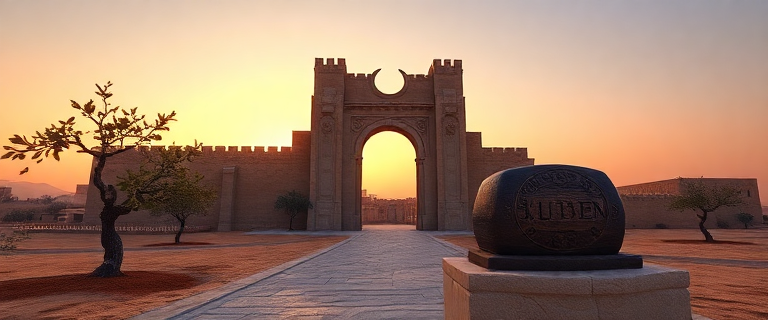
Sentinel’s origin story centers on the Ra Gada era, beginning with waves led by Grandee Yaghoub who sighted a harbor on the coast during a voyage north from Old Hegathe. The founders named the settlement Sentinel after the scout who first sighted its harbor, and the area supported crops such as figs, pomegranates, and olives. In this historical arc, High Elves were captured and enslaved to enable Sentinel’s construction, including its palace, Samuruik. Over time, the Forebears and Crowns moved into Sentinel, and the symbol of the city became a crescent moon that looms over the gates, celebrated in a harvest festival called Koomu Alezer’i, a Thanksgiving tradition featuring figs and pomegranates.
In later periods, Sentinel was ruled on the eve of the Oblivion Crisis by Lhotun, who inherited the throne from his mother Akorithi, who served as Regent-Queen after her husband Camaron’s death at the War of Betony. The Warp in the West of 3E 417 expanded Sentinel’s territory from the Barony of Abibon-Gora to the Fiefdom of Mournoth, increasing its importance within Iliac Bay’s political landscape. Lhotun’s reign also saw the rise of a gray-area political faction called the Lhotunics, designed to operate between the Crowns and Forebears. These dynamics contributed to a backdrop of diplomatic, religious, and military maneuvering as Sentinel navigated shifting allegiances among its broader imperial context.
Sentinel’s era also features Queen Clavilla of Taneth attempting to curb independently chartered guilds, portraying worship of Satakal as heresy to the Empire, while High Priest Ayaan-si of Elinhir marshaled the True Crowns in a campaign that pushed into Bergama and Dak’fron, ultimately challenging Sentinel’s control over Totambu. By the time of the Oblivion Crisis, front lines had shifted west toward Totambu, leaving the outcome unresolved. The rise of the Thalmor in the Fourth Era further displaced refugees into Sentinel’s Refugees District, culminating in the Night of Green Fire, where the Imperial Legion failed to protect civilians. In the following years, the Great War saw the Aldmeri Dominion pressing into Hegathe, and Sentinel’s Forebear guardianship appearing pivotal in stabilizing the region.
Two competing theories about the title: city or artifacts?
The central question about Sentinel hinges on what the title signifies. The traditional reading treats Sentinel as the city—the Guardian of Starfall Bay and a bastion within Hammerfell’s Alik’r Desert. However, competing evidence from reported rumors points toward a second theory: the Sentinels are artifacts—powerful relics whose history and secrets may drive the game’s plot. The Verge’s report describes the game as exploring the history of the titular artifacts and enabling players to uncover their secrets firsthand. If artifacts are the MacGuffin, the narrative would likely center on uncovering ancient technologies or powers with implications for Hammerfell’s political and military tensions, Thalmor incursions, and faction dynamics among Forebears and Crowns. The city theory remains plausible, but the artifact theory has gained traction due to The Verge’s account. Until official confirmation arrives, both are legitimate possibilities that shape reader expectations and gameplay speculation.
Two themes emerge from these theories: first, the artifacts could be central to the plot, shaping progression, exploration, and faction choices; second, Sentinel as a city could function as a politically charged setting where players navigate Forebear–Crown rivalries and external threats. Treat Sentinel as a flexible conceit that could support either model or a hybrid approach, depending on how the story evolves in development.
Release timing speculation and practical questions
Industry reporting has suggested 2028 as a potential release window, with notes that more details might surface next year. This speculation is not a promise of timing, and Bethesda has historically reserved major announcements until development is nearing a publish-ready state. For fans, the salient takeaway is that concrete gameplay details remain forthcoming, and the 2028 target is speculative rather than a confirmed schedule.
Lore depth and additional details worth noting
Beyond Sentinel’s founding myth, several lore details enrich the broader Hammerfell context. The enslavement of High Elves by Yaghoub is a defining moment in Sentinel’s early development, followed by the Warp in the West (3E 417) which expanded the kingdom’s reach from Abibon-Gora to Mournoth. Political maneuvering includes Queen Clavilla of Taneth’s policies and the True Crowns’ engagement led by Ayaan-si of Elinhir, whose campaigns touched Bergama and Dak’fron and affected Totambu. The Night of Green Fire marks a significant Thalmor-tinged conflict within Sentinel, and the later Great War era saw the Aldmeri Dominion applying pressure in Hammerfell, with Sentinel’s Forebears taking up a guardian role. The symbols of Sentinel—the crescent moon over the gates—persist as a visual link to these centuries of strife and alliance-building and are celebrated in the Koomu Alezer’i festival. These details not only deepen the world but also inform potential gameplay systems, such as faction alignment, political intrigue, and artifact-driven quests.
What this could mean for TES VI: a synthesis of lore and gameplay potential
If the artifact theory proves correct, The Elder Scrolls VI could pivot toward a narrative centered on the Sentinels—the titular artifacts—and their long-hidden secrets. Players might encounter a factional landscape shaped by Forebears and Crowns, with the Thalmor influence adding a political dimension that fragments Hammerfell. The artifacts could serve as a central MacGuffin around which quests, factions, and diplomacy coil, enabling players to influence the balance of power within Sentinel and across the Iliac Bay. In the alternative city-centered reading, the game could foreground Sentinel as a politically complex metropolis, where exploration of its founding myths, its key figures, and its ongoing conflicts yields a narrative in which the city itself becomes a critical character. Either scenario would benefit from a strong, lore-informed world-building framework that leverages Hammerfell’s history with the Forebears, Crowns, and external powers.
Readers should approach these possibilities with the understanding that the current reporting is rumor-based and subject to change. The Verge’s framing highlights the artifact angle, while the existing Sentinel lore from in-universe sources provides a rich setting regardless of which theory holds true. For fans who want to trace reliability, it’s useful to distinguish between industry reporting, which is rumor-prone, and fan-created lore, which enriches world-building but does not carry the same evidentiary weight. In practice, a strong TES VI narrative could combine political drama within Sentinel with a buried artifact mystery—providing both a sense of place and a compelling central objective.
What to watch for and how to stay informed
Because this topic intersects rumor, lore, and official development updates, following reliable sources is essential. The Verge’s reporting should be read as rumor-related journalism, not a publisher-confirmed title. Meanwhile, community resources and lore compilations—such as fan-wiki entries—offer extensive world-building detail that can help readers understand the historical backdrop and key figures, even though their claims should be weighed against official announcements. When updates occur, they will likely refine whether Sentinel is the city-focused setting, centers on the Sentinels as artifacts, or embraces a hybrid narrative approach.
Reliability and context: how to weigh sources
In evaluating claims about The Elder Scrolls VI: Sentinel, it is important to recognize the different natures of sources. The Verge reports a rumor about the title and potential plot elements, while fan wikis compile lore based on in-universe material and community interpretation. This distinction matters because it affects how readers should weigh the information: treat rumor-based articles as speculative and hedged, while treat lore summaries as descriptive and interpretive. Readers should look for official statements from Bethesda or Microsoft for confirmation and should view speculative details about the artifacts and the city with an understanding of their provisional status.
Notes for follow-up
If you’re tracking TES VI developments, keep an eye on major anniversaries that might coincide with announcements, such as Skyrim’s 15th anniversary and Xbox’s 25th anniversary, as mentioned in reporting. Additionally, note that The Verge’s central claim involves the history and secrets of the titular artifacts, which could reshape expectations about the game’s central quest and world-building. For now, the most accurate takeaway is that Sentinel is a rumored title with potential ties to Hammerfell, Sentinel’s founding lore, and the possibility of an artifact-driven plot, but without official confirmation from the publishers.
Sources and ecosystem context
Readers should distinguish between industry reporting and fan-driven lore. The Verge is a reputable outlet providing rumor-based coverage about a potential title and plot directions. In contrast, fan-maintained lore repositories describe Sentinel’s history, geography, and key figures in depth, offering context for readers but not the same level of editorial verification. This distinction helps readers assess credibility while still benefiting from the rich lore that informs any TES VI narrative hypotheses.
Bottom line
Sentinel as a concept covers both a possible city-centered setting and a potential artifact-driven plot. The Verge’s report emphasizes the artifact theory, potentially making the Sentinels the central MacGuffin of TES VI, while existing Sentinel lore provides a rich, long-standing historical framework that could support a nuanced political drama in Hammerfell. Until Bethesda issues an official confirmation, readers should treat Sentinel as a rumor with two plausible interpretations, appreciating how each theory could shape the future of The Elder Scrolls VI.