
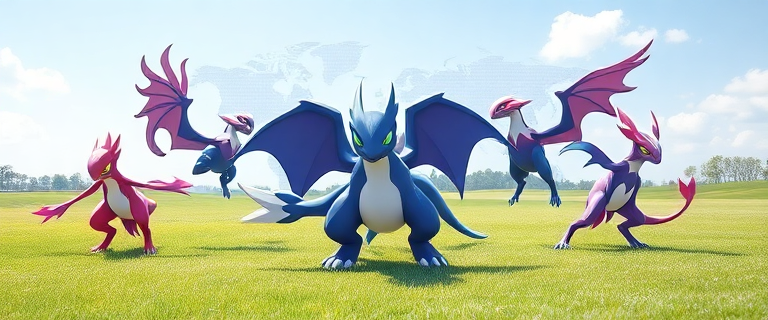
Pokémon UNITE
Team up in Pokémon’s first 5-on-5 strategic battle game. A free-to-start MOBA-style title for Android, iOS, and Nintendo Switch, with cross‑platform play and a distinctive scoreboard‑less design meant to curb rage quitting. This guide provides a comprehensive snapshot of what the game is, how it plays, its current status, and practical guidance for players before service ends on March 23, 2027.
Two teams of five Pokémon face off on Aeos Island, aiming to score the most points before the clock runs out. Players defeat and capture wild Pokémon to power up their own, unlock moves, and contribute to their team’s total score. The game emphasizes teamwork, map control, and evolving your strategy as the match unfolds. As of mid‑2024, the game had been downloaded more than 200 million times across all platforms, and the title’s lifecycle continues toward its scheduled shutdown in 2027.
Gameplay
Pokémon UNITE is a multiplayer online battle arena (MOBA) that follows TI‑Mi Studio Group’s design approach, offering standard 5‑on‑5 battles where each match lasts up to 10 minutes. The team with the higher score at the end wins, though the game also ends earlier if an opposing surrender is called after the halfway mark. A distinctive feature of UNITE is the absence of a traditional in‑game scoreboard. Instead, players read the flow of the match from timed announcements that appear at specific moments, signaling which team is ahead or behind and by how much.
In practice, that means moments like “We have a huge lead!” indicate a lead of 100 points or more, while “We’re REALLY struggling!” signals trailing by 100 points or more. To interpret these signals effectively, players develop a feel for how point totals translate into the ongoing momentum of the match. The design choice behind hiding the live score is to discourage rage quitting when a team falls behind, relying instead on these timed cues to gauge the situation.
There are additional modes beyond standard battles. Quick Battle, a shorter, time‑constrained mode, features 5‑minute matches on smaller maps with 3–4 players per team and altered rules. This mode is described as a standard, accessible option for players who want a faster pace and shorter commitment.
Each match begins with players selecting a Pokémon to control. Progression during a match comes from defeating wild Pokémon, capturing wild Pokémon to gain experience, and scoring goals to earn points. Experience gained from these actions unlocks new moves, and at specific levels, Unite Moves—special, powerful moves unique to each Pokémon—become available. A core progression hook in the Pokémon UNITE experience is evolution: as players level up, their Pokémon can evolve, adding a visible payoff to capturing wild Pokémon and advancing through the match. This evolution happens alongside unlocking new moves and strengthening your combat options.
Overall, UNITE combines real‑time action with a strategic layer built around map control, timing, and how you deploy moves and scoring opportunities. The game features a roster of over 79 Pokémon and emphasizes team communication and coordinated play to secure victory.
Scoring and Winning
Because the scoreboard is not displayed in real time, reading the game state relies on the series of public announcements throughout a match. The key timings to watch are the cues that appear at five minutes remaining, three minutes remaining, two minutes remaining, and one minute remaining. Each cue carries context about the score and the current balance of power between teams. For example, a statement like “We have a huge lead!” means a lead of 100 points or more; “We’re REALLY struggling!” means trailing by 100 points or more.
In the event of a tie, the winner is determined by which team first reached the final score—the team that had previously led in points is declared the winner. This tie‑breaker rule has strategic implications: a late tying goal can still result in a loss if the opposing team already reached the final score first. With the live score hidden, understanding both the timing of announcements and the tie‑break rule is essential for end‑game decision‑making.
Practically, this means securing and defending a lead remains critical, even as the clock nears the end of the match. Readers should pay attention to how leads shift over the final minutes and how framing your plays around the expected announcements can influence outcomes.
For competitive players, the scoring system also informs late‑game risk assessment: attempting to force a comeback requires precise timing and position, since the final outcome hinges on who reached the final score first rather than a simple last‑second accumulation of points.
Modes and Quick Battle
Beyond the standard 10‑minute battles, Pokémon UNITE includes Quick Battle as a faster mode that uses smaller maps and shorter team engagements. Quick Battle features shorter durations (around 5 minutes), smaller teams (3–4 players per side), and adjusted rules to accelerate the pacing and decision points. This mode provides a practical entry point for new players who want a quick, less‑committal experience while learning core mechanics such as capturing wild Pokémon, leveling, and unlocking Unite Moves.
On top of Quick Battle, the core gameplay loop remains centered on teamwork, capturing wild Pokémon, leveling up, evolving, and preventing the opposing team from scoring. The combination of 5‑on‑5 standard battles and the shorter Quick Battle option gives players flexible pathways to practice, compete, and have fun regardless of time constraints.
Pokémon, Moves, and Progression
Each player starts with a relatively weak Pokémon and strengthens it by defeating wild Pokémon, capturing them, and knocking out opposing Pokémon. Capturing wild Pokémon grants experience, which contributes to leveling up the player’s own Pokémon and unlocking new moves. The game uses Unite Moves—special moves unique to each Pokémon—activated at certain levels. Unlocking moves and evolve mechanics are integral to the progression arc, providing a tangible payoff as you advance through battles.
The roster features a growing number of playable Pokémon (over 79), with new additions released periodically as downloadable content. The combination of leveling, move acquisition, and evolution creates a familiar progression loop for Pokémon fans while maintaining distinct MOBA mechanics for battle strategy.
Monetization and Perception
Pokémon UNITE is a free‑to‑start game with optional in‑game purchases. The monetization model has faced scrutiny in reviews and discussions. In particular, critics have cited concerns about pricing and the potential impact on gameplay balance. Notably, independent reviews have pointed to high cosmetic prices and the perception that certain purchases could confer gameplay advantages, which has fed ongoing debates about pay‑to‑win dynamics.
Two documented criticisms are commonly discussed: first, higher cosmetic prices (for example, premium skins) and, second, the claim by some outlets that certain monetized items could influence gameplay in ways that go beyond cosmetics. Attribution of pay‑to‑win claims to critics rather than asserting them as proven facts helps maintain accuracy and reader trust. The debate around monetization remains a relevant consideration for readers deciding whether to invest time or money in the game before shutdown.
Representative examples from contemporary coverage illustrate these points, without rendering a one‑sided conclusion. The game’s cosmetic catalog and pricing evolve over time, so readers should regard these observations as indicative of broader concerns rather than static verdicts.
Esports and Competitive Play
Pokémon UNITE maintains an esports lineage that includes the Unite Championship Series and regional qualifications feeding into a world championship structure. Historical champions include BLVKHVND/Luminosity (North America) and Fennel (Japan) as early victors, with later champions PERÚ UNITE (2025, Anaheim) and ZETA DIVISION (2026, San Francisco) marking the ongoing competitive arc as the game approaches its shutdown. The scene has evolved to reflect regional diversity and the changing competitive landscape over time.
The Championship Series relied on a system of regional zones, championship points (CP), and regional finals that led to the World Championships. Age eligibility and CP track records—particularly how CP can be retained when players switch teams—are important details for aspiring competitors. The top CP teams in each regional zone typically earned spots in Regional Championships, which used round‑robin groups followed by double‑elimination finals to determine qualifiers for worlds. For readers considering competitive play, a practical focus on eligibility (including regional age requirements) and the CP‑to‑regional‑championship path is more useful than enumerating every regional zone.
As the title continues toward its shutdown, prospective competitors should track the evolving competitive landscape, including the latest champions and season formats, to understand where the most active play remains and what to expect in the final competitive seasons.
Status, Availability, and Shutdown Timeline
Pokémon UNITE launched in 2021 on Nintendo Switch and later arrived on iOS and Android. Downloads have surpassed major milestones over the years, including tens of millions of installations on mobile platforms and Switch. A significant wind‑down began with the Belgian and Dutch end‑of‑service in November 2025, followed by a global shutdown scheduled for March 23, 2027 at 00:00 UTC. These dates mark the end of official play across all platforms, signaling a transition period for players who remain invested in the title and for those curious about its final era.
In addition to the shutdown timeline, the game’s cross‑platform play, account synchronization, voice chat, and Holowear features have remained central to the user experience and ongoing updates during its active period.
What You Need to Play
To participate in Pokémon UNITE, you must have an internet connection. The Nintendo Switch and mobile versions share progress through a Pokémon Trainer Club or Nintendo Account, enabling cross‑platform play. The mobile app size is commonly cited around 1.3 GB, and iOS devices require iOS 12.0 or later. The game supports multiple languages (including English and 14 additional languages), highlighting accessibility for a wide audience. Android system requirements are not fixed in one place across all official pages, so readers should verify device requirements at the time of download. The combination of online dependency, storage needs, and language coverage are important practical considerations for prospective players planning to install and play before shutdown.
Reception and Public Perception
As an ongoing title with mixed opinions in the press, Pokémon UNITE’s reception has been characterized by a spectrum of viewpoints. Aggregate reviews historically place its reception in a mixed range, reflecting both its novelty as a Pokémon‑themed MOBA and concerns over monetization and balance. Aggregate indicators often cited include a Metacritic score around 70/100 on Switch and an OpenCritic rating around 41% recommend, pointing to a broad sentiment rather than a uniform consensus.
These reception signals provide a useful backdrop for deciding whether to invest time or money in the game before its shutdown. They help readers calibrate expectations in the context of ongoing updates, evolving balance, and the looming end of service.
Is Pokémon UNITE Worth Playing Before Shutdown?
Pokémon UNITE remains a distinctive blend of Pokémon flavor and MOBA mechanics, with a nationwide player base, cross‑platform play, and a straightforward onboarding path for new players. Its 5-on-5 format, evolving progression, and Unite Moves offer a unique rhythm compared with other MOBAs. However, readers should weigh the end‑of‑life timeline, the monetization conversations, and the evolving competitive scene when deciding how to invest their time and money. If you’re curious about the current state of Pokémon UNITE, this guide outlines what you need to know—from how scoring works to what Quick Battle adds, and what to expect as the shutdown date approaches.
Notes
Standalone notes and references to platform specifics, official statements, and esports records are available through the game’s official channels and partner coverage. For any reader seeking up‑to‑date details, checking the latest official announcements remains the best practice as the shutdown approaches.