
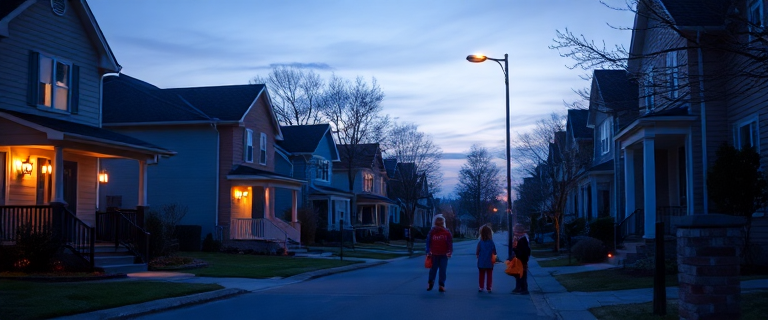
Trick-or-Treating Hours 2026: A Practical Guide to Local Halloween Timings, Safety, and Verification
Halloween 2026 falls on Saturday, October 31. Many towns publish official trick-or-treat hours or move the night, and some areas have regional variations like Beggar’s Night. This guide helps you find exact hours for your town, understand common timing patterns, and learn how to verify hours from reliable sources.
What time does trick-or-treating start and end?
There isn’t a single nationwide start time. Timing typically depends on age and local norms. Younger children usually begin earlier, while older kids may head out later. Because Halloween 2026 falls on a Saturday, families often extend their plans later into the evening compared with a school-night Halloween. A practical rule of thumb is that trick-or-treating tends to begin around sunset and most neighborhoods see activity taper off by around 8:00 p.m. However, local rules and official hours can vary significantly from town to town.
Across thousands of towns, the single most common officially posted window is 6:00 p.m. to 8:00 p.m. This modal timing helps many families align their routines, even when other local limits apply. The exact start and end times, though, can still differ depending on location, date changes, or rain-date arrangements.
City-specific hours (examples from 18 major cities)
To anchor expectations, here are representative official windows cited by city officials and local outlets. For readers outside these cities, use an official city page or a trusted local source to confirm the precise hours for your town.
| City | Official trick-or-treat window |
|---|---|
| Atlanta | 5:00 p.m. – 9:00 p.m. |
| Boston | 5:00 p.m. – 8:00 p.m. |
| Chicago | 3:00 p.m. – 7:00 p.m. |
| Cincinnati | 6:00 p.m. – 8:00 p.m. |
| Cleveland | 6:00 p.m. – 8:00 p.m. |
| Dallas | 5:00 p.m. – 7:00 p.m. |
| Denver | 3:30 p.m. – 7:00 p.m. |
| Houston | 5:00 p.m. – 9:00 p.m. |
| Indianapolis | 5:30 p.m. – 9:00 p.m. |
| Los Angeles | 6:00 p.m. – 8:30 p.m. |
| New York | 3:00 p.m. – 8:00 p.m. |
| Philadelphia | 6:00 p.m. – 8:00 p.m. |
| Phoenix | 5:00 p.m. – 7:30 p.m. |
| Pittsburgh | 6:00 p.m. – 8:00 p.m. |
| San Antonio | 4:30 p.m. – 10:00 p.m. |
| San Diego | 5:00 p.m. – 8:00 p.m. |
| Seattle | 4:00 p.m. – 7:00 p.m. |
| Washington, D.C. | 5:30 p.m. – 9:00 p.m. |
Note: hours vary by town, and these representative windows are not a substitute for your local official posting. For a comprehensive search, use a trusted local source or a nationwide index that aggregates official hours by town or ZIP code.
Regional variations you may encounter
Beyond the standard Halloween window, some regions use different designations for Trick-or-Treat night. In Central Ohio and parts of Iowa, the event is often called Beggar’s Night, and towns set their own evenings rather than following October 31. This regional naming helps explain why a family might find conflicting information when searching for hours in those areas.
To help families plan, it’s useful to know that Beggar’s Night and similar regional traditions can shift the date or time away from October 31. If you hear about Beggar’s Night, treat it as a distinct local schedule rather than assuming it mirrors other nearby towns.
Where to verify hours and why it matters
Official sources—the city website, the town’s calendar, or the local police department—are among the most reliable places to confirm hours. In some cases, police departments publish official hours on their websites or social media well before Halloween, which can provide a definitive reference when town pages are vague or late to update.
For example, Indiana’s Clermont town page lists trick-or-treating hours as a published interval from 6:00 p.m. to 8:00 p.m., with notes from the town. This illustrates how a trusted official channel can anchor your planning. In many communities, official times are echoed or reinforced by local police communications.
As a broader planning aid, some families turn to dedicated aggregation resources that compile posted hours by town, state, and date. HalloweenMap.com is a well-known example that lists thousands of towns, provides a state-by-state view, links to official sources, and notes when towns have posted 2026 hours or are using last year’s guidance while waiting for current updates. As of now, the platform reports tens of hundreds of towns with posted 2026 hours and thousands more awaiting updates.
Planning notes: dates, rain dates, and early confirmation
A substantial share of towns moves trick-or-treating to a different date or observes a rain date. HalloweenMap.com shows that among towns with posted 2026 hours, a portion chose an evening other than October 31, and some set rain dates. Always verify the date in addition to the time, especially in states where non-Halloween evenings are common, such as parts of Ohio, Indiana, Iowa, and Pennsylvania. If your town has posted hours, sharing the official link helps other families verify quickly.
Universal safety etiquette for a smooth night
Beyond timing, important practices help keep everyone safe and happy. The porch-light principle—participation is indicated by a lit porch light—remains a simple visual cue for whether a home is handing out candy. For a respectful, orderly night, families should knock or ring only once and wait briefly for the response, avoiding repeated door pounding. There’s no hard age cutoff for trick-or-treating; teens in costume who are courteous can join in, but homeowners aren’t obliged to hand out candy to anyone who isn’t participating or who isn’t in costume.
Practical safety tips include coordinating chaperones for younger children, carrying a cellphone for emergencies, bringing a flashlight or wearing reflective costumes to remain visible in dimly lit areas, and establishing a curfew to ensure everyone returns home safely. After the night, parents should inspect collected candy for opened packaging or potential hazards before sharing it with kids.
Planning tools and extras
For families who want more than hours, additional planning tools can help. FrightMaps offers maps of home haunts, decorated houses, and haunted attractions near you, which can be useful for planning a safe and festive route. If you’re planning a route and want a broader planning aid, free interactive maps like HalloweenMap.com can show you decorated houses and participating addresses in your area. Using such maps is optional but can enhance your overall trick-or-treat plan.
Frequently asked questions
If you’re wondering about the exact hours for your town, start with your city’s official website or police department page. When that’s not available, a trusted state or local government portal can be a useful secondary source. For a broader search, an aggregator that lists hours by town or ZIP code can quickly point you to official postings.
Quick reference: Halloween 2026 is a Saturday. The list of hours above reflects common patterns, but always verify to avoid surprises. If your town has posted hours, share the official source so others can confirm quickly. For readers seeking granular, town-by-town data beyond the 18 major cities, use a reliable aggregation site to look up your specific town, suburb, or county.