
Wind Farms: What They Are, How They Work, and Practical Considerations
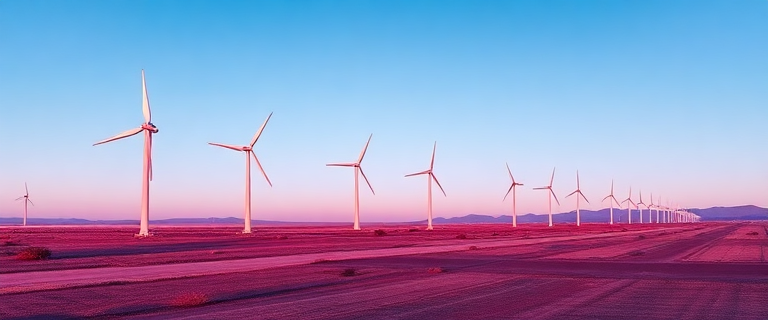
A wind farm, also known as a wind park or wind power plant, is a cluster of wind turbines located in the same area to generate electricity. These installations can range from a handful of turbines to several hundred, covering a broad expanse of land or sea. Wind farms may be sited onshore or offshore, and their scale continues to grow as turbine designs increase output per machine.
Across the globe, some of the largest onshore wind farms are in China, India, and the United States. The Gansu Wind Farm in China reached a capacity of more than 6,000 MW by 2012 and was targeted to reach 20,000 MW by 2020. As of mid-to-late 2020s reporting, capacities in this region have expanded far beyond those early figures, with current estimates for Gansu around 30,000 MW. Offshore, the Hornsea Wind Farm in the United Kingdom reached 1,218 MW and became the largest offshore wind farm in the world by December 2020. Turbine designs have continued to advance, allowing higher total output with fewer turbines overall.
Because wind farms generate electricity without burning fuel, they typically have lower environmental emissions than many other forms of power generation. Yet they are not without criticisms: visual and landscape impacts, land-use considerations, and some concerns about wildlife and health effects have been raised. The prevailing conclusion from many researchers is that wind farms are generally compatible with wildlife and public health when properly sited and operated, though certain concerns—such as blade disposal and underwater construction noise—require attention as the industry evolves.
Siting considerations
Choosing a wind-farm site hinges on multiple factors that together determine the project’s viability and performance. The core considerations are wind resource quality, access to electric transmission, physical access for construction and maintenance, and local electricity prices. The faster the average wind speed at a site, the more electricity a turbine can generate; however, strong gusts and high turbulence demand more capable, often costlier, turbines. The ideal wind regime features strong, steady winds with low turbulence and a consistent direction.
Topography also matters. Mountain passes and ridge lines can channel wind and create high-resource corridors, but they require careful turbine placement to manage turbulence and wake effects. In the United States, early wind-farm development benefited from such passes (for example, historic sites like San Gorgonio Pass and Altamont Pass) and provided lessons about turbulence and crowding that informed later siting strategies.
Site assessment relies on a combination of wind industry data and on-site measurements. Before turbines are installed, developers compile wind maps, install meteorological towers, and collect data on wind speed and direction over extended periods. This site-specific data is crucial for financing because it demonstrates the project’s potential to meet its energy targets while fitting the grid and market context.
Wind speed typically increases with height because surface drag diminishes with altitude. However, air density decreases at higher altitudes, which partly offsets the gains in wind power. The practical takeaway for developers and planners is to balance higher-energy wind resources against the costs of taller towers and longer blades, as well as potential siting constraints.
Electricity grid considerations
In many markets, the first step in site selection for a large wind project is identifying areas with adequate available transfer capability (ATC) in the transmission network. ATC measures how much capacity remains for new interconnections without costly upgrades to lines and substations. Once suitable regions are identified, long-term wind measurements and interconnection feasibility play a key role in financing decisions.
In the United States, independent system operators (ISOs) such as the California ISO and the Midcontinent ISO use interconnection request queues to manage new generation proposals. Submitting a request incurs deposits and ongoing study costs that can extend for years as the interconnection studies evaluate ATC and related constraints. In practice, larger developers with the most market power tend to secure the most favorable queue positions, while others withdraw their requests to recover some deposits when projects are deemed too risky compared with competing options.
Design and layout considerations
A core design challenge for wind-farm projects is turbine spacing. Turbines positioned too close together experience wake effects, where slower wind behind upstream turbines reduces energy capture for downstream machines. Spacing must be balanced against the cost of roads, cables, and land area. A common guideline is to maintain at least several rotor diameters of clearance between turbines, recognizing that actual spacing depends on turbine model, site conditions, and operational strategy. The so-called blockage effect can also reduce wind power by a few percent for the turbines at the wind-farm front, depending on configuration.
Onshore and offshore wind farms
Onshore wind farms are the most widespread and historically preceded offshore development. The earliest wind-farm capacity was modest, but modern projects now span vast territories and employ turbines with higher individual output. One notable onshore project example is the Gansu Wind Farm in China, cited above, which grew from several thousand megawatts to tens of thousands of megawatts in aggregate capacity as of the 2010s and 2020s. Offshore wind farms benefit from higher average wind speeds and typically higher capacity factors due to the smooth offshore environment, though they require specialized installation, service vessels, and maintenance strategies to deal with harsher conditions at sea.
Europe has led offshore wind development, with the early Vindeby project in Denmark (installed in 1991) illustrating the feasibility of offshore deployment. By 2010, numerous offshore farms existed in Northern Europe, and by the late 2010s and early 2020s several large offshore projects—such as Hornsea, Walney, and others in the United Kingdom and continental Europe—pushed total offshore capacity well above 1,000 MW in individual sites. The perception of offshore turbines as more visually discreet is commonly noted, and capacity factors at sea are typically higher than onshore, reflecting stronger and more consistent marine winds.
As of the late 2010s and early 2020s, the largest offshore projects included Hornsea Wind Farm (1,218 MW) and Walney Wind Farm (1,026 MW) in the United Kingdom, followed by other large UK and European developments. Ongoing development has continued to expand offshore capacity, with new projects entering service and existing sites receiving upgrades to increase total output. In addition, offshore wind installations face unique maintenance challenges, such as the need for specialized jackup vessels and around-the-clock service operations to maximize turbine availability.
Experimental and proposed wind farms
Beyond conventional farms, experimental wind setups have included single-turbine test fields such as Østerild Wind Turbine Test Field. Innovative concepts have been proposed, including airborne wind farms—clusters of airborne wind energy systems connected to the grid at a single point—and wind-farm concepts that combine diverse turbine types to span a wider range of wind speeds. The aim of such configurations is to maximize energy production while controlling costs across a spectrum of wind conditions.
Regional snapshots
Wind-energy activity varies by region. Australia has seen policy support alongside environmental concerns about wildlife. Brazil reached substantial wind capacity in recent years, with the Lagoa dos Ventos onshore project expanding toward 1,500 MW. India holds a prominent position globally, with large-scale deployment and increasing capacity across states such as Tamil Nadu and Gujarat. Japan has substantial potential for offshore wind but has deployed comparatively less capacity so far, with targets for offshore wind expansion set for the coming decades. North America and Europe continue to lead in installed capacity, grid integration, and policy frameworks that enable siting and investment in wind projects, while ongoing work addresses interconnection processes, wildlife monitoring, and community engagement.
Effect on environment and landscape
Compared with fossil-fuel power, wind energy produces little to no air pollution and emits far less greenhouse gas over its lifetime. Emissions associated with turbine production are offset by the electricity generated within a relatively short payback period. On land, wind farms can impose visual and landscape changes and require large land areas, though farmland often remains usable for crops between turbine rows. Shadows, noise, and siting restrictions can generate local concerns, which communities and developers address through careful planning and mitigation strategies.
End-of-life blade disposal has historically been a challenge because many blades are made from fiberglass composites. Since 2019, some landfills require blades to be crushed before disposal, and modern blades are more likely to be designed with recyclability in mind as manufacturing technology evolves. Noise from turbines is usually modest at a distance; a typical daytime noise level near a wind farm can be around 50 dB, dropping to inaudible levels at greater distances. Offshore operations are generally quieter in daily operation, though underwater piling noise during construction can be a concern and is addressed with planning and mitigations.
Wildlife impacts, particularly for birds and bats, have been a focal point of monitoring efforts. While wind farms can affect wildlife, properly designed projects with ongoing monitoring can minimize adverse outcomes. Wind energy is generally regarded as wildlife-compatible relative to many other energy sources, though site-specific assessments remain essential.
Additionally, wind energy can influence local microclimates. Some studies have reported cooling effects in surrounding areas during the day and slight warming at night near onshore turbines, driven by turbulence and mixing of air—effects that can influence crop microclimates in nearby agricultural zones.
Health effects and public concerns
A substantial body of peer-reviewed work has examined wind-turbine noise and health effects. The consensus in many reviews is that there is no evidence of direct adverse physiological health effects from wind-turbine noise when projects are properly sited. Some people report annoyance or sleep disruption, which can be explained by nocebo mechanisms or individual sensitivity, rather than a proven medical harm. Notable reviews and statements from public-health authorities emphasize that no consistent causal health harm has been established, though ongoing research and careful siting remain important to address individual concerns.
Several major reviews and statements have highlighted that, while wind energy does not pose established health risks in aggregate, communities may experience annoyance or perceptual discomfort. Health experts also note that addressing siting, vibration, and operational noise can reduce potential impacts. In practical terms, this means communities and developers should engage early, monitor experiences of neighbors, and implement mitigation strategies where necessary.
Effect on the power grid and storage integration
Wind farms connect to transmission systems to deliver electricity to the grid. Their intermittent nature can complicate grid balancing, particularly when wind energy represents a large share of regional supply. Grid operators increasingly rely on energy storage, flexible generation, and transmission interconnections to mitigate variability and maintain reliability. Storage technologies—such as lithium-ion batteries, pumped hydro, and green hydrogen—are becoming more common as part of integrated wind-plus-storage projects. These hybrids help smooth output, support grid stability, and enable higher penetrations of wind power in many markets.
Several large offshore and onshore projects illustrate how storage can complement wind energy in practice, though specific projects vary by region and regulatory framework. As storage technologies mature and costs fall, the combination of wind generation with storage is expected to play a central role in decarbonizing electricity markets.
Radar, communications, and siting mitigations
Wind-farm operation can interfere with radar and radio communications. The degree of interference depends on radar type, aircraft speed, turbine layout, and processing of radar signals. Mitigations include techniques such as non-initiation windows to hide turbines during critical radar operations, stealth-bladed designs, and advanced radar systems capable of filtering turbine reflections. Regulatory guidance, such as FAA advisories, provides precautionary zones around aviation activity. Mobile radar systems and software-based mitigation are also deployed to distinguish aircraft from turbine blades and reduce false returns.
Frequently asked questions and quick facts
Across the United States, published figures show a growing fleet of wind farms. By late 2020s reporting, there were roughly 1,388 operating wind farms with about 167 gigawatts (GW) of capacity, with new projects continuing to come online annually. The largest U.S. wind farms include multi-hundred-megawatt facilities in various regions, with the largest capacities periodically updated as new projects commission. The number of wind farms and capacity has grown steadily, reflecting ongoing construction and commissioning of new projects year after year.
Key performance drivers for wind farms include improved turbine reliability, taller towers, longer blades, and larger rotor diameters, which collectively increase energy capture without a proportional rise in the number of turbines. Cost trends for wind energy have also progressed: the cost of electricity from new wind power projects has fallen significantly over the past decade, with Lazard citing a notable decline in Levelized Cost of Energy (LCOE). This supports continued deployment as part of broader decarbonization strategies.