
What time does trick-or-treating start and end on Halloween?
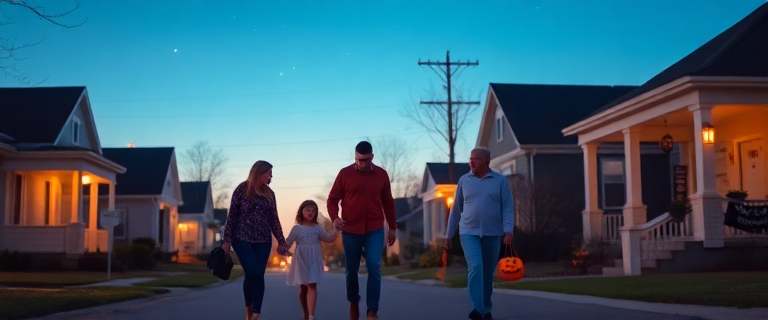
There isn’t a single universal start and end time for trick-or-treating. The right schedule depends on where you live, your neighborhood norms, and your children’s ages. A practical approach is to aim for a window that starts around dusk and ends by early evening, while checking local rules that can shift from year to year. In many places, a common default window is roughly five to six in the evening until around nine o’clock, but this varies by city and street.
The timing context matters: starting too early can catch families by surprise and ending too late can create safety and sleep concerns for children and caregivers. As you plan, consider local curfews, school-night schedules, and any neighborhood practices that affect when doors are open or lights are on.
Know your local window
Official trick-or-treat hours differ by city and even by neighborhood. For example, reported windows in recent guides and local advisories show ranges such as Atlanta from 5 to 9 p.m., Chicago from 3 to 7 p.m., New York from 3 to 8 p.m., and San Antonio from 4:30 to 10 p.m. These illustrations demonstrate how the night can swing from early evening to late night depending on location. To plan safely, consult local sources—city websites, area news outlets, and neighborhood social groups—for the most current schedule. Schedules can change year to year, so verify close to Halloween.
A practical three-step lookup helps you learn your local window: first, check your city’s official website or municipal calendar; second, review trusted local news for community tips and any late changes; third, skim neighborhood or block groups where residents share “rush times” and common start moments. This approach gives you a concrete sense of when doors will be open in your area.
Year- and day-of-week considerations
Timing isn’t static across years. For instance, Halloween in 2025 falls on a Friday, which tends to ease bedtime pressure because kids can sleep in a bit on Saturday. When Halloween lands on a weekday, families often feel a stronger pull to keep to school-night commitments. Conversely, a weekend Halloween affords more flexibility for later start times or longer trick-or-treating windows. The general rhythm aligns with a dusk-to-evening pattern: start around dusk or sunset—usually around 5–6 p.m.—and end by around 9 p.m. in many communities. This balance respects daylight, safety, and the energy levels of children after a school day or after daytime activities.
In practice, a simple rule can guide planning: treat Friday or weekend Halloweens as opportunities for a slightly longer window, while school-night Halloweens should lean toward an earlier finish. The idea is to preserve sleep and safety while allowing older kids some flexibility when the day’s demands are lighter.
Individual families may still stray from these patterns based on local norms, family schedules, and parental judgment. Where children are very young, many families prefer an earlier start so activities finish before dark and bedtime routines stay intact.
Age-based timing guidance
To translate timing into actionable planning, consider age-specific pacing. A compact, expert-informed schedule can help parents adapt the general window to their child’s needs, without prescribing a rigid nationwide rule:
– Toddlers and preschoolers: start earliest and finish before dark. Keep the outing short so younger children don’t miss crucial sleep windows.
– Elementary-age children: aim for a window roughly from 5:30 p.m. to 8:00 p.m., with adult supervision. This timing supports safe crossing and allows families to wrap up before older kids begin longer routes.
– Middle and high schoolers: many families allow a later window, roughly 6:00 p.m. to 9:00 p.m., but with a clear curfew and explicit check-in expectations. Some jurisdictions also restrict trick-or-treating for those over a certain age, so verify local rules.
These guidelines translate a general rule into practical planning based on age and independence, rather than treating every year as identical. They are framed as recommendations informed by common patterns and expert guidance, not as universal nationwide mandates.
Safety and sleep considerations
Safety timing matters because it intersects with sleep needs and nighttime visibility. A widely cited finding from pediatric research notes a higher risk for nighttime pedestrian incidents on Halloween—a precise figure from the literature is 43% higher risk of pedestrian fatalities on Halloween, attributed to a JAMA Pediatrics study. This statistic strengthens the case for a reasonable end time and steady adult supervision, especially for younger children.
Beyond timing, practical safety steps support a positive night: assign a chaperone for children under 12; for older kids, encourage group outings with a plan to regroup periodically; equip kids with cellphones and teach home addresses and contact numbers; carry a flashlight and dress in bright or reflective costumes; set a firm curfew and communicate it clearly; and inspect candy wrappers before eating. These measures help keep the evening fun while minimizing risk.
If you’re worried about late doorbells after your family’s limit, a simple signal can help: turn off outside lights to indicate you’re done for the night, or post a brief sign if you’ve run out of candy. This reduces doorbell traffic and makes your intentions clear to trick-or-treaters.
Signaling participation and winding down
Household signals matter for both candy givers and trick-or-treaters. A house that leaves porch lights on and displays Halloween decorations generally signals participation and the availability of treats. If you don’t wish to participate, turning off porch lights, removing decorations, and posting a sign can clearly communicate that you’re not handing out candy. When you’re running low, a visible sign or note helps direct the flow of visitors and supports a quicker, smoother end to the night.
Local rules, dates, and practical lookup
Be aware that some communities enforce Halloween curfews or age restrictions. While enforcement varies, a small number of municipalities may limit trick-or-treating for older teens. To stay compliant, check local police non-emergency lines or city ordinances for the current year’s rules. Also note that some areas schedule trick-or-treating on a different date, such as Beggar’s Night in Des Moines, Iowa, or other weekends chosen by towns. If a community moves the event, verify the date as well as the window.
As you prepare, consider including one or two lines noting the possibility of alternate dates and encourage readers to verify locally. A short, reusable lookup approach works well: check the city website, review local news coverage for the latest guidance, and consult neighborhood groups for any last-minute shifts. This keeps planning concrete and actionable.
Alternatives to street trick-or-treating
If families prefer a controlled or earlier setting, trunk-or-treat events provide a different option. These events typically run in parking lots, often at schools or churches, with candy displayed from car trunks and sometimes games or decorations. Some parents view trunk-or-treat as safer or easier than walking the neighborhood, though times vary and should be confirmed locally.
Other communities host trunk-or-treat or similar events announced by local organizations. When planning, check with churches, schools, or community groups for dates and times in your area.
Etiquette and signals recap
Etiquette on Halloween blends courtesy with safety. Trick-or-treating typically begins at dusk, and some municipalities choose different dates. Homeowners who wish to participate may decorate their homes and keep porch lights on; those who do not wish to participate can turn off lights and secure gates. In areas where trick-or-treating is restricted by age or curfew, it’s important to respect local rules and for families to plan within those boundaries. Dressing in costumes remains common for all ages, and adults often accompany younger children while teens may participate in groups with clear boundaries and expectations.
What time trick-or-treating starts by city (illustrative examples)
To illustrate the diversity of local practice, several cities report distinct windows. For example, Atlanta commonly runs from 5 to 9 p.m., Chicago from 3 to 7 p.m., New York from 3 to 8 p.m., and San Antonio from 4:30 to 10 p.m. Always verify in your own neighborhood and consult up-to-date local sources for the year you’re planning.
Brief note on history
Trick-or-treating evolved from older practices such as souling and guising in Britain and Ireland, with variations introducing the modern custom across North America and beyond. The interjection “Trick or treat!” appeared in central Canada and the United States in the early 20th century and became widely adopted by the mid-20th century. Across regions, communities have adapted dates, formats, and signals over time, contributing to the current patchwork of practices and timings described here.
Practical takeaway
Plan around dusk with a flexible end time that respects local rules and your children’s ages. Confirm the local window using a three-step lookup: city website, local news coverage, and neighborhood groups. Use clear signals at your home to indicate participation or wind-down, and consider a safety checklist that includes chaperones for younger kids, a cellphone, a flashlight or reflective gear, a firm curfew, and candy inspection before eating. With year-specific context (such as a Friday Halloween in 2025) and age-adjusted timing, you can craft a safe, enjoyable Halloween night that works for your family.