
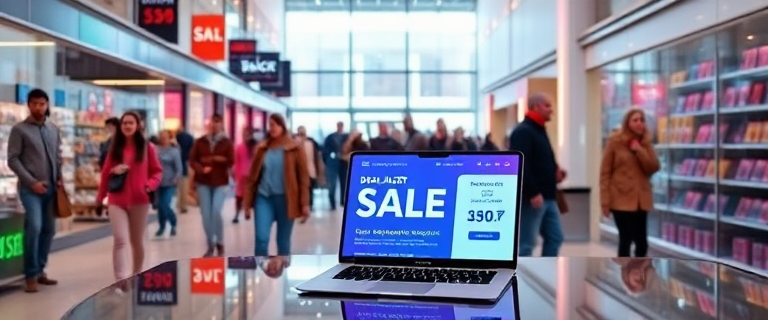
Black Friday: Definition, History, Timing, and Modern Significance
Black Friday marks the start of the Christmas shopping season in the United States and has evolved into a global, multiweek shopping phenomenon. From its origins in the 19th century to today’s extended promotional season, the event now blends in-store and online experiences, often stretching across November as retailers compete for shoppers’ attention.
Origins, Etymology, and Early Meaning
The phrase Black Friday did not originally refer to shopping. Its earliest association with calamitous events stretches back to the 19th century, most notably the gold market crash of 1869 when financiers Jay Gould and James Fisk attempted to corner the gold market. The ensuing panic caused a dramatic drop in gold prices. As for the retail term, the first known use to describe the day after Thanksgiving appeared in Factory Management and Maintenance in November 1951, and again in 1952. This earlier usage referred to workers calling in sick on the day after Thanksgiving to obtain a four‑day weekend, a meaning that ultimately did not gain traction.
Separately, Philadelphia police in the mid‑20th century used the term Black Friday to describe the crowds and traffic congestion that accompanied the start of the Christmas shopping season, a situation the city sought to manage by exploring branding ideas like “Big Friday.” By the 1980s, retailers popularized the notion that Black Friday signified the point at which profits moved from red ink to black ink, signaling a positive turn for the year. From there, the term spread nationally and became associated with the high-profile shopping day that launches the holiday season.
The name’s enduring resonance rests less on precise etymology than on its function as a cultural signal: a busy, highly promotional day that has grown into a broader season as retailers chase demand through longer promotions and online channels.
History and Evolution: From a Single Day to a Season
Historically, Black Friday followed Thanksgiving and inaugurated the Christmas shopping period. In the early days, stores competed to open first and to offer dramatic doorbusters, with some doors open as early as midnight. Over time, the emphasis shifted toward strategic promotions and extended hours, culminating in a broader online‑driven shopping window.
In 1939, Thanksgiving was shifted to the fourth Thursday in November to extend the Christmas shopping season, a change later reinforced by law, with some communities choosing to celebrate on the traditional date. The interplay between Thanksgiving, the holiday calendar, and shopping promotions helped lay the groundwork for today’s season‑long promotional activity.
The rise of online shopping reshaped the dynamics further. By the late 2010s, many promotions extended beyond a single day into Cyber Week—an era when online traffic and sales surged. The COVID‑19 pandemic accelerated this trend, pushing even more deals online and lengthening the promotional period into weeks or even months in some cases.
The year 2015 marked a notable milestone with Prime Day (often described as “Black Friday in July”) introduced by Amazon, signaling the shift toward continuous promotional calendars. Since then, retailers have increasingly introduced early and extended promotions to capture demand across longer horizons.
Recent years have seen ongoing debates about the balance between online and in‑store shopping, the role of speed and urgency, and how promotions shape consumer behavior during the holiday season.
From Black Friday to Black November: A Shift in Timing and Strategy
A central development is the movement from a single‑day event to a multiweek promotional season often referred to as Black November. Retailers spread deals across November to accommodate online shopping, logistical realities, and consumer expectations for generous pricing over time. This shift reduces the urgency once associated with a single Doorbuster Day, while still delivering meaningful savings to shoppers who track prices, compare offers, and shop when convenient.
Experts describe this evolution as a strategic response to consumer behavior, e‑commerce growth, and the disruptions of the pandemic era. Retailers aim to keep customers engaged by rotating deals and offering limited‑time offers across days or weeks, rather than flooding stores with blanket discounts for a single day.
For shoppers, the practical takeaway is clear: plan ahead, monitor price movements, and be prepared to act when you spot genuine savings. While the flashy doorbusters may be less common, the overall value proposition can still be strong if you shop with a plan and a clear wishlist.
Economic Impact and What It Means for Shoppers Today
The Black Friday weekend now sits within a broader holiday shopping frame. Recent data illustrate a hybrid in which in‑store traffic and online shopping coexist, with substantial activity across both channels. In 2024, online spending on Black Friday reached around $10.8 billion in the United States, with 87.3 million shoppers buying online and 81.7 million shoppers visiting physical stores. Globally, spending during the 24‑hour period reached about $74.4 billion, and a majority of purchases—about 69%—occurred on mobile devices. During peak hours, roughly $11.3 million per minute was spent online in the United States between 10:00 a.m. and 2:00 p.m.
These figures illustrate how promotions are paid out over a broad time window and across channels. They also underline the importance of early planning, price tracking, and awareness of stock levels. In a marketplace where discounts may be shallower than in the past due to tariffs and inflation, shoppers should calibrate expectations and target meaningful, durable savings rather than chasing the deepest discounts on every item.
Industry experts note that while discounts may be less aggressive in some categories this year, absolute savings can still be substantial when stock is limited or when bundled offers provide higher effective value. The shift toward a longer promotional season means shoppers can spread purchases over time, potentially balancing budget and avoiding lumpy spending at a single moment.
AI and the 2025/2026 Shopping Season: A Current Trend
A growing trend is the use of artificial intelligence as a shopping companion. Adobe Digital Insights projects a dramatic surge in traffic from AI sources to retail sites, with a 517.5% year‑over‑year increase expected between November 1 and December 31, 2025. Thanksgiving Day alone could see AI‑driven traffic rise by as much as 725–730% compared with the previous year.
Shoppers are leveraging AI for price comparisons, product discovery, and deal aggregation, seeking efficiency and confidence in finding the best value. Retailers, in turn, are using AI for dynamic pricing and personalized offers to attract and convert shoppers. The practical implication for readers is straightforward: use AI tools to compare deals and verify savings, but stay mindful of the fact that AI recommendations should be cross‑checked against real item prices and stock availability.
Black Thursday and the Controversies Around Opening Hours
The practice of opening stores on Thanksgiving grew from an era of very early doorbusters on Black Friday. By 2014, many outlets were opening on Thanksgiving itself, leading to the term Black Thursday and generating public pushback about the encroachment of shopping on a holiday traditionally spent with family. In response to the backlash and the 2014 sales dynamics, several retailers chose to close on Thanksgiving in 2015, with others continuing to offer online access to the same deals.
The broader conversation has continued into the pandemic era, with online shopping surging and in‑store visits declining for many categories. In 2020, total online spending on Thanksgiving weekend reached record levels, while in‑store crowds were significantly reduced. By 2021, many major retailers signaled permanent or near‑permanent changes to Thanksgiving hours, focusing promotions around online channels and spread‑out in‑store opportunities.
A notable development in 2025 was a consumer boycott campaign targeting several large retailers, underscoring that Black Friday remains a focal point for labor practices, ethical concerns, and corporate responsibility debates.
Black Friday Around the World: Regional Variations
The Black Friday phenomenon has global reach, with regional adaptations. In Africa, Egypt introduced White Friday in 2014 as a local variant. Libya followed suit around 2019. In Asia, Pakistan has seen promotions renamed for cultural reasons, and India hosts major regional campaigns such as the Great Indian Festival and the Big Billion Days, promoted by large platforms. Saudi Arabia and the United Arab Emirates have regional versions—Yellow Friday and White Friday, respectively—often aligning with global promos while reflecting local markets. China participates more modestly, with promotional activity focused on electronics and imported goods.
In Europe, adoption varied by country, with Belgium, Latvia, the Netherlands, Norway, Switzerland, the United Kingdom, and others incorporating Black Friday‑style promotions since the mid‑2010s. Some markets faced initial concerns about overpromotion or crowd control, but the day has become an established part of many retailers’ calendars.
Across North America, Canada and Mexico host parallel promotions, with El Buen Fin in Mexico serving as a weekend extended promo period prior to the U.S. Thanksgiving weekend. In the United States, Black Friday remains a principal shopping day and weekend, though it now sits within a broader promotional season, with strong online participation and cross‑border shopping flows shaping the experience.
In Oceania, Australia historically carried a controversial association with the name due to earlier fire disasters, but in the 2010s retailers popularized Black Friday promotions there as well. New Zealand followed suit with national promotions around the same time.
Cyber Monday, Cyber Week, and the Cyber Five
The online counterparts to Black Friday—Cyber Monday and Cyber Week—grew from a 2000s concept into a sustained period of online promotions. The industry also uses the term Cyber Five to describe the five‑day window from Thanksgiving through Cyber Monday, highlighting the concentrated shopping period that increasingly defines the modern holiday season.
Historically, Cyber Monday (the Monday after Thanksgiving) became a dominant online shopping day, with online sales reaching record levels in 2013 and beyond. By contrast, in recent years Black Friday online traffic and sales have exceeded those of Cyber Monday in total shoppers, even as traditional in‑person traffic fluctuates.
Practical Guidance for Shoppers (2025/2026)
Given the extended nature of today’s promotions and the current economic context, the best approach is strategic: set a realistic budget, identify non‑negotiables, and watch for genuine price dips rather than chasing the deepest discounts on every item. Inventory levels have shown volatility due to supply chain and tariff dynamics, so earlier shopping is often safer if you’re hunting specific products.
Track prices on your wishlist items, compare offers across retailers, and look for bundles or store‑specific incentives that increase overall value. Be mindful that limited stock can mean that an item sells out quickly and may not return at the same price. If you’re shopping in November, consider spreading purchases across several weeks to manage budget and avoid lumpy spending.
For technology and high‑demand categories, be prepared to buy early if possible, and verify the item, model, and warranty terms before completing a purchase. If you’re shopping online, use price‑comparison tools and monitor shipping times to avoid delays during peak periods.
Meet Our Experts
Barbara Kahn is a professor of marketing at The Wharton School of the University of Pennsylvania.
Katherine Cullen is the vice president of industry and consumer insights at the National Retail Federation.
Nancy Koehn is a historian and professor at the Harvard Business School.
Dr. Ross Steinman is a professor of consumer psychology at Widener University.
Vivek Pandya is the director for Adobe Digital Insights.
Erik Guzik is an assistant clinical professor of management and entrepreneurship at the University of Montana College of Business.
Why Trust This Coverage
This piece synthesizes historical context, expert commentary, and current data to help readers understand how Black Friday has evolved into a broader shopping season. It emphasizes how changes in consumer behavior, online shopping, and global economic factors shape the deals people see today. The aim is to equip shoppers with context and practical guidance, not to promote a single retailer or agenda.
Frequently Asked Questions
What is Black Friday? Black Friday is the day after Thanksgiving in the United States, traditionally signaling the start of the Christmas shopping season. It has shifted toward a multiweek, online‑driven promotional period, with deals often available well before and after the actual date.
When is Black Friday in 2025/2026? In 2025, Black Friday falls on November 28. In 2026, it falls on November 27. The dates for 2027 and 2028 are November 26 and November 24 respectively.
Are deals better online or in-store? Both channels offer value, but online shopping has grown to dominate deal discovery and fulfillment, especially during extended promotional periods. Online deals appeared strong in 2020 and have remained a key component of the season.
What is the Cyber Five? The Cyber Five describes the five‑day period from Thanksgiving through Cyber Monday when many retailers run intensified online promotions, consolidating the traditional Cyber Monday focus into a broader window.
See Also
- Boxing Day
- Buy Nothing Day
- Circular Monday
- Cyber Monday
- Giving Tuesday
- Green Monday
- Native American Heritage Day
- Prime Day
- Singles’ Day
- Small Business Saturday
- Super Saturday
References and Further Reading
The narrative draws from a range of historical and industry sources, including Britannica, NBC Select, the National Retail Federation, Adobe Digital Insights, and other expert analyses that track the evolution of Black Friday from its 19th‑century origins to today’s global, multiweek promotional landscape.