
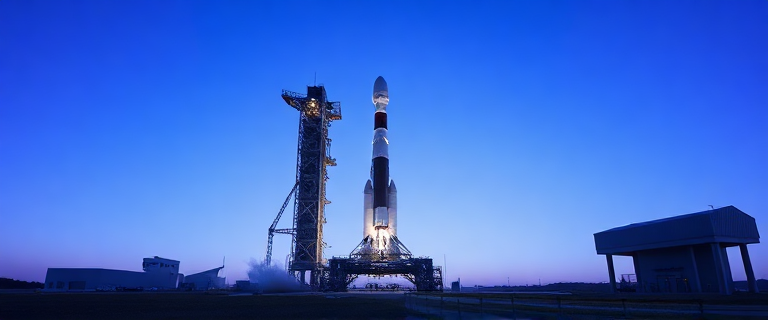
Space Exploration Technologies Corp. (SpaceX) — Company Profile and Overview
SpaceX is an American aerospace manufacturer and space transportation company that designs, builds, and operates rockets and spacecraft. The company runs a three-part business framework—Space (launch vehicles and spacecraft), Connectivity (Starlink satellite internet), and a nascent AI/compute initiative via its SpaceX Super Intelligence subsidiary. SpaceX has pursued ambitious milestones in rocket reusability, crewed spaceflight, satellite internet, and increasingly complex space architectures, while expanding its corporate footprint through major government contracts and a 2026 IPO that valued the company at an eye-watering level. Starlink has become the dominant revenue engine, while AI compute and other ventures are growing but still in earlier stages. SpaceX’s corporate and market story is defined by its rapid iteration, heavy capital needs, and a track record of disruption in the launch industry.
History
SpaceX, officially Space Exploration Technologies Corp., was founded in 2002 in El Segundo, California, by Elon Musk with the aim of reducing spaceflight costs and increasing reliable access to space, with a long‑term vision of enabling Mars colonization. The early years centered on building a small, vertically integrated team that could innovate rapidly, often using commercial off‑the‑shelf components where feasible and pursuing a software-like modular engineering approach. The company’s early leadership and staff included Tom Mueller (CTO), Gwynne Shotwell (COO), and others who had experience at TRW and Boeing, with Musk personally conducting many initial interviews.
SpaceX’s first orbital launch vehicle, the Falcon 1, faced three consecutive failures from 2006 to 2008. Those failures, paired with financing pressures from Musk and others, pushed the company toward near‑bankruptcy. The turning point came with the fourth successful Falcon 1 flight on September 28, 2008, followed by NASA’s selection of SpaceX for the Commercial Resupply Services (CRS) contract worth about $1.6 billion in December 2008. This contract was a lifeline that enabled continued development of the Falcon 9 and Dragon programs—foundational for later growth. ]
In 2010 SpaceX achieved a major milestone by launching the Falcon 9 with the Dragon spacecraft under NASA’s Commercial Orbital Transportation Services (COTS) program. The Dragon spacecraft’s COTS Demo Flight 1 in 2010 validated development progress, and by December 2010 the company was producing a Dragon and Falcon 9 on a roughly quarterly cadence. The Dragon program evolved to support cargo flights to the ISS in 2012 and later crewed development under NASA’s Commercial Crew program. Throughout the 2010s, SpaceX pursued aggressive reusability goals beginning with the Falcon 9 first‑stage recoveries, culminating in landed boosters and reflight programs that reshaped launch economics. SpaceX also introduced Starship concepts and laid groundwork for a broader constellation strategy with Starlink, announced in 2015 and expanded in subsequent years.
The 2010s also saw SpaceX’s expansion into new capabilities and markets, including the first reflight of an orbital‑class booster (SES-10) in 2017 and the 2018 maiden flight of the Falcon Heavy. The company grew into a leading global launch provider by volume of launches and contract revenue, with a growing portfolio of NASA and DoD missions as well as commercial customers. The period also laid the groundwork for a broader set of initiatives, including Starlink, Starshield, and Starship developments.
In 2019 and beyond, SpaceX accelerated Starlink deployment, building out a satellite constellation intended to provide global broadband internet. The company’s strategic focus broadened with the development of Starship for deep‑space exploration, crewed lunar missions, and eventual Mars objectives. In 2026, SpaceX acquired xAI (founded by Musk) to form SpaceX Super Intelligence, signaling a formal foray into a dedicated AI compute capability and space‑based data centers, and it announced a collaboration with Tesla to pursue Terafab, a large semiconductor fabrication project. The same year, SpaceX held an IPO on Nasdaq under the SPCX ticker, pricing at $135 per share and valuing the company at approximately $1.77 trillion, in what became the largest IPO in history and a landmark for private space ventures. SpaceX began trading on June 12, 2026.
Beyond these corporate milestones, SpaceX’s history includes a series of notable programs and milestones—vehicle development, NASA and DOD contracting, and the expansion of launch sites and facilities. The company grew its workforce dramatically, reaching approximately 22,621 employees by 2026, and reporting 2025 revenue around $18.7 billion with total assets near $92.1 billion and total equity around $2.6 billion. These numbers reflect a company that has moved from a near‑term survival phase in the 2000s to becoming a dominant player in space transportation and a growing force in space‑based infrastructure.
Corporate Affairs and Leadership
SpaceX’s corporate structure centers on an ownership model that concentrates control with Elon Musk, who owns a substantial portion of SpaceX stock and wields a large proportion of voting power via super‑voting shares. As of 2026, SpaceX’s leadership includes Elon Musk as CEO and CTO, Gwynne Shotwell as President and COO, and a board of directors with members who have deep experience in tech, finance, and investment. The board list includes Luke Nosek, Steve Jurvetson, Antonio Gracias, Donald Harrison, Ira Ehrenpreis, Randy Glein, and Roelof Botha, among others. Leadership changes in 2022 re‑aligned Starbase governance under Shotwell and Omead Afshar to focus on Starship development, while retaining core operations at Hawthorne and other facilities.
From a governance perspective, SpaceX’s board and leadership reflect a blend of founder influence, seasoned investors, and executives with aerospace and technology backgrounds. This structure supports the company’s dual emphasis on rapid spacecraft development and large‑scale contract execution with government and industry customers.
Business Segments and Strategy
SpaceX traditionally organized its activities around three primary segments—Space, Connectivity, and AI. Space encompasses Falcon 9, Falcon Heavy, and Starship projects, Dragon spacecraft, and the company’s orbital launch cadence. Connectivity operates the Starlink satellite constellation and its broadband internet services, which have grown to be a major revenue contributor. AI, historically framed as a core business alongside Space and Connectivity, has been repositioned in 2026 as SpaceX Super Intelligence, a wholly owned subsidiary formed by the February 2026 acquisition of xAI. This shift clarifies that Starlink remains the major revenue driver, while the AI compute business is nascent and still developing, with ambitions tied to space‑based data centers and partnerships for compute capacity. The broader strategy combines vertically integrated rocket and spacecraft production with a growing networked data‑center and satellite internet backbone to enable global connectivity and advanced computing.
Government Contracts and Programs
SpaceX’s government contracting has been a cornerstone of its development and growth. The company has participated in NASA’s Commercial Orbital Transportation Services (COTS) program, Commercial Resupply Services (CRS), and the Crew Transportation Capability (CCtCap) program, along with National Security Space Launch (NSSL) contracts and engagements with the National Reconnaissance Office (NRO) and other defense stakeholders. Notable program details include COTS funding of $396 million for Dragon and Falcon 9 development, CRS contracts valued at about $1.6 billion covering cargo missions, CCtCap funding for crew transport, and GPS III/NRO missions under DoD programs. SpaceX’s NSSL certification in 2015 opened the avenue for national security launches, and subsequent DoD and NRO contracts expanded the company’s strategic defense and space‑domain capabilities. These contracts collectively underpinned Falcon 9, Dragon, and Starship development and helped sustain SpaceX through market cycles.
In parallel, SpaceX has undertaken programs with Space Development Agency and other agencies to build missile‑warning and related satellite networks, reflecting a broader government‑tech integration. In 2024 Reuters reported a network of hundreds of NRO spy satellites under a multi‑billion contract, highlighting how defense commitments have shaped SpaceX’s technology trajectory. SpaceX’s government work, while sometimes contentious in public debate, has been instrumental in funding and accelerating its launch and crew capabilities.
Market Impact, Competition, and Pricing
One of SpaceX’s defining roles in the aerospace industry has been to disrupt traditional launch pricing and market structure. SpaceX’s low launch prices for geostationary transfers and other missions challenged the long‑standing pricing of established players, such as Arianespace and United Launch Alliance (ULA). Falcon 9’s published price around $56.5 million per launch helped catalyze competition and pricing pressure across the sector. This pricing effect contributed to ULA’s restructuring efforts in the mid‑2010s, as the company faced pressure to lower costs and adapt to SpaceX’s commercial strength. NASA’s public accounting over time also highlighted the broader shift that SpaceX helped drive: by mid‑2010s, the United States captured a growing share of the commercial launch market thanks to SpaceX’s cost discipline and cadence. By 2024, SpaceX had built a commanding presence in and beyond the commercial market, with a substantial portion of national security launches also shifting toward SpaceX, reflecting a broader change in the competitive landscape.
The company’s launch market leadership, combined with a large and expanding Starlink constellation, has reshaped the global space transportation ecosystem. SpaceX’s ability to offer potentially lower prices and higher launch frequency, along with its vertical integration, has influenced pricing pressure on competitors and altered customers’ expectations for cadence and cost. This disruption is a central dimension of SpaceX’s market impact and remains a key driver of the company’s valuation and growth.
Facilities and Operational Footprint
SpaceX maintains a multi‑site footprint designed to support manufacturing, testing, and launches. The Hawthorne, California facility has historically served as the company’s primary manufacturing hub, producing rocket engines, stages, spacecraft, avionics, and flight software in a highly integrated workflow. Starbase in Brownsville, Texas is the focal point for Starship development and manufacturing, with orbital flights beginning in 2023 after a long period of testing. SpaceX also operates McGregor, Texas, a major rocket engine development and test facility where engines are accepted and subjected to qualification tests. Additional government‑support and policy work occurs from an office in the Washington, D.C. area. Orbital launch sites include Cape Canaveral Space Force Station and Kennedy Space Center in Florida, and Vandenberg Space Force Base in California, each with specific orbital capabilities and constraints, and SpaceX has pursued Starship launch operations primarily from Starbase. In 2024, SpaceX relocated its headquarters from Hawthorne to Starbase, Texas, reflecting its evolving operational emphasis and regulatory landscape.
Starlink, Starshield, and Crewed Spaceflight
Starlink, SpaceX’s satellite internet constellation, has grown to serve consumer, enterprise, aviation, maritime, and government markets. The constellation began with prototype satellites launched in 2017 and mature commercial operation began in late 2020, with first orders in 2021. By late 2022, Starlink supported over a million subscribers, and SpaceX continued to expand the network through additional launches and partnerships. Starshield, introduced in late 2022, is a government‑focused Starlink program designed to support national security payloads on a Starlink‑based bus. In parallel, SpaceX has pursued Starlink spectrum deals and strategic collaborations to support satellite communications infrastructure worldwide. In 2024 and 2025, Starlink’s scale and reach continued to grow, including discussions about direct‑to‑cell strategies and spectrum acquisitions to broaden terrestrial coverage.
Crewed spaceflight milestones have included the Crew Dragon demonstrations, NASA’s Crew Dragon Demo‑2 in 2020, Crew‑1 in 2020, and Crew‑2 in 2021, with operational missions continuing under NASA’s Commercial Crew program. Private crewed missions have also been offered, including Inspiration4 (launched in 2021 for Shift4 Payments CEO Jared Isaacman) and ongoing private crew services. In 2024, SpaceX’s Polaris Dawn mission achieved the first private spacewalk, a landmark for private human spaceflight. The company has continued to pursue Starship development for lunar and deep‑space missions as part of NASA’s Artemis program, including Starship‑based lunar logistics activities.
Starship, Polaris Dawn, and Future Compute Initiatives
Starship represents SpaceX’s fully reusable, large‑capacity launch system under active development. The project envisions a two‑stage vehicle with a reusable first stage (Super Heavy) and a reusable second stage (Starship). The program has progressed through multiple flight tests, some of which ended in explosions or anomalies as the system matured toward orbital capability. Between 2023 and 2025, Starship underwent a series of test flights, including mid‑air anomalies, engine tests, and successful recoveries of certain hardware. Each flight contributed data toward a more reliable variant and a clearer path to sustained orbital operations.
In 2026, SpaceX completed the acquisition of xAI, creating SpaceX Super Intelligence, an organization intended to develop space‑based AI compute capabilities. SpaceX described a plan to deploy a large fleet of AI compute satellites and data centers, with ambitions to operate compute capacities from space and relay data via the Starlink network. The acquisition valued SpaceX at about $1 trillion and xAI at roughly $250 billion, for a combined valuation around $1.25 trillion. This move positioned SpaceX to pursue Terafab—a mega‑fab semiconductor project in a joint effort with Tesla and xAI that would produce significant AI compute capacity—initially to be prototyped at the Giga Texas site near Austin. A related development included reports that SpaceX had engaged Cursor, an AI‑assisted software startup, in a large potential acquisition. In parallel, Anthropic and Google entered compute arrangements with SpaceX’s AI ecosystem, underscoring a broader AI compute strategy tied to SpaceX infrastructure.
In May 2026, the company announced a substantial equity raise in support of xAI, and by June 2026, it announced a cosmic IPO that set a historic valuation record. SpaceX’s public offering raised tens of billions and triggered coverage of a market cap around $1.77 trillion at the offering’s close, reinforcing the company’s elevated status in both space and technology markets. Alongside these AI and financial milestones, SpaceX continued to execute on Starlink expansion, Starshield partnerships, and Starship flight testing.
Dragon, Propulsion, and Spacecraft Hardware
SpaceX has developed the Dragon family to transport cargo and crew to the International Space Station. The Dragon 1 cargo variant supported NASA cargo contracts under COTS/CRS programs, while Dragon 2 (Crew Dragon) advanced crewed missions under NASA’s Commercial Crew Program. Dragon XL was introduced as a resupply spacecraft for the Lunar Gateway under the Gateway Logistics Services contract, with planned flights on a Falcon Heavy. SpaceX has also developed a suite of propulsion and spacecraft systems, including Merlin and Kestrel engines on early Falcon vehicles, and the Draco and SuperDraco engines for Dragon’s propulsion and abort systems. The Raptor family is the methane‑fueled engine for Starship, powering first and second stages and underpinning future deep‑space ambitions.
Polaris Dawn, Inspiration4, and Crewed Spaceflight Milestones
In 2024, SpaceX’s Polaris Dawn mission featured the first private spacewalk, demonstrating a new era of private human spaceflight. Inspiration4, launched in 2021 on behalf of Shift4 Payments CEO Jared Isaacman, represented the first all‑civilian orbital mission, with the Dragon Resilience capsule deployed on a Falcon 9. These milestones illustrate SpaceX’s capability to execute complex, crewed missions beyond traditional government programs, complementing NASA and DoD collaborations.
IPO and Public Market Presence
In December 2025, SpaceX signaled an intention to go public, and by May 2026, the company had selected banks to lead the IPO process. On June 11, 2026, SpaceX priced its IPO at $135 per share, valuing the company at approximately $1.77 trillion and raising about $75 billion in total proceeds. Trading began on Nasdaq on June 12, 2026, under the SPCX ticker. This represented the largest IPO in history and transformed SpaceX from a private venture to a public company, while continuing to expand its Space, Starlink, and AI compute initiatives under a broader corporate umbrella.
Starmind and Terafab — Advanced Compute Initiatives
SpaceX’s xAI acquisition and the SpaceX Super Intelligence subsidiary introduced an ambitious solar‑powered, orbiting data center concept named Starmind. Described as an orbital satellite with localized compute, Starmind would beam data back to Starlink using high‑bandwidth laser links, supported by in‑space power and cooling resources. In parallel, the Terafab project envisions a vertically integrated mega‑fab near Austin, Texas, designed to deliver massive AI compute capacity. These projects align with SpaceX’s broader aim to combine aerospace and advanced computing with satellite networking. Nvidia later announced that its hardware would power some of SpaceX’s AI compute, reflecting a pull‑through of existing compute partnerships.
Hardware and Launch Vehicles
SpaceX operates three primary launch vehicles: Falcon 1 (retired since 2009), Falcon 9, and Falcon Heavy. Falcon 9 is a medium‑lift rocket with nine Merlin engines on the first stage, and it has been the backbone of SpaceX’s launch cadence for years. Falcon Heavy is a heavy‑lift vehicle using three Falcon 9 first‑stage cores and 27 Merlin engines total. The company is pursuing Starship as a fully reusable, next‑generation system designed to carry large payloads to Earth orbit, the Moon, and beyond. Falcon 9 and Falcon Heavy are certified for National Security Space Launch (NSSL) missions. SpaceX has also developed a family of rocket engines—Merlin, Kestrel, and Raptor (liquefied methane/oxygen versions for Starship), as well as Draco and SuperDraco engines for spacecraft propulsion and abort capabilities.
Starlink and Space-Based Internet
Starlink is SpaceX’s constellation of thousands of cross‑linked satellites in low Earth orbit intended to provide low‑cost broadband internet worldwide. Development began in 2015, with initial test satellites launched in 2017 and a broader rollout beginning in 2020. By 2022, Starlink had expanded to more than a million subscribers. The system faced concerns about light pollution and space debris, prompting performance improvements and brightness reductions. Starshield is a program associated with Starlink to serve government customers, and SpaceX has pursued spectrum deals and government partnerships to expand Starlink’s reach and capabilities. In 2024 and 2025, Starlink continued to scale, including cheaper, mobile‑friendly antennas (Starlink Mini) and direct‑to‑cell ambitions through spectrum acquisitions. Starlink’s scale has, in practice, become SpaceX’s most important revenue engine, even as other businesses—like Starship and AI — mature.
Facilities and Launch Sites
SpaceX’s facilities include Hawthorne, California (historical headquarters and Falcon/Dragon production), Starbase in Brownsville, Texas (Starship production and testing), and McGregor, Texas (engine testing). The company also maintains a presence in the Washington, D.C. area to support government customers. SpaceX operates four orbital launch sites: Cape Canaveral Space Force Station and Kennedy Space Center in Florida, Vandenberg Space Force Base in California, and Starbase in Texas for Starship operations. Each site provides distinct orbital capabilities; Vandenberg supports polar and high‑inclination missions, while Florida and California enable a broader range of orbital inclinations. In 2024, SpaceX relocated its headquarters from Hawthorne to Starbase, reflecting the strategic importance of Starship work and climate‑of‑regulation considerations. Environmental compliance matters have included fines related to discharges near Starbase, underscoring the regulatory backdrop of rapid expansion.
Conclusion — SpaceX at a Glance
SpaceX has evolved from a risky 2000s startup struggling to reach orbit into a diversified aerospace and technology powerhouse. Its three‑segment framework—Space (launch vehicles and Dragon), Connectivity (Starlink), and AI via SpaceX Super Intelligence—frames a company that catalyzed a revolution in launch economics, pioneered large milestone programs in crewed spaceflight, and built a global satellite internet backbone. The 2026 IPO is a watershed event that formalizes SpaceX’s transition into a public market participant, while Starlink remains the dominant income stream and Starship represents the future of deep‑space exploration. The company’s governance and financial profile—board composition, year‑by‑year trends, and ongoing government contracts—provide transparency for investors and partners seeking to understand the breadth and cadence of SpaceX’s activities. The path ahead combines continued launch cadence, Starlink growth, and the ambitious AI compute strategy embedded in SpaceX Super Intelligence and its associated Terafab and Starmind initiatives.