
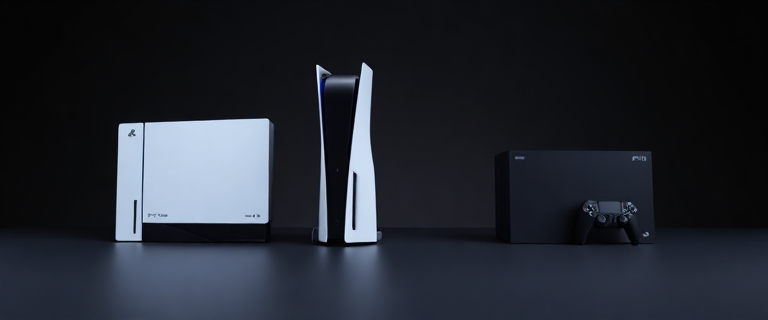
PlayStation 5 Consoles and Ecosystem: A buyer’s guide
This guide is designed to help you evaluate the PlayStation 5 family for a purchase decision. It covers hardware specifications, current pricing and model differentiation, the game library and exclusives, upgrade paths from PS4 and within the PS5 line, and ecosystem compatibility with accessories and services. The aim is to equip you with clear, current information so you can choose the model that fits your needs and setup.
Model lineup and current pricing
The PlayStation 5 family currently comprises several form factors, each with its own storage configuration and media options. Prices shown here reflect what Sony lists on its official pages and are representative of typical retail pricing. In practice, pricing can vary by region and retailer, and bundles may affect the effective value of a given model.
| Model | Price (USD) | Storage | Disc Drive | Best For |
|---|---|---|---|---|
| PS5 Disc Edition (1TB) | $649 | 1TB internal SSD | Ultra HD Blu-ray disc drive | Players who want physical discs and Blu-ray media |
| PS5 Digital Edition (825GB) | $599 | 825GB usable SSD | No disc drive | Digital-only play, with online store access and downloads |
| PS5 Pro | $899 | 2TB internal SSD | Disc drive not included | 4K/120Hz enthusiasts and power users seeking higher performance |
Note: The prices above reflect commonly cited official pricing. Sony’s site has historically listed the Disc Edition at 649 USD, the Digital Edition at 599 USD, and the Pro at 899 USD, though regional variations and bundles are common. A later pricing environment has included inflation-driven adjustments in some markets, so verify current figures on your region’s Sony site or trusted retailers before purchasing.
Which PS5 should you buy? The Disc Edition is generally the best option if you value physical media, resale, and a built-in 1TB SSD in a single package. The Digital Edition serves players who mainly buy and download games and want a lower upfront cost, though its 825GB usable storage is a practical limit for large digital libraries. The PS5 Pro targets enthusiasts with high-end displays (4K/120Hz) and a desire for more headroom in demanding titles; it’s a premium choice and best for those who benefit from the extra performance, not casual players.
Must-play PS5 exclusives and standout software
The PS5 lineup is anchored by first‑party studios delivering experiences that leverage the console’s capabilities. Below is a curated set of must‑play PS5 exclusives and landmark titles that have defined the platform’s early to mid generation. These picks illustrate how the hardware enables advanced visuals, fast loading, and immersive gameplay, while showcasing the library’s breadth. Note that the ecosystem also includes strong multi‑platform releases and cross‑gen titles, but exclusives often drive platform choice for many players.
Notable exclusives and essential PS5 experiences include Spider‑Man 2, Marvel’s Wolverine, Ratchet & Clank: Rift Apart, Demon’s Souls, Astro’s Playroom, Ghost of Tsushima: Director’s Cut, Horizon Forbidden West (PS4/PS5), Gran Turismo 7, God of War Ragnarok, Returnal, and Deathloop (timed exclusivity on PS5). These titles demonstrate what the PS5 ecosystem can deliver in terms of performance, immersion, and exclusive storytelling. In addition, PlayStation Studios and partner developers have continued to expand the catalog with both new and upgraded PS5 versions of existing titles.
Why this matters: exclusives demonstrate the platform’s value and demonstrate what makes a PS5 purchase compelling beyond pure hardware specs. For readers deciding between Xbox Series or PlayStation 5, the strength and timing of first‑party titles can tilt the balance as much as hardware differences.
Key hardware highlights and what they mean for you
The PlayStation 5 is built around a custom AMD system that combines CPU and GPU performance with ultra-fast storage. The CPU is an eight‑core Zen 2 design, and the GPU uses RDNA 2 architecture to deliver 4K gameplay at up to 120 frames per second with hardware‑accelerated ray tracing. This combination enables high‑fidelity visuals with rapid data streaming—a core reason for the console’s fast load times and immersive environments.
The console ships with 16 GB of GDDR6 memory, connected on a wide 256‑bit interface, designed to balance CPU, GPU, and system tasks. A Tempest Engine handles audio processing to produce spatial sound across hundreds of sources, enhancing immersion even when you’re using standard speakers or headphones. The drive system centers on a high‑speed internal SSD with 5.5 GB/s raw bandwidth and a decompression unit capable of several gigabytes per second, which supports the rapid texture streaming and loading that define modern PS5 games.
Storage architecture and expandability
The PS5 includes 825 GB of built‑in solid‑state storage, of which about 667 GB is available to the user for game installs. The flash memory and controller are soldered to the motherboard, providing high bandwidth and fast access. An internal M.2 slot accepts user‑installed NVMe SSDs up to 8 TB, expanding the potential storage for PS5 games. System updates added this M.2 support in September 2021. Note that PCIe Gen3 and older SSDs are not supported for the PS5’s internal storage expansion.
External USB drives (up to 8 TB) are supported, but PS5 games cannot be played directly from USB storage; they must be moved to internal or an installed M.2 SSD to run. PS4 games can be stored and played from an external drive, but PS5 titles must reside on the console’s internal or M.2 storage to run.
The standard (disc) model includes an Ultra HD Blu‑ray drive capable of reading Ultra HD Blu‑ray discs, Blu‑ray discs, and DVDs. It does not read CDs. A note on disc capacity: PS5 game discs can hold up to 100 GB of data, roughly double the capacity of many PS4 game discs, which helps with larger PS5 installations and updates.
Form factor and revisions at a glance
The PS5’s original launch form factor is a tall, two‑tone chassis designed for airflow and cooling, with a choice to stand vertically or lay flat. The front and rear ports include a mix of USB and connectivity options, while the case design emphasizes heat management and quiet operation. Later hardware revisions reduced weight and refined the heatsink, while a second generation slim form factor (the PS5 Slim) arrived in late 2023, offering a smaller footprint and slightly adjusted USB ports. The Slim Digital Edition later adopted 825 GB of internal storage. A PlayStation 5 Pro model was released on November 7, 2024, adding a faster GPU, AI‑driven upscaling, two terabytes of internal storage, and other enhancements, while omitting an optical disc drive and a vertical stand (which can be purchased separately).
Size and weight evolved slightly across revisions. The launch Disc Edition stood around 390 mm tall when vertical, with the Slim‑design revisions delivering a more compact footprint. The Slim Digital Edition’s internal storage was reduced to 825 GB in a later European/overseas update, while the standard model kept 1 TB in earlier pages. These details matter for space planning in a living room or home theater setup, especially if you’re integrating cabinets, stands, or wall mounting.
PS5 Pro: Is it worth the premium?
The PS5 Pro represents a significant performance uplift over the base PS5. Industry analysis and official announcements describe a GPU that is substantially faster (around 45% higher performance in some configurations) and introduce PlayStation Spectral Super Resolution (PSSR) for improved image quality. The Pro ships with a larger internal SSD (2 TB) and targets 4K gaming at 60 frames per second in many titles, with support for higher-end output such as 4K/120 Hz on capable displays. It also adds faster networking support (Wi‑Fi 7) and 8K output in some scenarios, along with a Game Boost feature that can enhance certain PS4 games on the Pro.
Critics have challenged the value of the Pro’s premium price. Coverage from mainstream outlets described the price as steep and the upgrades as modest relative to the cost, particularly given broader economic pressures. Sony’s leadership has framed the Pro as aimed at hardcore enthusiasts willing to pay more for peak performance, especially for owners with 4K/120 Hz TVs and a desire for extended longevity of top-tier visuals. The Pro’s higher price point has provoked varied reactions, with some outlets skeptical about whether the incremental gains justify the cost for all players. The key takeaway: the Pro is best for those who will specifically benefit from the higher performance—not a universal upgrade for every PS5 owner.
Important guidance for readers: if you own a compatible 4K/120 Hz display and want the strongest possible visuals and future‑proofing in a PS5‑native title, the Pro is the better choice. If you mainly play at 1080p or don’t require the top possible settings, a base PS5 or the Digital Edition will likely meet your needs at a lower price.
Backward compatibility and known exceptions
PlayStation 5 is designed to be backward compatible with more than 99 percent of the PS4 game library, and it supports PS4 and PS4 Pro titles with generally improved loading times and, in some cases, better performance. Some PS4 titles, however, may not be compatible or may require updates from the publisher. As of late 2021, a small list of PS4 games remained incompatible, and Sony has periodically updated this status with developer patches. The official list has included titles such as Afro Samurai 2: Revenge of Kuma Volume One, Hitman Go: Definitive Edition, Just Deal With It!, Robinson: The Journey, Shadwen, and We Sing. The Playroom is also not supported on PS5. In addition, some older PlayStation console games are accessible via PlayStation Plus streaming, and the PS5’s Create menu replaces the old Share menu for capturing media.
For readers who want exact accounting: the list of incompatible titles has changed over time as developers released compatibility updates. The PlayStation site provides the current compatibility status, and there are community-maintained references noting ongoing updates. If you have a specific PS4 catalog, it’s worth checking the official compatibility list to confirm whether those titles run on PS5 without issue.
PSVR2 and the broader ecosystem
PSVR2 brings a next-generation virtual reality experience to PS5, featuring high‑resolution OLED panels, eye tracking, advanced tracking with inside‑out cameras, and new Sense controllers. The headset launched with several marquee titles and has been praised for its tech, but coverage from some outlets notes mixed opinions on ongoing support, library breadth, and practical depth a year after launch. On the accessories front, PlayStation Portal (a streaming handheld) and DualSense Edge offer expanded control options, while continue to support standard PS5 peripherals like DualSense controllers, headsets, and external storage accessories. The ecosystem also includes PlayStation Plus, PlayStation Direct, and ongoing system software updates that expand features such as Discord voice chat integration, improved accessibility features, and expanded storage options over time.
Reader takeaway: when evaluating PSVR2 or other ecosystem choices, balance the hardware’s capabilities with the breadth and trajectory of software support and ongoing platform enhancements.
System software and updates that shape daily use
The PS5 user interface is designed to be fast and informative, with a Control Center that provides quick access to recent activities, game progress, and social features. Over time, Sony has released major system updates that expand storage options, improve accessibility, and enhance multimedia and social features. Notable updates over the years include expanded external storage support via USB, the introduction of M.2 SSD expansion, Game Trials, and ongoing refinements to audio, social, and party features. In 2023 and beyond, Sony introduced Discord voice chat integration, and subsequent updates expanded 3D audio profile customization, enhanced Welcome Hub features, and multi‑device controller pairing. The software roadmap also includes periodic improvements to trophies, parental controls, and the overall user experience to keep the PS5 responsive and approachable for new users and veterans alike.
For new owners, a practical takeaway is to review the setup checklist in your console’s initial onboarding, confirm your online account connections (Discord, PlayStation Network, and device pairing), and make sure you understand the storage layout (internal SSD, M.2 expansion, and external USB options) before filling the drive with games.
Games and the growing library
All PS5 consoles ship with Astro’s Playroom, a demonstration of the DualSense controller’s capabilities. The PS5 library includes a mix of exclusive titles and cross‑gen releases that take advantage of the platform’s hardware, with backward compatibility enabling access to many PS4 games. As with any console, new games and driver updates continue to shape the software ecosystem. The PS5 family has seen rapid growth in the exclusive and multi‑platform catalog since launch, and the library continues to evolve with ongoing development from Sony and partner studios.
Important context for readers tracking the platform’s software trajectory: while some early cross‑gen releases appeared alongside true PS5 exclusives, Sony has signaled a continued focus on leveraging new hardware features in first‑party titles, alongside opportunities for free and paid upgrades where publishers offer them.
Compatibility details and practical notes
PS5 backward compatibility is a core selling point. Most PS4 titles run on PS5, and many PS4 games benefit from faster loading and smoother frame rates thanks to the PS5’s SSD and improved hardware. When you upgrade, save data can be transferred via cloud storage, USB storage, or local transfer. If you own a large PS4 library, you should expect most of those titles to function on PS5, with a small set of exceptions and occasional publisher‑driven updates that improve compatibility over time.
Commercially, the PS5 family has undergone several revisions, including Slim models and a Pro variant, with ongoing adjustments to storage and connectivity. The Slim Digital Edition’s 825 GB storage figure has been noted in multiple regions, while the standard version’s 1 TB storage model remained in various markets after the revisions. This is an important detail for readers who plan to store many PS5 titles locally, as it affects how quickly you’ll fill the drive and when you’ll want to add expansion storage.
Controversy and policy developments impacting ownership
A major policy development affecting the PS5 ecosystem arose around 2028, when Sony announced that newly released games would be digital‑only on PlayStation. This transition sparked significant backlash and legal challenges from consumer groups, lawmakers, and others concerned about game ownership and preservation. Sony indicated it would handle the transition cautiously. For readers, this debate matters because it touches on ownership rights, resale opportunities, and how game libraries are managed as the platform evolves.
Balanced view on PSVR2 and related technologies
PSVR2 has introduced a next‑generation VR experience for PS5, offering high‑resolution visuals, eye tracking, and inside‑out tracking. Critics, however, have highlighted that continued, broad software support and a robust content pipeline are essential for a mature VR platform. Readers evaluating VR upgrades should weigh the hardware’s capabilities against the ongoing software support and the breadth of the game catalog over time.
Discord integration and social features
Discord integration has been added in system software updates, enabling seamless voice chat between PlayStation and Discord accounts. This is a notable differentiator for players who rely on cross‑platform voice chat and social coordination. If you value cross‑service social features, this is a meaningful upgrade in the PS5 software ecosystem.
Practical guidance: choosing the right PS5 setup
To summarize decision points: if your library is largely physical media or you value disc-based ownership and future disc‑driven upgrades, the Disc Edition remains the flexible all‑rounder. If you prefer a digital‑only approach and want to minimize upfront hardware costs, the Digital Edition is appealing, provided you have reliable internet and enough digital storage. If you crave the highest possible visuals and future‑proofing for demanding titles on a capable display, the PS5 Pro offers a pathway to enhanced performance, at a premium price.
Practical takeaway: pricing, storage capacity, and whether you play mainly on a 4K/120 Hz display should drive your choice. For most buyers, the Disc Edition delivers a strong balance of performance, media flexibility, and library access; Digital Edition suits those committed to a digital catalog; and Pro is best for enthusiasts who will exploit peak rendering and advanced features on a high-end setup.