
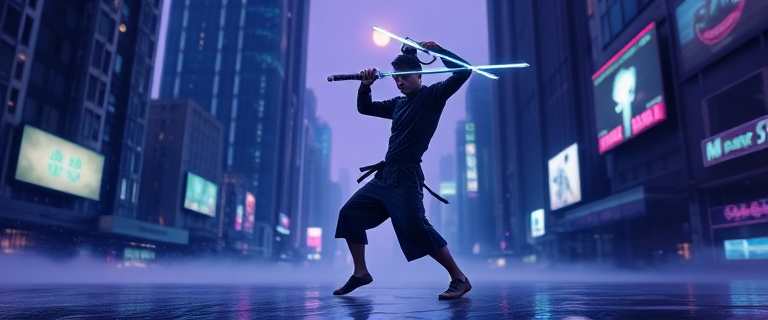
Phantom Blade Zero: Release Date, Editions, Platforms, and Pre-Order Details
Phantom Blade Zero is a dark wuxia action RPG powered by Unreal Engine 5, developed and published by Chinese studio S-Game. The game follows Soul, a swordsman with a tainted heart and only sixty-six days left to live, as he unravels a conspiracy that threatens the martial world. It blends fast-paced kung fu combat with a punk-infused aesthetic called kungfupunk, and its action is grounded in authentic martial arts performance, motion capture, and a distinctive soundtrack built from traditional Chinese instruments mixed with modern styles. The game launched for PC (Windows) and PlayStation 5 on 29 October 2026, with PS5 physical editions planned for 2027. The release also marked a notable milestone for S-Game, which positioned Phantom Blade Zero as a flagship title intended to showcase Chinese action game design on the global stage.
In addition to its core action, the title emphasizes a fully realized world built around kungfu culture, with a roster of more than 30 primary weapons and 20+ unique Phantom Edges. Combat emphasizes fast, fluid exchanges, parries, blocks, and a ghoststep maneuver that positions the player behind enemies after successful parries or evasions. The game features a semi-open world connected by non-linear progression, multiple paths to quests, and a range of difficulty modes designed to challenge players at different skill levels. Distinctive modes include Wayfarer, Pathbreaker, Hellwalker, and 66 Days, the latter introducing a death counter and permadeath under certain conditions. A New Game Plus mode adds further replayability, and the game supports a variety of accessibility and quality-of-life options as described on the PS5 feature page.
Release timeline and final date
The game was originally announced with a September 9, 2026 release date during The Game Awards in December 2025. In June 2026, S-Game moved the release to October 29, 2026 to provide additional time to polish the product and improve overall quality. The October 29 date is the official and final release date. PS5 physical discs are planned for 2027, though there is discussion in press coverage about a special catch related to the physical release that requires verification before publication. For readers prioritizing platform availability, Phantom Blade Zero is a PS5 console exclusive in terms of its first release window, with Windows (PC) available day one and no Xbox version announced at this time.
Note also that a PC day-one release accompanies the PS5 launch, ensuring Windows players can access the game on launch day. The 2027 window for a PS5 physical edition reflects the ongoing strategy to expand distribution beyond digital storefronts, while the final digital release date remains 29 October 2026.
Platform availability and physical edition notes
Phantom Blade Zero releases on PC (Windows) and PlayStation 5 on 29 October 2026. The game is described as a PS5 console exclusive in terms of its initial platform strategy, with a day-one PC release. Xbox has not been announced as a supported platform. A PS5 physical edition is planned for 2027. Reports around the physical edition mention a catch, which has not been fully verified in this article; readers should watch official communications for details.
Editions, pre-orders, and pricing
Pre-order bonuses are available and unlock content early. These bonuses include an accessory called Treasure Basin, which increases Remnant Dust drop rate by 10%, and an exclusive Legacy appearance. An early unlock is available, and the same content can also be earned through in-game progression. The Deluxe Edition includes two exclusive appearances—Wulin Legend and Blood-Steel Form—as well as a Digital Artbook and Digital Soundtrack (OST). In addition, players who purchase the Deluxe Edition also receive the standard pre-order bonuses.
The standard edition is priced at $60, though the price of the Deluxe Edition has not been verified in this article. When considering value, remember that pre-order bonuses can be unlocked in-game, which may influence the decision to upgrade to Deluxe depending on the confirmed Deluxe pricing. A final recommendation on Standard versus Deluxe will depend on confirmed pricing and the worth of the Deluxe extras relative to their in-game utility.
Is Phantom Blade Zero a Soulslike?
The game is not marketed as a traditional Soulslike. It emphasizes high-speed kungfu action, parry and ghoststep mechanics, and adjustable difficulty and combat options rather than a stamina-focused, Soulslike design. This aligns with statements from press coverage describing Phantom Blade Zero as distinct from Soulslike games, while still offering significant challenge and depth through its combat systems and difficulty modes.
PS5 features and accessibility
Phantom Blade Zero leverages PS5 hardware features to enrich combat and immersion. Players can feel weapon weight through the DualSense adaptive triggers and experience responsive haptics during blade clashes and heavy strikes. Tempest 3D AudioTech helps players locate threats through spatial audio, with enhanced realism from 3D audio for dialogue and effects. The game supports fully subtitled spoken dialogue and provides a range of accessibility options.
Accessibility and QoL options highlighted by the PS5 page include Adjustable Difficulty (Basic), Control Reminders, Tutorial Reminders, Game Pausing, and Manual Saving. Subtitles are available with advanced options, and players can pause the game and save progress manually even offline. The combination of these features makes the game more approachable for players with different experience levels, playing times, or accessibility needs. In addition, the localization scope includes a broad set of languages, which will be helpful for non-English players.
For players who seek a thorough accessibility and QoL checklist, Phantom Blade Zero provides a practical set of on-PS5 options: adjustable difficulty, control and tutorial reminders for on-demand guidance, offline pausing, manual saving, and full subtitling, all designed to improve comfort during long sessions or in challenging sections.
Cast and music
The game features English and Chinese voice acting. Roger Craig Smith voices the main character Soul in English, while Donnie Yen voices the character Mó Yuan in English and performed both facial and motion capture for the role. The in-game cast also includes Jia Xiongkai (Yucheng) as Soul and Zhang Jinzhi as Mu Xiaokui, with additional cast members helping to realize the character lineup. The music is composed by Caisheng Bo, who blends traditional Chinese instruments with modern genres to capture the mood and emotional depth of the story. The soundtrack includes thematic melodies for Soul, Mu Xiaokui, and Zuo Shang, all rooted in a shared musical framework to achieve cohesion across the score.
Notably, a theme song titled Heart Lake features Jane Zhang on vocals, contributing to Phantom Blade Zero’s distinctive musical identity that fuses classical Chinese instrumentation with contemporary sound design.
Language options
Official localization covers a broad range of languages. The PS5 page lists Chinese (Simplified), Chinese (Traditional), English, French (France), German, Italian, Japanese, Korean, Portuguese (Brazil), Portuguese (Portugal), Russian, Spanish (Spain), Spanish (Mexico), Thai, and Vietnamese as supported languages for interface and subtitles. This broad localization helps explain the global reach of the title and informs readers about accessibility for non-English players. For full details, readers should consult the official page listing all language options.
Gameplay snapshot
Phantom Blade Zero is a third-person wuxia action RPG with a semi-open world and fast, cinematic combat. Soul can wield two primary weapons and two secondary weapons, with blades as his primary weapons and Phantom Edges as secondary weapons, including cannons, lances, axes, hammers, and more. Weapon switching has a cooldown but fully restores sha-chi, the combat resource used for blocking and performing sha-chi attacks. Defensive options include blocks, parries, and dodges, with color-coded telegraphs signaling when certain enemy attacks cannot be fully countered. A ghoststep lets Soul reposition behind enemies after successful parries or dodge sequences. A skill tree governs character progression, and weapons can be upgraded or reforged to recoup invested materials. Six equipped accessories provide further stat boosts and bonuses.
The world is semi-open and interconnected, with several areas accessible only after acquiring specific weapons or completing certain routes. Main quests drive the central narrative, while side quests explore other characters’ stories. The narrative supports multiple endings, encouraging replayability. Difficulty options include Wayfarer, Pathbreaker, Hellwalker, and 66 Days, the latter incorporating permadeath via a death counter that starts at 66 and decreases with each death. New Game Plus is available after finishing the main story.
World, setting, and lore hooks
Phantom Blade Zero is framed as a wuxia ARPG with kungfupunk identity, blending traditional martial arts with steampunk and cyberpunk influences. It is set in the Phantom World, drawing on Chinese cultural motifs and martial traditions. The game maps to a concept of jianghu, the martial underworld, and the wulin, the guardian martial community bound by codes. The world design emphasizes authenticity through motion capture by martial artists and collaboration with traditional martial arts schools, and it draws on real-world locations in China for its architecture and atmosphere. The action design seeks to capture the fluidity of kungfu, with fast movement, cinematic finishers, and camera work that evokes martial-arts cinema.
In addition to combat, the game explores a ensemble of characters and mythic elements, including Memory Flowers, Transcension, and the Lady of the Veil, which are referenced in official materials as part of the Phantom World’s lore. The game’s music, instrumentation, and thematic motifs reinforce its cultural identity and emotional storytelling, contributing to a distinctive audio-visual package that supports the action-forward experience.
Development overview
S-Game developed Phantom Blade Zero with a focus on delivering a large-scale PC and console title inspired by Chinese martial arts cinema. The project used Unreal Engine 5 and relied on a global collaboration, including motion capture led by a team of martial arts professionals and studios across China and the United States. Donnie Yen contributed as a creative consultant and provided motion capture work for Mó Yuan, with English voice and performance capture also performed for the character. The game emphasizes authenticity in its martial arts choreography, weapon design, and environmental art, blending traditional weapons with unique mechanics to keep every tool novel to use.
Liang, the studio head, discussed how the project evolved from its early 2D concepts to a fully realized 3D title, and how external factors, including the reception of other Chinese-made action games, helped shift toward a more ambitious scope. Development milestones included a shift to Unreal Engine 5, strategic partnerships, and a pivot to a full-blown single-player experience designed to captivate players worldwide. The team emphasized a balance between authenticity and accessibility, striving to present kungfu in a way that resonates with global audiences while preserving its cultural roots.
Reception and early performance (high-level)
Upon release, Phantom Blade Zero enjoyed strong initial reception and competitive performance indicators. Steam saw a high number of concurrent players on launch day, and the game reported substantial sales and strong critic scores on major aggregators. Early reporting highlighted positive reactions to the game’s combat tempo, visual style, and production values, with critics praising its ambition and the quality of its execution. A significant portion of coverage also noted the game’s distinctive blend of kungfu aesthetics with action RPG mechanics, and its ambition to stand out among contemporary releases from both Western and Asian developers.
Notes and further information
For readers seeking deeper insights, the following contextual elements are worth noting: Phantom Blade Zero builds on a broader Phantom Blade franchise with a lineage tracing back to Rainblood, though it presents a standalone experience with a self-contained narrative. Donnie Yen’s involvement as Mó Yuan extends beyond consultancy, including English voice and performance capture. The game’s music themes are anchored by Caisheng Bo’s score, with a dedicated vocal theme Heart Lake performed by Jane Zhang. The title’s language support is extensive, signaling a global release strategy. Finally, the 66 Days permadeath mode has drawn commentary for its challenging approach and its impact on how players perceive risk and progression during high-stakes playthroughs.
Accolades and awards (summary)
Accolades cited in coverage include Phenomenon of the Year at the UCG Game Awards 2024, Most Anticipated Game at the Ultra Game Awards 2025, and an ongoing nomination in The Golden Joystick Awards’ Ultimate Game of the Year category. These recognitions provide context for the game’s anticipation and reception within the industry, though appraisal of these awards should be balanced with sales and critical scores when evaluating overall impact.
See also
External references and related materials are available on the Phantom Blade Zero official site and its dedicated pages on major outlets. The game’s engine, platforms, and release details are frequently updated as new information becomes available, so readers are encouraged to check official communications for the latest confirmation on platform availability, pricing, and post-launch content plans.
Notes
Qiwei Liang is known as Soulframe in English-language communications, and the project sometimes references Soulframe Liang or Soulframe as well. The Phantom Blade Zero project is stylized in various materials as Phantom Blade Ø, with the Chinese title 影之刃零 (Yǐngzhīrèn Líng). Donnie Yen contributed as a motion capture and performance artist in addition to consultancy. The game is positioned as a standalone entry that does not require knowledge of prior Phantom Blade/Rainblood titles, according to developer communications.