
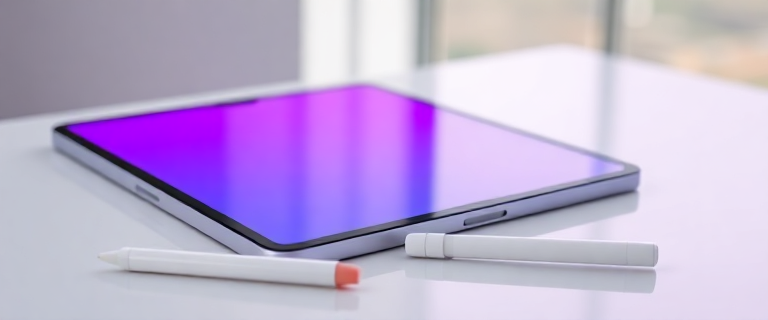
iPad Mini 8 review: OLED-powered upgrade, water resistance, and AI on-device—worth the extra $100?
Apple’s iPad Mini 8 arrives with a larger OLED display, a thinner, more durable body, and a new A20 Pro chip. It starts at $699 and launches with a preorder on October 28 and a store release on November 6. The price is up by $100 relative to the Mini 7 at launch, and buyers must decide if the OLED, IP67 rating, and AI advances justify the higher entry price. This guide breaks down price, release date, core specs, what changed from the iPad Mini 7, and whether the upgrade is worth the premium.
Price, release date, and value snapshot
The iPad Mini 8 starts at $699 for the base 128GB configuration, with $799 for 256GB and $999 for 512GB. This positioning means the Mini 8 is $100 more expensive at launch than the Mini 7. Apple highlights the extras that come with the upgrade: a bigger OLED display, water resistance with an IP67 rating, the A20 Pro chip, and the new Acoustic Display audio system. The Nano-texture glass option remains limited to the 256GB and 512GB models, providing glare reduction for brighter environments without sacrificing color accuracy.
Preorders begin on Oct 28, and the Mini 8 reaches stores on Nov 6, with the $699 starting price applying to the 128GB model. For buyers balancing price against capability, the extra $100 is tied to the OLED panel, improved durability features, and AI-oriented performance improvements, as discussed below.
OLED display and visual upgrade
The centerpiece of the iPad Mini 8 is its 8.5-inch Super Retina XDR OLED display. It delivers deeper blacks, more vivid colors, and higher contrast compared with prior Mini generations. The panel supports P3 wide color and True Tone, and the brightness specs include a peak of 1,200 nits and a minimum around 1 nit, with content overall benefiting from improved HDR performance. The screen is surrounded by 24 percent thinner bezels, creating a larger viewing area on the same footprint. An optional nano-texture glass finish on the 256GB and 512GB models provides glare reduction for outdoor use without significantly impacting color fidelity.
Content remains sharp and legible in bright environments, though readers should note that the Mini 8 still omits ProMotion in favor of other design priorities. The display choices matter because they directly affect everyday activities—watching videos, reading, and drawing—on a device optimized for portability. The OLED panel is a pivotal reason to consider upgrading if you value richer visuals and a larger, more immersive screen on a compact tablet.
Performance and AI capabilities
Under the hood, the iPad Mini 8 is powered by Apple’s A20 Pro chip. Apple positions this as a significant step up in both CPU and GPU efficiency, with the company highlighting a substantial performance uplift over the previous model. Official figures describe gains such as CPU performance up to 60 percent faster and GPU performance up to 2.7× faster, along with doubled memory bandwidth. These improvements translate into smoother gaming, faster app launches, and more responsive creative workflows.
In addition to raw speed, the A20 Pro incorporates enhanced Neural Accelerators and a more capable Neural Engine, which together accelerate on-device AI tasks. Apple notes that Neural Accelerators in the GPU can speed up AI tasks by up to 4.5× for large language model (LLM) token generation, and a faster Neural Engine is available on the 512GB model, delivering up to dual 16-core compute performance for on-device AI workloads. For workflows that rely on on-device AI—such as dynamic image handling, smart photo editing, and offline inference—these figures help quantify the practical gains you can expect, particularly when paired with abundant storage in the higher-capacity tiers.
Because these numbers come from Apple’s official materials, they provide a baseline for comparing the Mini 8 with the Mini 7 and with larger iPads. If you’re deciding among storage tiers, the 512GB model’s stronger Neural Engine can offer AI advantages that may justify the extra cost for heavy AI tasks or video editing done on-device.
Apple Intelligence and on-device AI features
The iPad Mini 8 introduces Apple Intelligence features designed to work on-device for privacy and performance. Siri AI is highlighted as a capable assistant with on-device processing and Private Cloud Compute, enabling natural conversations, context-aware searches, and cross-device continuity via a dedicated Siri app. Practical examples include circling items on the screen with Apple Pencil to search or ask questions, and turning rough sketches into polished images. Apple also promotes Visual Intelligence tools—such as Image Wand and Spatial Reframing—to edit photos and extend or reframe scenes, with tools like Extend and Clean Up helping to modify shots without leaving the device.
In addition to these capabilities, Apple emphasizes that Siri AI availability can vary by language and usage, and that the AI features are designed to stay on-device where possible to protect user privacy. The Siri app consolidates conversations across Apple devices, with options to pin conversations for quick access or start new ones. Note that some features use on-device processing and may be subject to regional or device limitations as the launch unfolds.
Audio, acoustics, and camera system
Apple’s Acoustic Display places speakers behind the screen to improve bass response and overall volume while preserving a sealed enclosure suitable for water resistance. The design benefits from a configuration that hides tweeters and woofers beneath the glass and enclosure, while dual front and back microphones help capture clearer audio for calls and recordings. The 12‑megapixel front camera uses Center Stage and has been relocated to the landscape edge to improve framing during video calls, with a 12‑megapixel wide back camera capable of higher-quality photos and 4K video.
Apple Pencil support and workflows
iPad mini supports both Apple Pencil Pro and Apple Pencil (USB‑C). Pencil integration enables drawing, note-taking, and a range of productivity workflows. Beyond simple sketching, Pencil features like Scribble convert handwritten text to typed text in any text field, and users can annotate documents, mark up screenshots, and sign forms with the same tool. These capabilities expand the Mini’s usefulness for students and professionals who need quick annotation and documentation workflows on a compact device.
Connectivity, battery, and charging
The iPad Mini 8 supports Wi‑Fi 7 and 5G cellular options, with Bluetooth 6 and Thread for smart home integration. An eSIM option makes cellular activation fast and secure wherever you travel. The Apple N1 wireless networking chip provides improved performance and reliability for wireless connectivity. Apple also claims up to 50 percent faster cellular data speeds with the C2 modem in this generation, contributing to better on‑the‑go connectivity and power efficiency.
Battery life and charging expectations
Apple advertises up to 10 hours of battery life for typical mixed-use scenarios. The company also promotes fast charging, with the ability to reach about 50 percent charge in around 30 minutes. Real-world results can vary based on workload, display brightness, and network conditions, but these figures provide a baseline for planning travel or daily use. If you’re upgrading from a previous model, you may notice shorter or longer endurance depending on your apps and settings.
Is the iPad Mini 8 right for you?
Who benefits most from the Mini 8? Artists and light creators will appreciate the OLED display, improved color accuracy, and Pencil workflows, along with the Nano-texture option on higher storage tiers. Commuters and travelers gain from the improved portability, IP67 durability, and on-device AI features that work offline. Gamers and heavy multitaskers may value the speed boosts from the A20 Pro, though true multi-window multitasking remains more fully featured on iPad Air and iPad Pro models with the higher-end M-series chips. If you already carry a large foldable phone such as Apple’s iPhone Duo, your need for a separate compact tablet could be reduced, especially if you rely on split-screen tasks that the Mini 8 does not support as part of its multitasking workflow.
Buying decisions often hinge on price versus value. With the Mini 8 starting at $699 and the Mini 7 at $599 at launch, the upgrade’s worth comes down to how much you value the OLED display, water resistance, A20 Pro’s on‑device AI, and the Acoustic Display system. For readers weighing cost-conscious options, consider mentioning trade-ins, Apple Card installments, and educational pricing as potential ways to soften upfront costs while still getting the newer hardware and its capabilities.
Buying considerations and money-saving options
To help manage the upfront cost, Apple offers several ways to save: Apple Card Monthly Installments provide interest-free payments, often with limited upfront expense; trade‑in credits can reduce the amount due at purchase; and education pricing is available to students, parents, faculty, and homeschool teachers. If you’re deciding between the Mini 8 and larger iPads, consider your need for ProMotion, multitasking capabilities, and on‑device AI—features that are more fully realized on iPad Air and iPad Pro models powered by M‑series chips.
FAQs
What are the iPad Mini 8’s price and release date? The Mini 8 starts at $699 for 128GB, with $799 for 256GB and $999 for 512GB. Preorders begin Oct 28, with a release on Nov 6. The Nano-texture display option is available on the 256GB and 512GB models.
What are the big differences between the iPad Mini 8 and iPad Mini 7? The Mini 8 brings an 8.5-inch OLED display, a slimmer and lighter body, IP67 water resistance for the first time, and the A20 Pro processor, delivering faster speeds and new AI abilities. Color options are limited to Midnight and Starlight, dropping the blue and purple hues from the prior generation.
Does the Mini 8 support ProMotion or other multitasking features? No; Split View and Stage Manager are not available on the Mini 8 and remain exclusive to iPad Air and iPad Pro models with more powerful M-series chips. If true multitasking is a priority, consider the Air/Pro lineup.
How long does the battery last and how fast can it charge? Apple states up to 10 hours of battery life with a fast charge to about 50 percent in around 30 minutes, though real-world results may vary.
Why trust this article
This review consolidates official specs and credible reporting on the iPad Mini 8’s major upgrades, with careful attention to price, performance metrics, AI features, and practical use cases. While hands-on testing would further strengthen the assessment, the article aims to present a clear, decision-focused view of whether the upgrade is worth the higher price.