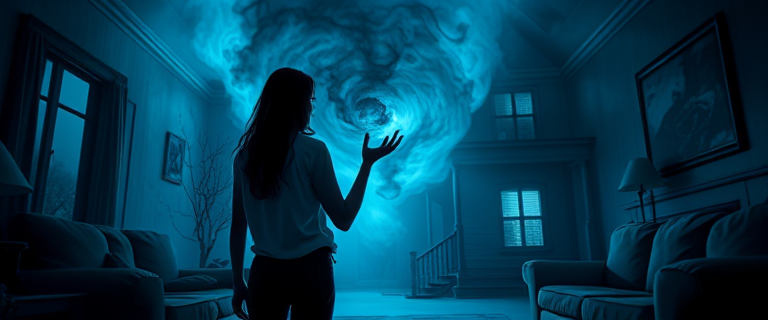
Insidious: Out of the Further arrives as the sixth installment in a franchise that has spent a decade refining supernatural dread. This time, the spotlight shifts to a new protagonist, Gemma, who can physically transport entities from The Further into our world. That twist distinguishing it from its predecessors, which mostly followed families haunted by unseen visitors, reframes the dynamic: the danger now emanates through an active conduit rather than passive possession.
Even more than its protagonist shift, the film positions itself as a prequel, charting events that occur before the 2010 original while broadening the franchise’s mythology. The creative team leans into that dual role, delivering a story that satisfies longtime fans with callbacks and lore expansion, while aiming to stand on its own for newcomers. Whether that balance works depends on what you expect from a contemporary horror movie and what you value in the Insidious universe.
The core premise and the new protagonist
Gemma’s defining trait is her status as a “Courier,” a term the franchise uses for individuals who can astrally project between The Further, a purgatorial realm of lost souls, and the material world. Unlike earlier leads who mainly witnessed haunting, Gemma actively participates in the exchange, bringing entities into reality and risking grave consequences. This inversion of power immediately ramps up tension: the threat isn’t just coming to the family, it’s passing through Gemma into their lives.
From the opening moments, the film establishes this premise with care. We see Gemma experience fragmented visions of The Further, gradually revealing the realm’s rules while shaping her character arc. The film’s trust in the audience—allowing viewers to infer meaning rather than spelling out every rule—offers a refreshing contrast to horror that leans on exposition over atmosphere.
Franchise positioning: prequel framing and production context
Set in the prequel space to 2023’s Insidious: The Red Door, Out of the Further investigates Elise Rainier’s origins and the forces she once battled, rather than pushing forward the Lambert family saga. This framing lets the film operate as both origin story and standalone narrative, though balancing those goals creates some narrative tension.
The production roster reads like a who’s who in modern horror: Blumhouse Productions and Atomic Monster return as producers, with James Wan and Leigh Whannell again involved in producer roles. Jacob Chase, directing his feature debut, collaborates with David Leslie Johnson-McGoldrick on the screenplay. Budgeted at $18 million, the film sits comfortably within Blumhouse’s usual range, a strategic choice that has previously yielded solid returns for this brand. The franchise’s track record—illustrated by Insidious: The Red Door, which grossed over $100 million worldwide on a similar budget—signals strong commercial potential even when critical reception is mixed.
Critics and audiences: what the film sparked and why
Reception to Insidious: Out of the Further reveals a movie that knows its aims and largely sticks to them. Critics consistently applaud its tension-building and its willingness to lean into the franchise’s established mythology, even as they note its reliance on familiar formulas and occasional tonal missteps. In short, it delivers what its core audience expects, which can be a strength or a limitation depending on one’s view of franchise entries.
Most reviews agree the film sustains dread rather than leaning heavily on jump scares, though some moments blur the line between effective horror and unintentional comedy. The humor—especially in Gemma’s exchanges with Elise—often lands as tonal inconsistency, swinging between levity and oppressive mood. That oscillation becomes a defining feature for many viewers: entertaining for some, distracting for others.
Overall reception and perceived strengths
Positive takes tend to highlight three pillars: the film’s disciplined use of suspense, standout set pieces that rank among the series’ best, and a deliberate embrace of fan service that rewards longtime followers. The pillow fort sequence, in particular, has emerged as a standout moment—an exercise in building dread through familiar, intimate imagery before tipping into supernatural horror. These elements demonstrate the film’s strength: creating fear through atmosphere and grounded, relatable settings rather than relying solely on shocks.
Performances receive strong notice, especially Amelia Eve as Gemma. Her evolution from an initially overwhelmed participant to a capable, if reluctant, agent of the supernatural provides the emotional center the increasingly bizarre events need. Lin Shaye’s return as Elise Rainier ties the film to franchise continuity, offering guidance and nostalgia for long-time fans while anchoring the story’s stakes.
Common criticisms and caveats
Where the film stumbles—according to many critics—centers on predictability and a third act that sometimes feels overfamiliar. Several reviews argue that explanations and mythological notes come too late or feel like a patch for underdeveloped ideas. Some observers worry that attempts to balance humor with horror tip into parody during certain character interactions, undermining the desired tension.
Another frequent point of contention is the film’s constrained geography and action. With most events confined to one household and its immediate environs, the visual variety can feel limited, which in turn affects the perceived escalation of threats. The ending, while thematically coherent, leaves several plot threads unresolved, which some readers interpret as narrative laziness rather than deliberate ambiguity.
Production context, crew, and technical frame
The film’s technical approach mirrors its modest ambitions. Shot on an $18 million budget and running 106 minutes, Out of the Further prioritizes atmosphere and character work over spectacle, relying on practical effects and restrained cinematography to generate unease. This choice aligns with the franchise’s history, where psychological horror frequently supersedes visual excess.
Distribution was handled by Sony Pictures Releasing, with a mid-August release designed to maximize the summer horror audience while avoiding top-tier competition. The August 18 premiere preceded the August 21 wide release, a schedule that allowed critics a brief window to weigh in before audiences flocked to theaters. Worldwide gross reached $60.1 million, a respectable result that signals healthy profitability without breaking franchise records.
Key creative team and principal contributors
Jacob Chase makes his directing debut with this installment, bringing a fresh sensibility to the franchise while working from a screenplay by David Leslie Johnson-McGoldrick. The producer lineup brings together James Wan and Leigh Whannell, who return to their original producer roles, with Jason Blum, Oren Peli, and others who have shaped the series from its inception. This blend of veteran franchise knowledge and new creative energy frames both the film’s strengths and its occasional missteps.
Budget, runtime, and distribution specifics
Blumhouse’s proven model—modest budgets delivering solid returns—guides Out of the Further. The 106-minute runtime keeps the storytelling lean, though some critics feel the third act could benefit from deeper development to justify its conclusions. Sony’s distribution strategy aimed to capitalize on summer horror demand, avoiding direct clashes with larger tentpoles and supporting a steady box office return.
Financial performance and franchise scale
The film’s worldwide gross of $60.1 million on an $18 million budget represents a strong return on investment, especially in a market where many horror titles struggle to break even. Domestic performance of $25.1 million places it firmly in the profitable category, even if it doesn’t redefine the franchise’s box office ceiling. Across six films, the Insidious brand has kept a steady audience, contributing to a cumulative global box office of about $740 million and underscoring the franchise’s enduring viability as a horror property.
The franchise-wide trajectory—especially compared to Insidious: The Red Door’s >$100 million worldwide on a similar budget—illustrates both continued demand and the impact of individual film choices. Out of the Further’ s status as a prequel and its focus on lore expansion rather than a direct continuation helps explain why the film remains commercially viable even as critics split on its artistic ambitions.
Global box office and budget context
Placed in context, the $60.1 million worldwide tally sits below the franchise’s top performers but above many contemporaries, reinforcing the brand’s resilience. The Red Door’s higher global total and the original’s near-$100 million domestic performance anchor the series’ historical highs, while the current entry demonstrates steady, if not spectacular, revenue generation within Blumhouse’s economical horror ecosystem.
Domestic and opening performance
With a domestic total of $25.1 million and an opening weekend that contributed to that figure, Out of the Further signals a cautious but solid theatrical presence. The trajectory suggests audiences approached the film with measured enthusiasm rather than overwhelming enthusiasm, a pattern consistent with a sixth installment that prioritizes atmosphere and continuity over audacious reinvention.
Franchise-wide impact and longevity
As the sixth film in the series, Out of the Further reinforces the Insidious brand’s longevity. Its prequel positioning expands the chronology while preserving the core lore, giving the franchise room to evolve without abandoning established mythology. This careful balance—between innovation and tradition—helps explain why the series continues to attract attention and why future atmospheric, lore-driven installments remain plausible within this universe.
The Further, lore terms, and key concepts
The Insidious universe runs on a defined logic that sets it apart from other haunted-house fantasies. Central is The Further, a purgatorial realm where lost souls reside and from which some entities seek entry into the material world. Couriers—like Gemma—are characters who can travel between The Further and the everyday world, capable of observation or direct transportation of entities, depending on their level of control and consequence.
Gemma’s status as a Courier marks a major narrative innovation: she becomes an active conduit for supernatural events, not merely a bystander. This shift raises questions about agency and responsibility and anchors the film’s exploration of how power over otherworldly forces reshapes personal accountability. The rules governing this ability remain deliberately ambiguous, inviting ongoing storytelling while retaining the franchise’s signature sense of mystery.
Core definitions you’ll encounter
The Further: A purgatorial realm of lost souls that exists parallel to our world. In the Insidious universe, this dimension serves as both prison and gateway for supernatural entities seeking to cross over.
Courier: An individual capable of astral projection between The Further and the material world. This ability ranges from passive observation to active transportation of entities, with varying degrees of control and consequence.
The pillow fort sequence and the ritual of set pieces
The pillow fort sequence has emerged as the film’s most celebrated set piece, showcasing how a familiar, intimate space can be transformed into a vessel for dread. Gemma creates a safe space for her younger sibling, only for the fort to become unstable as supernatural forces intrude. The power of this moment lies not in flashy effects, but in recasting childhood innocence as a site of creeping menace, illustrating how everyday environments can become portals to fear.
This approach epitomizes the film’s strengths: leveraging ordinary spaces to evoke the extraordinary, emphasizing atmosphere over spectacle, and proving that frightening ideas can grow from quiet, relatable settings.
Franchise leanings: fan service and accessibility
The film embraces fan service—a strength when you’re a loyal viewer and a limitation for newcomers. References to Elise Rainier, familiar entities, and established lore reward longtime followers by deepening connections, while possibly confusing newcomers who lack the prior context. The balance between The Further’s mythology and broader accessibility remains a delicate act, one the film mostly navigates successfully through strong performances and memorable sequences, even as it risks feeling insider-only at moments.
The third act and narrative cohesion
The third act stands as the most contested portion of the film. Critics frequently point to a resolution that feels predictable and certain threads left intentionally unresolved. This choice can undermine the overall tension built in the opening and middle sections, making the finale seem less consequential than the preceding setup. The film’s strongest passages lie in its opening and middle acts, where Gemma’s character work and the atmosphere carry the narrative forward.
Expert opinions and critical consensus
The critical response is divided, with some reviewers praising the film’s tension, atmosphere, and standout sequences, while others fault its predictability and reliance on formula. This split reflects larger questions about what horror franchises should aspire to in 2026: fresh scares and new mythos, or refinement of a proven template that already has a devoted audience. The film’s willingness to lean into franchise conventions results in a product that pleases fans while leaving some critics wanting more originality.
What emerges is a film that knows its purpose—balanced between delivering mood and meeting franchise expectations. Critical voices that celebrate tension and set-piece design provide compelling guidance for audiences deciding whether the film aligns with their tastes, particularly for fans who value atmosphere and lore continuity.
Select critics who commend tension and sequence design
Daniel Kurland of Dread Central hails it as “one of 2026’s best surprises,” praising its distinctive set pieces and its fidelity to the franchise’s mythology. Courtney Howard of Fresh Fiction calls it “a solid sequel with impressive sequences,” emphasizing how atmosphere can generate genuine scares without leaning on cheap thrills. Amelia Emberwing of TheWrap praises the pillow fort sequence and notes the film’s humor, while candidly acknowledging tonal inconsistencies. Together, these reviews sketch a picture of a movie that excels in craft and missteps in tonal balance.
Critics who call out predictability or formula fatigue
Other voices worry about originality and narrative cohesion. Nagier Chambers of Big Gold Belt Media argues the film offers little new beyond familiar scares and callbacks. Scott Tobias of The Guardian describes it as a “harried spectacle with dodgy effects,” suggesting that technical flaws hamper its atmospheric ambitions. The recurring critique of the third act reinforces the sense that the finale doesn’t fully capitalize on the setup, leaving some viewers with a sense of underwhelming closure. Still, these dissenting opinions provide a counterbalance, reminding readers that the film’s strengths live in its craftsmanship and mood even when its narrative novelty falls short.
FAQs and quick-reference guide
FAQ001 — What is Insidious: Out of the Further about?
Insidious: Out of the Further follows Gemma, a woman who discovers she can traverse The Further—a purgatorial realm of lost souls—and bring supernatural entities into our world. The film explores her journey as she learns to control these abilities while confronting the consequences of her actions. Positioned as a prequel to Insidious: The Red Door, it expands the franchise’s mythology while serving as a standalone story.
FAQ002 — Who stars in Insidious: Out of the Further?
The principal cast includes Amelia Eve as Gemma, Brandon Perea in a supporting role, and Lin Shaye reprising her role as Elise Rainier. The film also features returning franchise elements and new characters who populate The Further’s supernatural realm.
FAQ003 — Who directed Insidious: Out of the Further?
Jacob Chase makes his directorial debut with this installment, bringing a fresh perspective to the franchise while collaborating with screenwriter David Leslie Johnson-McGoldrick. The creative team includes producers James Wan, Leigh Whannell, Jason Blum, and Oren Peli—all architects of the original franchise’s success.
FAQ004 — When does Insidious: Out of the Further release?
The film premiered on August 18, 2026, before its theatrical release on August 21, 2026. This timing positioned it for maximum impact during the summer horror season while avoiding direct competition with major studio releases.
FAQ005 — What is The Further in the Insidious universe?
The Further is a purgatorial realm where lost souls reside before potentially crossing over into our world. It serves as both prison and gateway for supernatural entities, with its own rules and limitations that distinguish it from typical haunted house narratives.
FAQ006 — How does Insidious: Out of the Further compare to previous installments?
The film distinguishes itself through its active protagonist who drives the supernatural events, rather than passive victimhood. It expands franchise lore and delivers effective scares, but it can struggle with predictability and tonal consistency that some previous entries largely avoided.
FAQ007 — Is Insidious: Out of the Further scary?
The film delivers genuine scares through atmosphere and tension more than by relying on constant jump scares. Its effectiveness depends on your taste for psychological unease and supernatural dread; most viewers will find it unsettling, though a few moments may verge into unintentional comedy.
FAQ008 — What are the reviews saying about Insidious: Out of the Further?
Critical reception is divided between admiration for its tension and criticisms of its predictability and formula repetition. The film satisfies its target audience through fan service and solid horror elements, but may frustrate viewers seeking greater innovation.
FAQ009 — Does Insidious: Out of the Further require prior franchise knowledge?
While it works as a standalone story, familiarity with the franchise’s lore and characters enhances the experience. Newcomers may miss some references, but strong performances and standout set pieces largely compensate for this gap.
FAQ010 — What are the standout moments in Insidious: Out of the Further?
The pillow fort sequence stands out as the film’s most effective set piece, turning childhood innocence into something profoundly unsettling. Gemma’s initial encounters with The Further and Lin Shaye’s Elise Rainier also provide emotional anchors in an otherwise uneven narrative.
Synthesis, implications, and next steps
Ultimately, Insidious: Out of the Further succeeds as a franchise entry that understands its strengths and its limits. By prioritizing atmosphere over spectacle, leaning into character development over relentless shocks, and favoring continuity over radical reinvention, it delivers exactly what its core audience expects. That approach sustains profitability and audience satisfaction, though it may leave viewers hoping for bolder risk-taking in future installments.
The film’s most meaningful achievement lies in expanding the Insidious universe—probing The Further’s rules and introducing Gemma as a Courier—to open new storytelling avenues while preserving core lore. This careful balance between innovation and tradition suggests a franchise that recognizes its strengths and is willing to lean into them for future chapters.
Final takeaway and practical takeaway for viewers
For longtime fans, Out of the Further offers welcome fan service, strong scares, and deeper lore that deepen engagement with the franchise. For newcomers, it provides an accessible entry point that mostly works as a standalone story, though some references may require extra context. The film’s technical craft—especially its atmosphere and standout sequences—largely justifies its modest ambitions, even if its predictability and final act invite critique.
If you prize mood and experiential dread over novelty, this entry delivers what you want. If you’re seeking a bold, transformative sixth chapter, you may leave wanting more. In short, Insidious: Out of the Further demonstrates what happens when a franchise prioritizes consistency and mood over radical experimentation—a solid addition that satisfies core fans while leaving room for further evolution.