
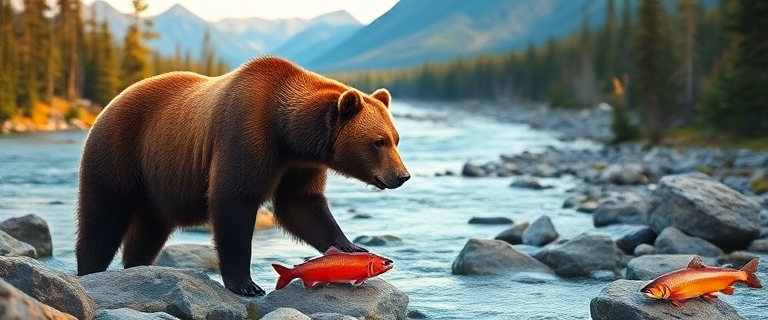
Fat Bear Week 2026: Dates, Bears, and How to Engage
Fat Bear Week returns to Katmai National Park with the 2026 bracket running from September 22 to September 29. This year’s competition features 16 bears, an increase from 12 in recent years, reflecting a record number of bear families observed at Brooks River. Park Superintendent Mark Sturm notes a generational shift as a new cohort of fat bears begins to shape the landscape of Katmai’s iconic river. Readers and fans can vote for the fattest, most winter-ready bear at fatbearweek.org, and they can watch live footage via Explore.org and the park’s resources.
The Fat Bear Week tradition began in 2014 and centers on the remarkable transformation of Katmai’s brown bears as they fatten up on sockeye salmon to survive the winter. The public votes in a bracket-style tournament to crown the Fat Bear Week Champion. Last year’s competition drew more than 1.7 million votes from visitors in over 100 countries, with Bear 32, nicknamed “Chunk,” crowned the champion. For 2026, fans should note that the bracket reveals on September 18, followed by voting from September 22–29, with no voting on the weekends, and the champion crowned on September 29. Fans can explore bear lives through the cams on Explore.org and learn more on the park’s official channels, as Fat Bear Week is a partnership among the National Park Service, Explore.org, and the Katmai Conservancy.
Fat Bear Week 2026 Schedule of Events
The bracket reveal takes place on September 18, 2026. The tournament and voting run from September 22 through September 29, with voting paused on weekends. The finale and champion announcement occur on September 29. For the full slate of live programs, tutorials, and Q&As, visitors can check Explore.org and the park’s pages for the complete timetable and links to stream or participate.
Key live programming includes the “Drawn to Explore” creative sessions, “More to Explore” explorations, Fat Bear Week Q&As, a play-by-play commentary, and conservation-focused celebrations. In addition, Explore.org’s streams and related channels provide ongoing access to Brooks River’s bear and salmon activity throughout Fat Bear Week.
How to Watch, Vote, and Participate
You can watch live bear activity through Explore.org’s Brooks River cams, and you can participate by voting at FatBearWeek.org during the bracket. The event is a collaborative effort, with media and ranger commentary helping explain bear behavior and the factors behind each contender’s fattening journey. Donating to the Otis Fund, which supports Katmai’s education, interpretation, and research, may be matched by Explore.org during the fundraiser, doubling your impact.
Meet the Bears: a Snapshot of Competitors
The 2026 field includes a diverse mix of subadults, single adult females, and adult males, each bringing unique strategies for fat-building and survival. Subadults are independent bears aged roughly three to five years who learn through play, exploration, and competition. This year, two subadults—620 and 694—are in the bracket, illustrating the range of contestants that readers will encounter and the learning that happens on the path to adulthood.
Single adult females compete with a focus on their own fat reserves, sometimes at the expense of nearby cubs, as they prepare for potential future offspring. Notable examples include 131 Marshmallow and 428 Studious, who demonstrate how freedom from cub-rearing can shift fat-building dynamics. The bear profiles below highlight a representative sample of the field, providing context for judging by the stories and challenges each bear faces.
Rising opportunities and ongoing narratives around each bear add depth to voting decisions. For instance, the bracket features a mix of mothers with cubs, subadults learning the river’s rhythms, and dominant males navigating a crowded hierarchy. This variety helps explain why certain bears attract more attention at different points in the season and why the field is considered rich in competition.
In addition to the above, several notable bears anchor the 2026 lineup with distinctive traits. Bear 132 is a large, experienced mother with three spring cubs, and she is linked to Bear 806 as her later offspring’s kin. Bear 284 Electra carries forward a lineage of Brooks River bears, including her mother 708 Amelia. Bear 610 is a small adult female raising her first known litter this season, while Bear 806 has both a spring cub and an adopted 2.5-year-old. Bear 901 stands out for her fat reserves and her mixed success as a mother, with one cub surviving and another cub from her first litter not making it. Bear 909 and her sister 910 reflect resilience and sustained fat-building even in the face of loss. The male lineup includes familiar names like 32 Chunk, the defending Fat Bear Week champion, and other prominent competitors such as 89 Backpack, 151 Walker, and 164 Bucky, each contributing to a dynamic field. Bear 903 Gully, known for bird-hunting behavior and lineage from former champion Grazer, also adds intrigue to the bracket.
Finally, the broad class of adult males, including 32 Chunk, 89 Backpack, 151 Walker, and 164 Bucky, compete to secure prime fishing spots and maximize fat reserves. The scales of competition shift as younger rivals move into prime years, illustrating how the bear population’s structure—now with a record 19 bear families and 37 cubs observed at Brooks River—shapes the tournament’s drama.
Alongside these individual stories, a broader context matters: Katmai’s bears reach extraordinary sizes in late summer, often surpassing 1,200 pounds for the largest males. The life of a Fat Bear Week participant is defined by a balance of fishing prowess, social dynamics, and the ability to grow fat quickly enough to endure the long Katmai winter.
Subadults: Learning, Growth, and the Bracket
Subadults are independent juveniles typically three to five years old. They are still learning social codes, hunting strategies, and territory decisions. In 2026, two subadults—620 and 694—are competing, underscoring the bracket’s educational value and the evolving dynamics at Brooks River. Subadults often face the challenge of breaking into established hierarchies while developing the skills needed to feed well, grow fat, and position themselves for future success as adults.
Single Adult Females and Notable Mothers
Single adult females in Fat Bear Week enter the competition focused on their own fat-building, with no cubs to feed immediately. This can enable different feeding patterns and fat accumulation trajectories. Bears such as 131 Marshmallow and 428 Studious illustrate how independent fat storage can unfold when cub-rearing duties are not in the immediate foreground.
Other mothers and contenders in the arena include 132, a large, experienced mother with three spring cubs who may be connected to subsequent generations, and 284 Electra, a bear with a lineage tracing back through generations of Brooks River bears. The narratives of these bears—how they fish, how they raise or lose cubs, and how they interact with rivals—inform readers about the variability in fat-building strategies across the field.
Adult Males: Size, Strategy, and Competition
Adult male bears at Katmai can reach formidable sizes, with full-grown individuals often dominating Brooks Falls. Their primary objective is to sire cubs and accumulate fat to endure winter, rather than to raise offspring themselves. The field includes a mix of dominant and challenger males, whose access to productive fishing spots and overall size shape the bracket.
Key contenders include 32 Chunk, the 2025 Fat Bear Week champion, noted for his significant size and a notable jaw injury observed in 2025. Other prominent males include 89 Backpack, 151 Walker, and 164 Bucky, each bringing different approaches to fishing and competition. The group’s composition—paired with the ongoing generational shift—helps explain the dramatic dynamics at Brooks River during Fat Bear Week.
Representative Bears in Focus
Bear 32 Chunk is a large adult male with a distinctive scar on his muzzle and a broken canine tooth from an injury suffered in 2025. He is the defending Fat Bear Week champion. Bear 909 is a large adult female who faced the loss of her two spring cubs but remains highly fat and resilient. Bear 910, another large adult female, has demonstrated strong fishing ability and family connections, including adoption of a niece into her kin group. Bear 131 Marshmallow is a 2018-born bear who has grown significantly and shows potential for future cubs. Bear 428 Studious, daughter of former champion 128 Grazer, has earned a reputation as a focused angler on the lip of Brooks Falls. Bear 903 Gully, a male known for bird-hunting behavior and lineage from Grazer, continues to be a notable contender. Bear 620, a subadult, carries future potential as he matures, while Bear 694, also a subadult, demonstrates the curious and exploratory nature of younger bears. Bear 132 stands out as a seasoned mother with multiple cubs, illustrating the experience that can influence cub outcomes and fat-building. Bear 284 Electra carries forward a family legacy and has given birth to multiple cubs, contributing to the river’s evolving family dynamics. Bear 610 is a smaller adult female facing the challenge of juggled responsibilities as she raises her first known litter. Bear 806 carries a blended family—one spring cub and an adopted 2.5-year-old—reflecting flexible parenting and social bonds in the bear community. Bear 901, a prominent female, demonstrates how fat reserves translate into both survival and variable cub outcomes. Bear 151 Walker, a large adult male, has broadened his role in the hierarchy as younger rivals challenge him for dominance. Bear 164 Bucky has rapidly grown into a dominant position, while 909 and 910 continue to show resilience in the face of cub losses and shifting family structures. This ensemble underlines the bracket’s breadth and the educational value in watching how each bear navigates Brooks River’s opportunities and hazards.
Conservation Impact and the Otis Fund
Fat Bear Week also serves as a platform to support conservation and education at Katmai. The Otis Fund, named in honor of 480 Otis, channels donations toward park education, interpretation, and research. Donations made during Fat Bear Week may be matched by Explore.org, doubling their impact. This match opportunity makes participation not only a fun endorsement of wildlife appreciation but a tangible contribution to ongoing conservation efforts.
A Generational Moment for Fat Bear Week
Park leadership has highlighted a generational shift as a defining narrative for 2026. The 2026 bracket brings a new generation of fat bears to the fore, with a record 19 bear families observed at Brooks River this year. This context helps readers understand why the event feels particularly newsworthy and differentiated from prior years, as newer bears establish their presence alongside established veterans.
Context About the Otis Fund and Bracket Size
The Otis Fund is part of Katmai Conservancy’s efforts to support the park’s education, interpretation, and research. The fund’s naming reflects its connection to a beloved bear, 480 Otis, and its purpose within Fat Bear Week’s conservation framework. The bracket for Fat Bear Week 2026 includes 16 bears, up from 12 in recent years, reflecting growth in the event’s scope and audience.
Notes on Reporting and Verification
Important factual points include that the bracket features 16 bears and that last year’s voting tallies reached over 1.7 million votes from more than 100 countries. The exact weight of individual bears like Chunk may vary across sources, and park data sometimes describe general weight ranges for the largest males. If you’re citing specific figures, check the latest NPS news releases and Explore.org schedules for the most current numbers and dates, and reference them consistently across the article.