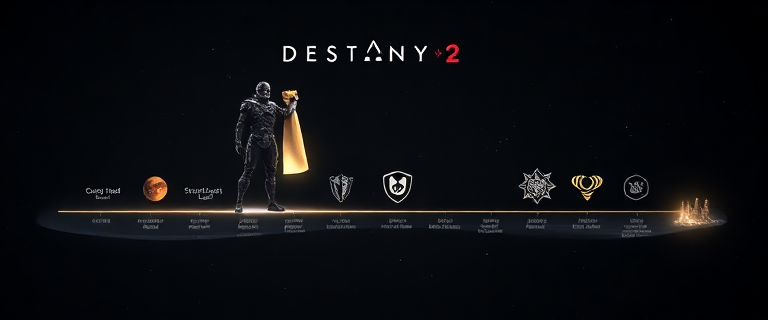
Destiny 2 Release Timeline: Expansions, Seasons, Episodes, and the Final Update
This article traces Destiny 2’s chronological release history—from expansions and seasons to late-year major updates—highlighting announced plans, what shipped, what was canceled, and how Bungie’s delivery model evolved over eight-plus years. It also explains the Destiny Content Vault (DCV), unvaulting plans, and what happened when development ended.
How Destiny 2 Released Content Over Time
From Year One onward, Bungie experimented with a evolving cadence. Early years featured two small expansions funded through an Expansion Pass and seasonal content released in a more scheduled fashion. With Forsaken in Year Two, an Annual Pass introduced three premium drops bundled with the major expansion. Year Three introduced standalone expansions and a free-to-play base: New Light accompanied Shadowkeep, enabling broad access to Curse of Osiris and Warmind content. Year Four introduced the Destiny Content Vault (DCV), vaulting large swaths of old content to improve management and prepare for future releases, while preserving the possibility of unvaulting in the future. Starting with Year Seven, episodes replaced seasons, and Year Eight introduced a two-season cadence with major updates in the middle of each season. The final active development period ended in 2026, with Destiny 2 remaining online but no new content updates after Monument of Triumph.
Over time, Bungie shifted away from long, single-expansion cadences toward more frequent, smaller major updates, and then toward episodic storytelling. The last two “years” of content were presented as two seasons per year, each beginning with a mid-sized expansion and followed by a Major Update. In Year Seven and Year Eight, the format moved from seasons to longer episodes and then to two big seasons that started with mid-sized expansions followed by major updates.
Destiny Content Vault (DCV) and Content Availability
The Destiny Content Vault (DCV) began in Year Four as Bungie removed base campaigns and older expansions from active play to streamline the game. The DCV vaulted The Red War, Curse of Osiris, and Warmind content, with Forsaken’s campaign later removed as part of that vaulting process. After the DCV’s initial implementation, Bungie continued cycling older content in and out as needed, sometimes reworking or reintroducing destinations and activities. Beginning with Year Six, Bungie stopped vaulting expansion content, though seasonal content continued to be vaulted with each content year. In June 2026, Bungie announced a broader reintroduction plan, including unvaulting content from the DCV to lay foundations for new Destiny experiences. In September 2026, Bungie stated that it would re-add vaulted content in phases, starting with the first phase (production anticipated to begin in early 2027) to include the classic Red War through Curse of Osiris, plus the Menagerie activity, with the aim of returning that material to the game in a reworked form.
For players, the DCV means some destinations and activities are not always available, but content can return in unvaulting phases. The DCV is also tied to Bungie’s plans to rebuild and expand Destiny in future projects beyond Destiny 2’s lifecycle.
Year 1 (Destiny 2 base cadence and early DLCs)
Destiny 2 launched in September 2017. The first two minor expansions—Curse of Osiris and Warmind—followed in 2017 and 2018, respectively. Curse of Osiris released on December 5, 2017, bringing Mercury as a new patrol destination and a Rocket-era focus on the Infinite Forest, while Warmind arrived on May 8, 2018, adding Mars as a destination and a new Horde-style Escalation Protocol mode. The base game introduced a new live-service approach to post-launch content, with the Expansion Pass providing access to Curse of Osiris and Warmind at a discounted price compared with buying them separately. The game also introduced new PvP systems and a rotating cadence of activities and loot.
During Year One, Destiny 2’s post-launch content included expansions and seasonal activities, and pre-launch communications emphasized post-release cadence and the Expansion Pass’s value. The game also introduced a free-to-play base experience later in Year Three with New Light, which reintroduced Curse of Osiris and Warmind as accessible content for new players.
Year 2 (Forsaken and the Annual Pass cadence)
Year Two began with Forsaken, released on September 4, 2018, marking a major shift in Destiny 2’s design and endgame. Forsaken introduced a new story arc, the Tangled Shore and Dreaming City destinations, a new raid (Last Wish), a new dungeon (The Shattered Throne), and a new PvP mode (Gambit). Bungie also launched the Annual Pass, offering three premium drops—Season of the Forge (Season 5) in December 2018, Season of the Drifter (Season 6) in March 2019, and Season of Opulence (Season 7) in June 2019—plus Season 4’s Forsaken content. In September 2019, the Annual Pass became free for Forsaken owners who did not purchase the pass. The expansion cadence during Year Two signaled a shift to aSeasonal model with separate season passes and ongoing seasonal content tied to Forsaken’s release.
Forsaken and the Annual Pass launched Destiny 2’s signature cadence, with Bundled content and recurring seasons defining the core cadence for the next two years. A significant shift also occurred with a rebranding of endgame assets and a major expansion that deeply affected Destiny 2’s narrative and endgame progression.
Year 3 (Shadowkeep, Free-to-Play New Light)
Year Three introduced Shadowkeep (October 2019), a standalone expansion that did not require ownership of Forsaken. Shadowkeep included four seasonal offerings with free and premium tracks, a seasonal artifact, and a move toward a more interconnected seasonal narrative. The base game also became free-to-play as New Light alongside Shadowkeep, which included Curse of Osiris and Warmind in the free-to-play base package. The seasonal cadence involved four named seasons: Season of the Undying (Season 8) with Shadowkeep at launch, Season of Dawn (Season 9), Season of the Worthy (Season 10), and Season of Arrivals (Season 11). Beyond the expansion, the DCV continued to vault older content while new seasons offered ongoing content expansion. Shadowkeep’s release marked a shift toward a more integrated, season-based storytelling model that would continue through Year 4 and beyond.
As Shadowkeep arrived, Bungie introduced a free-to-play gateway with New Light, enabling players to access Curse of Osiris and Warmind content without purchasing Forsaken. Shadowkeep’s own endgame content was later repackaged as the Shadowkeep Pack, and the base Shadowkeep experience became a distinct, standalone release that did not require Forsaken.
Year 4 (Beyond Light, DCV, and COVID-era delays)
The fourth year began with Beyond Light (November 10, 2020), a major expansion that introduced Stasis, vaulted Io, Titan, Mars, and Mercury into the DCV, and brought back the Cosmodrome as a reimagined starting destination. The expansion also introduced a new raid, Deep Stone Crypt, and a new dungeon, Grasp of Avarice, as part of the Bungie 30th Anniversary Pack mid-season content. Beyond Light’s release was delayed from September 22, 2020, to November 10, 2020, due to the COVID-19 pandemic. The year also saw Bungie’s DCV strategy in action: content behind vaulting and unvaulting decisions, as well as the introduction of the Bungie 30th Anniversary Pack in December 2021, which included a new dungeon and the free-to-play Dares of Eternity activity. The Witch Queen expansion followed in February 2022, and Year 4 also included the transition to a more interconnected seasonal cadence with four seasons: Hunt, Chosen, Splicer, and Lost. The DCV pages show that portions of Forsaken’s content and other expansions began to be reorganized as content packs and DCV entries, gradually making room for new narrative arcs while preserving access to select endgame experiences.
COVID-related delays also influenced release timing; The Witch Queen’s original fall 2021 release was shifted to February 2022, and Lightfall’s schedule followed after that shift, reshaping the cadence across Years 4–5. The Bungie 30th Anniversary Pack introduced a new dungeon and a free six-player activity, Dares of Eternity, alongside nostalgic Gear tied to Bungie’s history. The DCV’s broader impact continued as subsequent expansions arrived, with parts of Forsaken’s endgame content repackaged into the Forsaken Pack prior to Forsaken’s removal from active play in Year 5’s Witch Queen era.
Year 5 (The Witch Queen era)
The Witch Queen expansion released on February 22, 2022, introducing Savathûn’s Throne World, Lucent Hive, and weapon crafting. It also introduced a new raid, Vow of the Disciple, and a reimagined raid experience. The Witch Queen era rotated Forsaken’s older content into DCV while Forsaken’s endgame content was repackaged as the Forsaken Pack. The year’s four seasons—Risen, Haunted, Plunder, and Seraph—ran from early 2022 through early 2023, with The Witch Queen’s arrival reshaping the endgame and DCV’s handling of Forsaken’s content. The year also saw continued DCV usage and the introduction of dungeon keys for access to yearlong dungeon content, a monetization shift that tied deluxe editions to access and allowed separate purchases for dungeon keys, beginning with Year 5.
Seasonal content continued to define the Destiny 2 cadence, with a mix of free and paid tracks, and the continuation of the DCV approach as Bungie refined its strategy for content management and unvaulting plans where appropriate.
Year 6 (Lightfall era)
Year Six began with the Lightfall expansion on February 28, 2023, introducing Neptune’s city Neomuna, the Strand power, and a new raid, Root of Nightmares. The four seasonal cadences—Defiance, Deep, Witch, and Wish—brought new activities and a major interlude with Into the Light (April 9, 2024), a prelude to The Final Shape. The Power and EXP progression remained a key topic, with a cap of 1800/1810 and later adaptation for Seasonal Power bonuses. Into the Light served as a free two-month mid-season update that foreshadowed The Final Shape, and the year also saw the continuation of DCV; however, the traditional seasonal cadence ended after Year 6, transitioning toward broader episodic formats in subsequent years. By the end of Year 6, the DCV strategy had already begun to shift as Bungie prepared for future updates and unvaulting plans.
Year 6 also laid groundwork for the later unvaulting and expansion strategies, while keeping the core Destiny 2 experience accessible to players through free-to-play elements and ongoing seasonal activities.
Year 7 (The Final Shape and episodes)
The Final Shape arrived in June 2024, ending the first major Destiny 2 saga, the Light and Darkness arc. Bungie then introduced a new episodic model, replacing four seasons with three longer episodes—Echoes, Revenant, and Heresy. Each episode consisted of three acts with six-week intervals and shared a common reward path via extended season passes. Echoes launched June 11, 2024; Revenant began October 8, 2024; Heresy started February 4, 2025. Rite of the Nine served as a free event prologue to Year Eight in May 2025. Shadowkeep and Beyond Light campaigns were made free-to-play, while their endgame content was repackaged as the Shadowkeep Pack and Beyond Light Pack, respectively. The year also introduced a longer episode structure and expanded artifact and reward systems for a more TV-like storytelling cadence. The Final Shape also introduced new 12-player activity ex, Salvation’s Edge, and two new dungeons across Acts 2 and 3.
In this year, Bungie began bundling all available expansions into Destiny 2: The Collection (released in June 2026) as part of a broader plan to consolidate content access for players and reframe Destiny 2’s lifecycle as a playable but strongly curated platform. The year also included a major update cadence shift away from traditional seasons toward episodic storytelling with longer durations and broader cross-episode consistency.
Year 8 (Year of Prophecy: The Edge of Fate, Ash & Iron, Renegades, Monument of Triumph)
Year Eight, nicknamed the Year of Prophecy, began with The Edge of Fate on July 15, 2025, followed by its major update Ash & Iron on September 9, 2025. The second expansion, Renegades, released on December 2, 2025, with the Monument of Triumph major update arriving in June 2026. The Edge of Fate introduced Kepler as a Nine-influenced setting, while Renegades drew on Star Wars collaboration inspiration for its narrative and gear. The major updates delivered narrative content for each expansion year, with free-to-play narrative components and premium reward passes. Monument of Triumph, initially announced as Shadow & Order with a planned March 2026 release, was delayed and renamed as the final Destiny 2 content update in June 2026. It bundled ongoing content into Destiny 2: The Collection and included a broad set of new Exotics and endgame activities, serving as the game’s concluding live-service update.
In addition to these releases, Year Eight introduced a two-season cadence that culminated in a major end-of-life planning phase, including unvaulting discussions. The Edge of Fate’s launch date, the Ash & Iron update, and Renegades’ start date are documented in the release history. Monument of Triumph marked the final installment of Destiny 2’s live content, and Bungie announced ongoing plans to reintroduce vaulted content in the future as part of the broader Destiny revival strategy. The September 2026 announcements also indicated that Destiny 2 would remain online but without further active development, and that unvaulting would proceed in phases as Bungie prepared new Destiny experiences.
Year 9 and Beyond: Canceled Expansions and the Fate Saga
Year Nine was planned with two expansions—Shattered Cycle and The Alchemist—but these were canceled when Bungie ended development for Destiny 2. Some content from those planned expansions was folded into Monument of Triumph. The Fate Saga was introduced as the overarching narrative theme for Year Eight’s prophecies, but the planned Year Nine expansions were ultimately canceled with development ending in mid-2026. Bungie subsequently announced unvaulting plans to reintroduce content from Destiny 2’s earlier lifecycle in phases, with production anticipated to begin in early 2027. The unvaulting plan would eventually aim to reintroduce classically popular campaigns, raids, and activities from Destiny 2’s launch through Curse of Osiris and beyond as Bungie rebuilt toward new Destiny projects. The Destiny 2: The Collection bundle was released on June 9, 2026, to package all available content for players and mark a milestone in Destiny 2’s lifecycle as it transitioned out of active development.
Consolidated quick-reference: major named releases and dates
A concise listing of major expansions and mid-season/mid-year updates, showing start dates and the nature of each release. This table focuses on named releases and major updates that defined Destiny 2’s cadence from launch through Monument of Triumph and the post-release recovery plans.
| Year | Name | |||
|---|---|---|---|---|
| Year 1 | Curse of Osiris | Expansion | December 5, 2017 | Mercury destination; Infinite Forest |
| Year 1 | Warmind | Expansion | May 8, 2018 | Mars/Hellas Basin; Escalation Protocol |
| Year 2 | Forsaken | Expansion | September 4, 2018 | Two major endgame shifts; Tangled Shore/Dreaming City |
| Year 2 | Season of the Outlaw | Season | Sept 4, 2018 | Season 4; Annual Pass cadence began |
| Year 2 | Season of the Forge | Season | Dec 4, 2018 | Season 5; Black Armory content |
| Year 2 | Season of the Drifter | Season | Mar 5, 2019 | Season 6; Gambit focus |
| Year 2 | Season of Opulence | Season | Jun 4, 2019 | Season 7; Menagerie |
| Year 3 | Shadowkeep | Expansion | Oct 1, 2019 | Standalone expansion; New Light included |
| Year 3 | New Light | Free-to-Play | Sept 17, 2019 | Base game free-to-play; Curse of Osiris/Warmind accessible |
| Year 4 | Beyond Light | Expansion | Nov 10, 2020 | DCV initiated; Stasis; Europa |
| Year 4 | The Bungie 30th Anniversary Pack | Mid-season Pack | Dec 7, 2021 | Grasp of Avarice dungeon; Dares of Eternity |
| Year 5 | The Witch Queen | Expansion | February 22, 2022 | Savathûn; Lucent Hive |
| Year 6 | Lightfall | Expansion | February 28, 2023 | Neomuna; Strand; Root of Nightmares |
| Year 6 | Into the Light | Mid-season Update | April 9, 2024 | Prologue to The Final Shape; Onslaught |
| Year 7 | The Final Shape | Expansion | June 4, 2024 | Concludes the Light and Darkness saga; Episode model begins |
| Year 7 | Episode: Echoes | Episode | June 11, 2024 | Season 24; following The Final Shape |
| Year 7 | Episode: Revenant | Episode | October 8, 2024 | Season 25 |
| Year 7 | Episode: Heresy | Episode | February 4, 2025 | Season 26 |
| Year 7 | Rite of the Nine | Prologue Event | May 6, 2025 | Prologue to Year Eight |
| Year 8 | The Edge of Fate | Expansion | July 15, 2025 | Kepler; Nine |
| Year 8 | Ash & Iron | Major Update | September 9, 2025 | Narrative content free; reward pass |
| Year 8 | Renegades | Expansion | December 2, 2025 | Star Wars-inspired narrative; new dungeon |
| Year 8 | Monument of Triumph | Major Update | June 9, 2026 | Final Destiny 2 content update; renamed from Shadow & Order |
| Year 8 | Destiny 2: The Collection | Bundle | June 9, 2026 | All expansions and content packaged together |
| Year 9 | Shattered Cycle / The Alchemist | Cancelled | 2026 | Two announced expansions canceled with end of development |
Note: After Monument of Triumph, Bungie announced unvaulting plans in phases with production to begin in 2027, and The Collection served as a consolidation for players. This table highlights the major named releases and their dates that defined Destiny 2’s cadence up to the end of active development.
Context: Why the Timeline Matters for Players
Understanding the release timeline helps players plan purchases, anticipate unvaulting opportunities, and know what content remains available or is slated to return. The Year 8 and Year 9 developments show how business decisions—such as the end of development, major project realignments, and external corporate pressures—shaped Destiny 2’s long-range plan. The final update, Monument of Triumph, marked a turning point: Bungie acknowledged the end of active development for Destiny 2, with content planned to re-emerge later in unvaulting phases and a broader reimagining of Destiny projects in the future.
What This Means for Players Going Forward
With development effectively paused, Destiny 2 remains playable online, and Bundled access such as Destiny 2: The Collection provides continued access to past expansions and content. The unvaulting plan represents a potential return path for beloved campaigns, raids, and activities, though no fixed dates were announced for concrete releases beyond the stated phase approach. Players should consider evaluating The Collection for long-term access to legacy content and the free-to-play components that remain accessible without a purchase. Bungie’s ongoing plans hint at a shift toward reimagined Destiny projects in the future, built on the lessons learned from Destiny 2’s eight-year lifecycle.