
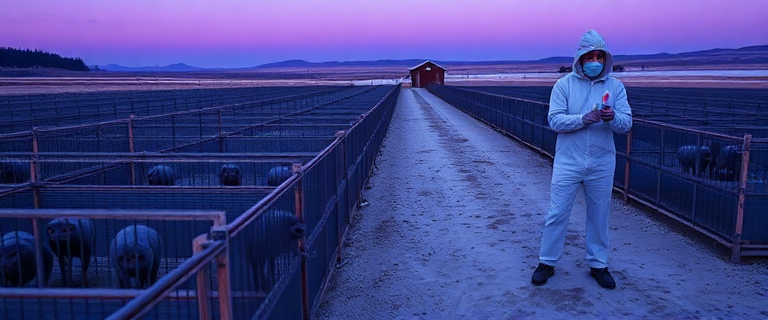
Report: A Utah mink farm is rife with bird flu
Infectious disease experts say Utah agriculture and health officials haven’t responded adequately to a bird flu outbreak on a mink farm near Payson, as revealed by a ProPublica investigation. The case raises questions about how prepared regulators are to manage diseases that can pass between animals and people, and how public health guidance is being applied in a high-risk setting.
Why it matters
Flu experts warn that the ongoing outbreak holds the potential for a virus mutation that could enable transmission among humans. While the current mink outbreak is not viewed as causing a tidal wave of human infections, the risk is tied to how the virus could evolve within a mammal host and then spread to people. As Jennifer Nuzzo of Brown University’s Pandemic Center puts it, “No animal or human will be protected from the toll of this virus through secrecy.” She argues that the greatest risk lies for workers exposed to sick animals, and that this does not relieve the government of its responsibility to prevent a pandemic. The situation illustrates broader questions about One Health—how animal health, human health, and the environment intersect in disease risk—and whether existing responses are robust enough to prevent spillover.
The outbreak on the Utah mink farm: what happened
Two months of bird flu activity unfolded at a fur farm about an hour from Salt Lake City, where thousands of mink are raised for pelts, ProPublica reported. A state veterinarian, Amanda Price, tried to enlist help from the U.S. Department of Agriculture (USDA), but federal officials told her they do not regulate mink or have an approved vaccine for the species. The USDA did not respond to requests for comment, and the CDC spoke with Utah health officials but did not directly engage with Price. In many countries with mink outbreaks, authorities have ordered depopulation of the mink on affected farms; Veterinarians told ProPublica that is the standard approach in those contexts, and many viewed it as the appropriate course for Utah as well.
The outbreak is not the first time Utah has faced fur-farm disease pressures. During the COVID-19 pandemic, nearly 10,000 Utah mink died from the virus and quarantines were implemented at nine farms. The virus was likely transmitted to mink from infected workers, a point cited in the journal Emerging Infectious Diseases. Mink species are highly susceptible to a range of pathogens that also affect humans, including influenza viruses, a fact documented by the Proceedings of the National Academy of Sciences and other studies.
Nuzzo emphasizes that even if the current outbreak has not yet produced human-to-human transmission, the scenario remains dangerous. “The scenario I’m worried about is this one: workers who are exposed to these animals will get sick, and some of them might die, and that is awful because we potentially could prevent that through thinking about protecting farm workers with a vaccine, like other countries are using,” she said. She also notes that the virus could infect humans and, if it combines with a circulating human influenza strain, potentially spark a pandemic. “I cannot tell you what the probability of that is. It could be zero,” she adds, underscoring uncertainty even as risk remains material.
On the ground, the response has drawn sharp critique. A farm owner, Chad Fenn, told ProPublica that a worker developed eye redness (a symptom observed in some human bird-flu cases) and that the health department did not recommend testing. The owner also alleged that the worker “dust in his eye” was the cause and that the farm’s workers wear masks only selectively. State officials maintained that the farm’s movement of mink, manure, and carcasses had been halted, but no formal quarantine was issued. In this case, CDC guidance that calls for monitoring exposed workers was not followed in a way that satisfied many public health experts.
The ProPublica reporting also documents a striking dynamic: Price, who rarely visited the farm, relied on conversations with the owner and other remote sources to assess risk. She said she felt “very comfortable” that the virus would not spread beyond the farm and described that mink do not move on and off the farm in the same way as dairy or poultry operations. This has been cited as a key illustration of how on-site investigation and direct testing were limited in practice.
Regulatory landscape: who is responsible and where the gaps lie
Nationwide, there is a tension between animal health regulation and human health protection in the context of mink outbreaks. The Utah case reveals a lack of federal rules specific to sick mink, with USDA officials saying they have no mink-specific vaccine programs or depopulation authorities. The state veterinarian’s authority to act was constrained by a verbal hold rather than a formal quarantine, and the farm’s operations continued under a permissive framework that prioritized the farm’s economic interests over aggressive disease control.
Amid these debates, a 2025 agreement between the Utah Department of Agriculture and Food and state health officials shifted some monitoring practices. The agreement reportedly limits proactive worker health monitoring unless there is evidence of human-to-human transmission, and a line was drawn to avoid monitoring that farms perceive as intrusive. Pamela Gomez Pinedo, a respiratory disease epidemiologist with Utah’s health department, explained, “We will only do active monitoring in the case of evidence of human-to-human transmission.” This policy has been cited by critics as contributing to a lack of testing and surveillance, and experts have called the approach “irresponsible” and “puzzling.”
In addition, the 2025 agreement ties information-sharing about bird-flu outbreaks to not probing workers’ health actively, a stance that drew pushback from many public health advocates who argued that worker safety should not be dependent on a formal transmission event. The dynamic is part of a broader pattern in which monitoring and transparency appear uneven between agricultural and health authorities, especially when farms are involved in the fur industry.
Across the Atlantic, observers point to stronger precautionary measures in some European countries. In Finland and Spain, authorities have historically pursued depopulation strategies on mink farms to curb spread. Spain’s 2022 outbreak, for example, involved at least one mutation that favored mammal-to-mammal spread among mink, prompting aggressive containment measures. By contrast, the Utah case highlights a confusion of responsibilities and a more limited on-site regulatory footprint in the United States.
Economic impact and policy tensions
The fur industry in the United States has been under pressure for years. Production has fallen dramatically since 2015, with fewer than 70 mink farms remaining and a concentration of activity in Wisconsin and Utah. Prices have declined, and fashion brands have increasingly moved toward fur-free alternatives. In parallel, a broader debate over public subsidies for the fur industry has intensified as part of the Farm Bill debate in Congress. The House and Senate versions both propose repealing a nearly 30-year ban on federal subsidies for mink fur exports, effectively directing taxpayer money to expand the fur trade despite public health concerns raised by the outbreak. Critics argue that supporting a dying industry with taxpayer funds is ill-timed given the outbreak’s risks and the lingering questions about disease surveillance and worker safety. Proponents contend that such subsidies could ease transition for workers and communities. The discussion reflects a fundamental policy tension between economic support for a niche industry and public health priorities in a modern, One Health framework.
International context shows a similar pattern: Europe’s fur sector has contracted sharply, with EU fur-farming sales down dramatically and many member states tightening or banning fur farming. In the United States, advocates say a transitional strategy—phasing out fur farming and providing retraining and financial support for workers—could reduce future pandemic risk without leaving communities economically stranded.
In the near term, the 2025 Farm Bill provisions around mink subsidies, alongside ongoing debates about depopulation incentives and vaccine research for mink, will shape how future outbreaks are managed. The question for readers is not only what happened in Utah, but what policymakers choose to do next to balance animal health, human health, and economic realities.
Scientific nuance: why mink matter in the risk equation
Mink are considered a high-risk intermediate host because their respiratory tract receptors can resemble human receptors, creating opportunities for viruses to adapt for mammal-to-mammal transmission. A notable finding from 2024 showed that a single mutation could switch the dairy strain of the bird flu from preferring bird-type receptors to human-type receptors. Ferret studies, a close relative to mink, showed mutations that allowed the virus to interact with human-type cell receptors. These details help explain why researchers view mink outbreaks as a potential bridge to human infections, even if the probability remains uncertain. As Meghan Davis, an epidemiologist at Johns Hopkins, notes, the outcome depends on what the virus does as it evolves, and on the broader ecological context, including human flu season dynamics. The key takeaway is that the risk is not static; it grows when the virus has more opportunities to mutate and circulate in a mammalian host that is in close proximity to humans.
Beyond single mutations, experts warn about reassortment—when two influenza viruses exchange genetic material in the same cell. A scenario in which a bird flu strain reassorts with a human seasonal flu virus could create a novel strain with pandemic potential, particularly if such a variant circulates during peak human influenza season. In Utah, the question remains whether the mink farm could serve as a milieu for such genetic reshaping if surveillance lags or data analyses lag behind the virus’s evolution.
Direct evidence and on-the-ground concerns
Two central anecdotal items from ProPublica’s reporting help illustrate the monitoring gaps. First, there is the red-eye incident: a worker developing eye redness—present in over 90% of human bird-flu cases as a warning sign—yet the health department reportedly did not recommend testing. Second, the farm owner’s public statements highlighted skepticism about testing and a posture that prioritized business considerations over strict health precautions, including assertions that the worker’s red eye was caused by dust and not illness. In the same narrative, the state health department’s willingness to test was framed as contingent on symptom severity, further underscoring a mismatch between CDC guidance and field practice. The farming operation was described as one where the owner’s trust in the farm’s control measures and the absence of animal movement suggested limited risk to the wider community, a view that many experts challenged as incongruent with the science of spillover risk.
Additionally, state veterinarian Amanda Price’s limited on-site presence emerged as a focal point of concern. Reports indicate she did not visit the farm; instead, she relied on Google Maps and phone conversations. She told ProPublica she felt “very comfortable” that the virus would not spread beyond the farm after discussions with the owner. This remote approach is cited as a major gap in a disease event that hinges on direct observation, testing, and rapid containment decisions.
What happens next: monitoring, testing, and policy decisions
Experts warn that current genomic data from mink samples are incomplete. While initial sequencing did not reveal alarming mutations, newer samples were reportedly pending at the time of reporting, with researchers stressing that the virus likely continued to mutate over the following weeks. As John Korslund, a retired USDA official, asked, “Are we getting accumulated mutations making the virus more dangerous?” The absence of up-to-date genetic analyses hampers risk assessment and decision-making about interventions such as vaccination of mink or broader worker monitoring.
Meanwhile, the ongoing debate over how to balance industry interests with public health persists. The Farm Bill remains a focal point: even as the outbreak underscores risks, lawmakers are weighing subsidies intended to promote mink fur exports. Critics contend that funding an expanding fur export sector amid an outbreak is ill-timed, while supporters argue that a structured transition plan could mitigate economic harm for workers. In Utah specifically, the question remains whether current regulatory approaches—relying on voluntary reporting, verbal holds, and limited surveillance—are sufficient to prevent spillover and safeguard workers.
Why the Utah outbreak matters now
FAQ: key public questions answered
Is this outbreak likely to cause a human pandemic? Experts say the current outbreak is unlikely to trigger widespread human-to-human transmission by itself, but it represents a high-risk environment for viral evolution. The risk grows if the virus continues to mutate in a mammalian host and if surveillance remains insufficient to detect changes early.
What are the regulatory gaps? There is no federal rule for sick mink, and the farm was managed with a verbal hold rather than a formal quarantine. Testing and monitoring of workers were not conducted consistently, and information-sharing practices between agriculture and health departments were constrained by a 2025 agreement limiting proactive health monitoring in the absence of clear evidence of human-to-human spread.
What about the Farm Bill and subsidies? Both House and Senate Farm Bill proposals would repeal a long-standing ban on federal subsidies for mink fur exports, effectively using taxpayer funds to expand mink farming even amid an outbreak. This stance is controversial given the outbreak’s public health implications and the industry’s declining economic trajectory.
Conclusion: lessons and paths forward
The Utah mink farm outbreak underscores the importance of robust, transparent surveillance and decisive action when a disease with pandemic potential arises on a fur farm. The evidence collected by ProPublica—and the expert commentary it cites—points to gaps in on-site investigation, worker health monitoring, and interagency coordination. Scientific nuances about mink’s role as a mixing vessel and the potential for single mutations to shift receptor binding strengthen the case for rigorous risk assessment and proactive containment. The policy questions surrounding subsidies, depopulation options, and data-sharing practices will shape how future outbreaks are managed. A prudent path forward involves aligning federal and state activities, expanding surveillance where mammals bridge animal and human health, and supporting workers and communities as the industry adapts to evolving public health realities.