
Air Canada Cancels Eight U.S. Routes: What Travelers Need to Know
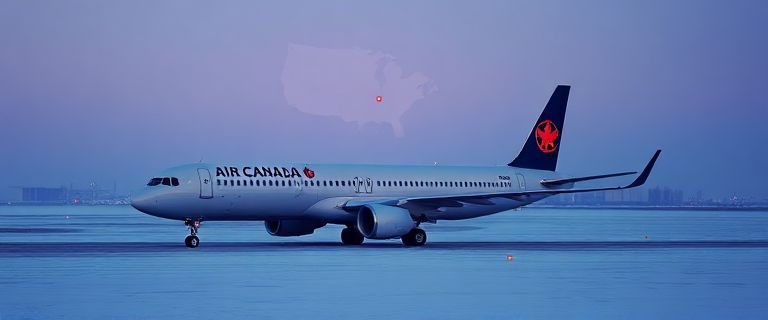
Air Canada has announced adjustments to its transborder network as part of its Winter 2026 schedule. Eight routes between Canada and the United States are affected, with some endings occurring before winter, others delayed until December, and a few removed from the timetable altogether. In addition, the airline has signaled five additional routes that will be discontinued in 2027, including a permanent end to the Toronto Pearson–Charleston service. This guide explains which routes are affected, why the changes are happening, how compensation and rebooking work under Canadian rules, and practical alternatives for travellers.
Affected routes for Winter 2026
The following eight routes have altered schedules as Air Canada transitions into the Winter 2026 timetable. Details below reflect whether service ends, is delayed, or has been suspended.
| Route (Origin – Destination) | Impact | Notes |
|---|---|---|
| Montreal (YUL) – Detroit (DTW) | Service ends on October 24 | Previously scheduled to operate daily throughout the winter. |
| Toronto (YYZ) – Indianapolis (IND) | Service ends on October 24 | Previously scheduled to operate daily throughout the winter. |
| Montreal (YUL) – Minneapolis-Saint Paul (MSP) | Service ends on October 24 | Previously scheduled to operate daily throughout the winter. |
| Ottawa (YOW) – Fort Lauderdale (FLL) | Delayed to December | Originally planned to begin in October. |
| Quebec City (YQB) – Orlando (MCO) | Delayed to December | Originally planned to begin in October. |
| Montreal (YUL) – Palm Beach (PBI) | Delayed to December | Originally planned to begin in October. |
| Toronto (YYZ) – New York JFK | Removed from schedule | Suspended previously from June through October; now removed for winter. |
| Montreal (YUL) – New York JFK | Removed from schedule | Suspended previously from June through October; now removed for winter. |
Beyond these eight routes, Air Canada has announced further changes for 2027, including permanent discontinuation of five additional cross-border routes. The planned 2027 cuts include Montreal–Seattle, Vancouver–Nashville, Vancouver–Raleigh-Durham, Billy Bishop Toronto (Toronto’s downtown airport)–Boston, and Toronto Pearson–Charleston. The Charleston service from Toronto Pearson (YYZ) to Charleston (CHS) is the only direct Air Canada flight between Canada and South Carolina and is slated to end in 2027.
Why these changes are happening
Air Canada’s network tweaks come as cross-border demand has weakened in the Canadian-U.S. market. Market-level factors—combined with broader political and trade dynamics—have influenced routing decisions. In recent reporting, cross-border travel with the United States has declined in comparison with 2024 levels, with observers citing heightened tensions and tariff-related frictions as contributing factors. These shifts affect capacity planning and lead to prioritizing routes that demonstrate stronger current demand.
Industry coverage notes that demand fluctuations have prompted carriers to reallocate capacity toward higher-yield routes. For readers, this context matters because it clarifies that route changes are part of a broader market recalibration, not simply a routine policy adjustment.
What to know about 2027 route cancellations
Air Canada has indicated that five additional routes will be permanently discontinued for 2027, expanding the shifts beyond the Winter 2026 timetable. These planned cuts include Montreal–Seattle, Vancouver–Nashville, Vancouver–Raleigh-Durham, Billy Bishop Toronto–Boston, and Toronto Pearson–Charleston. The Charleston service from Toronto Pearson is notably the only direct Canada–South Carolina link and represents a significant network change for cross-border travellers.
Readers booked on any of these routes should plan for alternative itineraries or refunds when the 2027 timetable is enacted. As schedules evolve, it’s wise to monitor My Bookings and official Air Canada notices for the latest updates.
How rebooking and compensation work under APPR
Air Canada’s policies for disrupted flights are governed by the Air Passenger Protection Regulations (APPR). When a disruption affects a flight by three hours or more, the airline will attempt to rebook passengers on the next available Air Canada service first, followed by partner or alternate carriers, as applicable. If you have provided contact information, Air Canada will notify you about the rebooking status. You can also manage changes yourself via My Bookings, or speak with a gate or customer service representative if you are at the airport.
Compensation eligibility hinges on where the root cause of the delay lies. The final arrival delay reason is determined after arrival and can take up to 72 hours to confirm. If the final cause is within Air Canada’s control (and not related to safety) and the arrival delay is three hours or more, you may be eligible for compensation. The compensation levels are CAD 400 for 3–6 hours, CAD 700 for 6–9 hours, and CAD 1,000 for 9+ hours, subject to other APPR factors.
The process to check eligibility involves using Air Canada’s Compensation Eligibility Tool, which becomes available 72 hours after your arrival. You’ll need your booking reference, your first and last name, and the date of your disrupted flight. If the tool indicates potential eligibility, you may submit a claim for consideration. The final determination and any payments follow APPR guidelines and timelines.
Several important conditions also shape eligibility. You must have been notified of the disruption within 14 days of your flight, and you must file within one year of the disruption. You cannot double-claim compensation for a single event if you have already received compensation under another regime for the same disruption, and you cannot claim more than once for the same event if you are denied boarding or rebooked. For more information on passenger rights, see Air Canada’s APPR guidance and related resources.
If compensation is denied or you want to escalate, you can contact the Canadian Transportation Agency (CTA) for dispute resolution. The CTA can be reached at otc-cta.gc.ca or by calling 1-888-222-2592.
Practical alternatives and helpful guidance per route
When a route is cancelled or postponed, travellers should consider a few practical options. Rebooking on the next available Air Canada flight remains the default path, and you can also explore traveling via partner airlines within the Star Alliance network or through alternate Air Canada routes. If you prefer to arrange your own options, you can use My Bookings to manage changes or request a refund for the unused portion of your ticket.
To illustrate, for routes like Ottawa–Fort Lauderdale, travellers may find viable connections through Toronto or Montréal with partner or alternate carriers, depending on schedules. For Montreal–Detroit or Montreal–Minneapolis, a connection via another Air Canada hub such as Toronto can be a typical path if direct service is suspended. Always verify baggage handling requirements when routing travellers via different airlines or airports, as baggage policies can differ between carriers and partners.
Keep an eye on the status of affected flights via My Bookings, and revisit closer to departure dates, since schedule changes can take weeks to appear. If you’re worried about future uncertainty, consider travel insurance or refundable fare options as a proactive precaution for cross-border travel during periods of market volatility.
Additional considerations for planning and staying informed
Travelers should be aware that automatic vs. manual rebooking dynamics can affect timelines. Air Canada typically attempts automatic rebooking for disruptions within its control and will notify passengers if contact details are on file. If you prefer, you can actively manage changes through My Bookings. If none of the offered options meet your needs, you can request a refund for the unused portion of your ticket, or consider refunding processes if applicable under APPR rules.
For those booking future travel amid ongoing uncertainty, a brief note on safety and protections is useful: travel insurance coverage can complement airline protections, and refundable fares provide a cushion against sudden changes. In addition, keeping documents handy and understanding APPR thresholds helps you navigate compensation processes more confidently.
How to stay ahead of schedule changes
The Daily Travel Outlook highlights today’s disruptions, but it may not reflect future changes. If your trip is far in advance, use My Bookings to monitor automatic schedule changes as they are applied to your itinerary. Air Canada notes that some schedule updates may take weeks to appear in bookings, so check back as your departure date approaches and stay alert for new notices from the airline.
Frequently asked questions
Why does Air Canada sometimes change the reason for my arrival delay? The final arrival delay reason can evolve as the airline investigates contributing factors. Departure delay information may differ from the final arrival delay reason, and the investigation can take up to 72 hours after reaching the final destination.
What are the possible compensation amounts? The APPR offers CAD 400 for 3–6 hours, CAD 700 for 6–9 hours, and CAD 1,000 for 9 hours or more, depending on the most significant contributing factor and other qualifying criteria.
How do I check my compensation eligibility? Use Air Canada’s Compensation Eligibility Tool 72 hours after arrival, entering your booking reference, name, and flight date. If eligible, you may submit a claim for consideration.
Final notes for travellers
Air Canada’s route adjustments for Winter 2026, plus the planned 2027 cuts, reflect the airline’s effort to align capacity with demand in a changing cross-border travel landscape. Travellers should stay informed through My Bookings, understand the rebooking and compensation options under APPR, and consider protective measures such as travel insurance or refundable fares for future cross-border trips.
If you believe compensation should apply and it’s not being offered, remember you can contact the Canadian Transportation Agency (CTA) for resolution at otc-cta.gc.ca or by calling 1-888-222-2592.