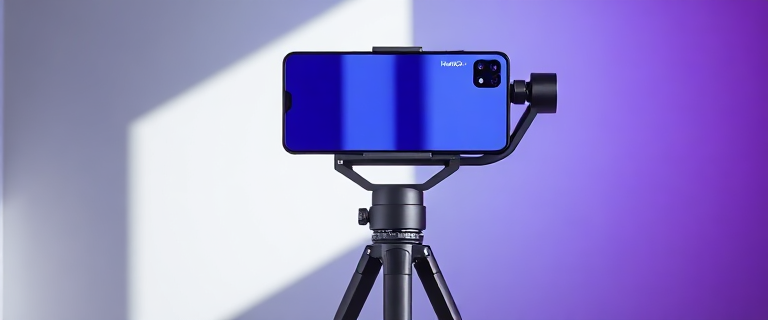
The HONOR Robot Phone integrates a professional-grade mechanical gimbal directly into a smartphone chassis, delivering stabilized cinematic motion without carrying a separate rig. Marketed as a flagship device built for content creators, it combines a 3‑axis mechanical gimbal with AI stabilization and a built-in ARRI-informed imaging workflow to streamline on‑the‑move production—from vlogs and interviews to landscapes and live streams.
HONOR describes a deep collaboration with ARRI, debuting ARRI Image Science on the device. This partnership underpins features such as Cinema Look workflows, LogC3 recording, and native DaVinci Resolve compatibility for on‑set color management and quick grading. The result is a mobile platform designed to deliver cinema-grade control over color, exposure, and grading directly from a phone that also houses a sophisticated camera system and gimbal.
Camera system and imaging philosophy
The main camera setup centers on a dual‑sensor approach paired with a 3-axis mechanical gimbal. The device showcases a 200 MP main sensor and a 200 MP telephoto sensor, complemented by a 50 MP ultrawide; all three are part of a dual 200 MP configuration described as “Dual 200MP Setup8.” The main camera is described as 200 MP, f/1.6, 23 mm wide with a 1/1.28″ sensor, PDAF, OIS, and a retractable motorized 4DoF gimbal integration. The telephoto is 200 MP, f/2.6, 62 mm, with 2.7x optical zoom and 200x digital zoom, plus OIS. The ultrawide is 50 MP, f/2.0, 122° FOV. A 50 MP front/selfie camera is listed for self-recording and vlogging tasks.
Video capabilities include 4K recording at multiple frame rates (up to 4K@120fps on some configurations and 4K@30/60fps with LogC3 in certain modes), 1080p at higher frame rates, gyro‑EIS, and OIS. The device supports a 10‑bit LogC3 workflow and LUT-based color grading for professional-grade output, particularly when used in tandem with ARRI Look and DaVinci Resolve pipelines.
For creators prioritizing detail and flexibility, the camera system is designed to work with the H1 Image Chip (see the next section) to enable high‑quality 4K 120fps capture, robust night performance, and portrait enhancements, while maintaining a cinematic color pipeline aligned with ARRI standards.
HONOR H1 Image Chip and 4K portrait capabilities
The HONOR H1 Image Chip is described as enabling up to 4K 120fps recording with advanced noise reduction, helping to manage high-contrast night scenes and challenging lighting. This chip works alongside the main Snapdragon platform to deliver refined detail across difficult lighting conditions and complex scenes, including telephoto challenges and high‑contrast scenes. In addition, HONOR promotes a separate 4K Portrait Enhancement feature powered by dedicated portrait algorithms that recognize faces to optimize skin texture and radiance for camera-ready results in portrait video and stills.
In practice, the 4K Portrait Enhancement is marketed as a distinct capability for portrait video, positioned alongside the H1 Image Chip’s broader video processing. The two components together aim to deliver cleaner night footage, better texture, and more appealing skin tones in 4K portrait contexts.
On the software side, the device emphasizes native DaVinci Resolve compatibility for real-time LUT monitoring and color restoration on set, supporting a streamlined on‑set grading workflow that reduces the gap between shooting and post.
Gimbal, AI, and YOYO workflow
HONOR markets a multi‑axis mechanical stabilization system described as 3-axis stabilization with an AI stabilization engine. The gimbal is designed to respond to small movements in real time, compensating quickly to maintain stability across complex camera movements. The system is bundled with an AI‑driven set of features intended to simplify cinematic motion—from AI object tracking to an AI-driven motion library that can preserve subject tracking as you move.
In addition to stabilization, HONOR promotes a set of intelligent shooting aids and modes that assist with framing and subject interaction. The gimbal system includes an AI zone that tracks motion to align sound capture with motion, enhancing production sound alongside video. A distinctive mode called Spinshot is introduced as a cinematic motion tool, enabling controlled, one-handed panoramic moves that can elevate handheld footage to a more cinematic level.
Activation and practical use are embedded in HONOR’s YOYO ecosystem. Users interact with the YOYO app to switch to Robot Mode or other automated workflows. The company notes that Robot Mode is activated via voice or text commands within YOYO. In practice, this means you can say or type “Turn on Robot Mode” to awaken Robot Mode, after which you can issue camera commands to the gimbal and camera system. A concise operational tip is to open YOYO and say or type the command to activate Robot Mode before issuing camera instructions.
Display, brightness, and everyday usability
The Robot Phone features a 6.31-inch LTPO OLED display with a 6.31-inch footprint and a high brightness performance. The panel supports 120 Hz refresh and HDR, with a peak measurement cited as 6,800 nits and a typical high‑brightness work mode around 2,000 nits (HBM). The display is protected by a robust front glass described as Giant Rhinoceros Glass with an AR anti-reflective coating, designed to maintain legibility in bright outdoor environments and reduce glare during shooting in daylight.
The display resolution is listed at 1216 x 2640 pixels (19.5:9), resulting in a dense pixel density for on‑screen monitoring of exposure, color grading, and focus. The screen-to-body ratio is reported around 88.4%, and the curved-edge design contributes to a premium feel in-hand. HONOR notes PWM dimming characteristics at 4320 Hz, which has implications for eye comfort during long shooting sessions, especially in low-light conditions where screen flicker can be a factor.
Battery, charging, and endurance
The device is powered by a large battery with a typical capacity of 7060 mAh and a rated capacity of 6880 mAh. It supports 120W wired SuperCharge for rapid top‑ups and 50W Wireless SuperCharge, which requires using an HONOR SuperCharge Wireless Charger rated at no less than 50W and sold separately. The split-charging capability is highlighted as a feature that allows you to game or shoot while charging, reducing downtime between long shooting sessions.
Build, dimensions, and durability
HONOR specifies an unfolded body measuring 190.5 × 72.9 × 9.6 mm with a folded camera section of 151.4 × 72.9 × 9.6 mm. The device weighs 248 g and uses a glass front with an aluminum frame and a titanium gimbal. It carries an IP54 rating for dust and water resistance, providing some basic protection against splashes and dust during field shooting.
At-a-glance specifications
| Release and Availability | |
|---|---|
| Launch/Announced | 2026-08-12 (GSMArena listing) |
| Status | Available. Released 2026-08-18 |
| Price | Unconfirmed / awaiting official confirmation |
| Regions | Regional availability to be confirmed |
| Body and Build | |
| Dimensions | Unfolded: 190.5 x 72.9 x 9.6 mm; Folded: 151.4 x 72.9 x 9.6 mm |
| Weight | 248 g |
| Material | Glass front, aluminum frame, titanium gimbal |
| SIM | Nano-SIM + Nano-SIM |
| IP rating | IP54 dust and water resistance |
| Display | |
| Type | LTPO OLED, 1B colors, 120 Hz, HDR |
| Size | 6.31 inches |
| Resolution | 1216 x 2640 pixels |
| Protection | Giant Rhinoceros Glass; AR anti-reflective coating |
| Peak brightness | 6800 nits |
| PWM | 4320 Hz |
| Platform and OS | |
| OS | Android 16, MagicOS 10 |
| Chipset | Qualcomm SM8850-AC Snapdragon 8 Elite Gen 5 (3 nm) |
| CPU | Octa-core (2×4.6 GHz Oryon V3 Phoenix L + 6×3.62 GHz Oryon V3 Phoenix M) |
| GPU | Adreno 840 |
| Cameras | |
| Main | Dual 200 MP main and 200 MP tele; 1/1.28″ sensor; f/1.6; 23 mm; PDAF; OIS; retractable 4DoF gimbal |
| Tele | 200 MP, f/2.6, 62 mm; 2.7x optical zoom; PDAF; OIS |
| Ultrawide | 50 MP, f/2.0, 122° |
| Front | 50 MP, f/2.0, 22 mm |
| Video | 4K@30/60/120fps (main); 4K@30/60 (front); 1080p@30/60/120/240 |
| Features | Laser AF, LED flash, color spectrum sensor, 3D automated subject tracking, 10-bit Log-C3, LUT color grading |
| Connectivity | |
| WLAN | Wi‑Fi 6/7 (dual-band) |
| Bluetooth | 6.0; A2DP; LE; aptX family |
| Positioning | GPS/L1+L5, Galileo, QZSS, BDS, NavIC, GLONASS |
| NFC | Yes |
| IR Blaster | Yes |
| USB | Type-C 3.2, DisplayPort 1.2, OTG |
| SIM | Dual Nano-SIM |
| Battery and charging | |
| Battery | 7060 mAh typical; 6880 mAh rated |
| Charging | 120W wired; 50W wireless (requires eligible charger) |
| Special features | |
| Gimbal | 3-axis mechanical stabilization with AI stabilization; 4DoF gimbal; 6 professional movement modes (names not published in the provided data); adaptive stabilization |
| Gimbal AI | AI object tracking; AI Pose suggestions; Rear Panorama; Star Assist |
| Other | ARRI Image Science; Cinema Look; LogC3; DaVinci Resolve workflow; YOYO Robot Mode |
Limitations, requirements, and practical caveats
Several official caveats affect out‑of‑the‑box experience. Robot Mode activation requires opening the YOYO app and issuing the voice or text command Turn on Robot Mode to engage the gimbal’s automated camera controls. Some Camera Agent features will be delivered via OTA updates, and the maximum gimbal speed is exclusive to Robot Mode. 120W charging must use an original Wired SuperCharge charger and charging cable, while 50W Wireless SuperCharge requires purchasing a HONOR Wireless Charger rated at no less than 50W. Maximum pixel resolution requires enabling High Res mode. The front camera’s ability to leverage Robot Mode tracking depends on official documentation confirming auto-tracking for the selfie camera. Prices and regional availability are unconfirmed pending official confirmation; release timing follows HONOR’s regional rollout. These notes guard against overpromising the headline features and ensure readers understand what ships in the box versus what arrives later via software or accessory purchases.
Practical user tip: activating YOYO Robot Mode
To reproduce the demo in real usage, open the YOYO app and say or type “Turn on Robot Mode” to activate it, then issue camera commands. This concrete step helps readers verify the feature on launch and aligns expectations with official guidance.
Notes and official context
All data points reflect the information released by HONOR documentation and the referenced materials. Some values (like memory/storage variants or exact movement-mode names) are subject to official confirmation and regional variations. Readers should verify the latest official specifications on HONOR’s product page or regional retailers for the most up-to-date details.