Overview: OneDrive in the Microsoft ecosystem
OneDrive is a mature cloud storage and file syncing service with nearly two decades of refinement. It’s deeply integrated with Microsoft 365 and Windows, and it offers polished apps across major platforms, strong sharing and collaboration capabilities, and a robust free tier. For advanced Windows users, fine-tuning sync settings can help avoid edge cases, but overall OneDrive delivers reliability, polish, and strong Windows alignment. It earns its Editors’ Choice status alongside Google Drive for consumer cloud storage due to completeness, reliability, and cross-device coherence.
OneDrive is available in consumer and business tiers. The consumer tier shares a core set of features with the business editions, but the latter adds enterprise-grade controls (custom email domains, user management tools, and webinars, among others). In practical terms, families and smaller teams often benefit from the consumer-to-consmall business overlap, while larger organizations tap into the broader Microsoft 365 business offerings.
Core features and what they mean for you
OneDrive combines simple online storage with robust sync, strong Office integration, and secure sharing. It supports cross‑device syncing so your documents stay in step across Windows, macOS, iOS, and Android. The service includes Personal Vault for added security and a web interface that lets you edit Office documents in the browser without downloading desktop apps. It’s not zero-knowledge, and Microsoft can access data under certain conditions, but it emphasizes threat monitoring and multiple layers of protection. For privacy-conscious users, Proton Drive is suggested as an alternative with different privacy guarantees.
Key advantages include:
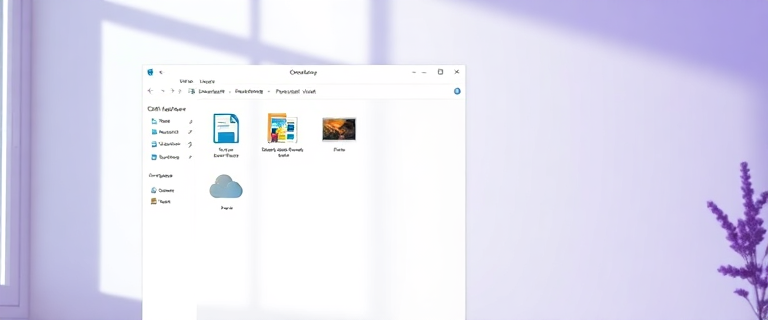
– Tight Windows integration: OneDrive behaves like a native folder in File Explorer on Windows, which makes everyday file management feel familiar and seamless. This familiarity is a practical benefit for many users who rely on Office apps and Windows workflows.
– Block-level sync: Only the changed portions of a file are re-synced, which saves bandwidth and time for large files that get updated frequently. This capability is a meaningful efficiency advantage over full-file syncing approaches.
– Personal Vault: An encrypted storage area that requires extra authentication to access. It adds a layer of protection for sensitive files stored in OneDrive, accessible on desktop and mobile.
– Sharing controls: OneDrive supports password-protected links and expiration dates on shared links, which provides stronger control over who can access content and for how long.
– Version history and recovery: Version history exists and can be useful in routine edits; premium plans provide broader recovery options, including the ability to rewind the entire OneDrive in certain disaster scenarios.
– OCR and search capabilities in the mobile and web interfaces help locate content inside images and PDFs, improving findability beyond simple filename search.
Performance and benchmarks
In practical testing, upload and download speeds were comparable between OneDrive and Google Drive for typical large files and folders. However, performance varies with file type, size, and network conditions.
For concrete data, a representative benchmark from a widely cited test shows OneDrive performing with strong throughput and moderate CPU usage during large-scale syncing. Specifically, a 10,000-file test reported upload times around 9 to 10 minutes and similar download times, with CPU usage in the mid-range (e.g., 47%). This reflects solid efficiency for bulk transfers, though individual results can differ based on hardware and network factors. It’s important to note that Google Drive’s tests also show strong performance, but the exact figures depend on file types and test conditions.
In short, if you’re evaluating speed, neither OneDrive nor Google Drive is universally faster across all scenarios. Expect robust performance from both, with small advantages in certain situations depending on your workflow and file mix. OneDrive’s block-level sync contributes to faster updates for edited files, which is particularly noticeable when you’re repeatedly saving large documents or media projects.
Common pitfalls and practical workarounds
Despite its strengths, OneDrive has known quirks that matter in daily use. Large or deeply nested folders can trigger sync issues, and some users encounter cryptic errors or path-length limits. Desktop relocation (moving the OneDrive folder outside its default location) can also cause shortcuts to vanish or sync confusion. These are actionable problems: plan for nested folders, avoid path length traps, and keep a clean desktop layout when syncing critical folders. If you encounter sync stalls, pausing and resuming sync or adjusting bandwidth settings can help. For laptops with limited storage, leverage the Files On-Demand mode to show files in File Explorer without consuming local disk space, and choose “Always keep on this device” only for files you truly need offline.
Other practical notes include this: OneDrive’s desktop folder appears in Windows Explorer as a separate OneDrive path, which can be confusing when you’re accustomed to the original Desktop and Documents folders. macOS users may see similar behavior with Finder integration. If you frequently move between machines, be mindful that moving or deleting shortcuts inside the OneDrive folder can affect shortcuts on other devices, so plan folder structure carefully and test workflows before large migrations.
On mobile, you’ll find features such as automatic camera uploads and a built-in document scanner, with the latter capable of uploading scanned documents directly to OneDrive. These mobile capabilities are particularly valuable for capturing receipts, business cards, or paper documents on the go.
Business use and SharePoint integration
OneDrive integrates deeply with SharePoint for team-level document management. For smaller teams, OneDrive for Business provides structured sharing and permissions, while larger organizations often rely on SharePoint to create intranet-style sites and broader collaboration surfaces. Microsoft 365 business plans bundle OneDrive with SharePoint, Teams, and the Office apps to enable enterprise-grade collaboration, governance, and compliance tooling.
From a decision perspective, this means: if your team already relies on Windows, Office apps, and Microsoft 365, OneDrive plus SharePoint can offer a coherent, standards-based workflow with centralized admin controls. If you primarily need browser-based collaboration or lighter admin overhead, Google Drive’s native tools and Shared Drives may feel more streamlined for that environment.
To summarize the enterprise angle: OneDrive shines when teams live in Microsoft 365 and Windows ecosystems, while SharePoint offers a tiered structure that scales for larger teams and more formal document governance.
Pricing and plans: a practical comparison
OneDrive pricing combines free storage with a spectrum of paid tiers that bundle 1) storage per user, 2) access to Office apps, and 3) security and management features. A storage-only plan is also available for users who want more space without additional apps. For context, shared pricing points against major competitors reflect differences in storage models (per-user vs pooled) and the value of included Office apps.
| Plan | OneDrive / Microsoft 365 | Notes |
|---|---|---|
| Free | 5 GB | Basic storage to start; Outlook attachments count against this quota in practice. |
| Individual | 1 TB per user with Microsoft 365 | Includes desktop Office apps plus protection features. Space typically allocated per user; corporate bundles differ by plan. |
| Family | 1 TB per user for up to 6 people (total up to 6 TB) | Shared across a household; includes the same Office apps and protections per user. |
| Business Basic | 1 TB per user (with 365 bundle, Teams, SharePoint, etc.) | 1 TB storage per user; Office apps delivered web and mobile versions; includes admin controls. |
| Business Standard | 1 TB per user (with desktop Office apps) | Includes desktop Office apps in addition to business-focused features. |
| Business Premium | 1 TB per user (with advanced security and Copilot features in some tiers) | Highest tier with broader security/AI features depending on plan. |
| Storage add-on | 100 GB add-on available | Storage-only option; does not include Office apps. |
In practice, Google Drive and Google One commonly offer pooled storage (shared across users), while OneDrive hinges on per-user allocations. This matters when you have many users or mixed usage patterns. For individuals, Google One often provides more free and bundled storage, while OneDrive offers strong value when protecting multiple users in a family or small business context through per-user allocations and the Office ecosystem.
Decision guidance: if you need large per-user storage and are already invested in Microsoft 365, OneDrive provides strong value, especially for families and entry-level business teams. If you want more free storage upfront or heavily rely on Google apps, Google Drive offers attractive pooling and seamless Google Workspace integration. The best choice depends on your ecosystem, user count, and whether Office productivity apps justify the price.
Version history and recovery: what to expect
Version history is strong for native Google files, with unlimited versions in many cases. On OneDrive, version history is readily accessible and useful for routine edits, but it is more limited by default than Google Drive’s approach. OneDrive’s disaster-recovery feature in premium plans allows a full account restore to rewind the entire drive, a capability that can be decisive in ransomware or mass-deletion scenarios. Google Drive maintains robust versioning for native Google files, but non-native file versions may be more limited than Google’s own formats.
For organizations concerned about worst-case recovery, OneDrive’s full-account restore provides a clear advantage.
Personal Vault and security controls
OneDrive’s Personal Vault adds an extra layer of file security. Access requires multi-factor authentication, and files stored there benefit from local BitLocker encryption when applicable. The vault is accessible on both desktop and mobile, with a practical limit on the number of files in free plans (3 files for Personal Vault on free accounts). Premium plans remove this restriction and expand vault capabilities.
Privacy, encryption, and what it means for you
OneDrive uses encryption in transit (TLS) and at rest with AES-256 keys protected in Azure. Microsoft follows a “zero-standing access” policy, meaning engineers do not have permanent access to customer data unless explicitly required for specific incidents. However, OneDrive is not zero-knowledge; Microsoft can access data under certain circumstances. For readers who require true zero-knowledge encryption, alternatives like Proton Drive exist.
Microsoft emphasizes threat monitoring and proactive security, but the absence of end-to-end or zero-knowledge encryption is an important privacy consideration for some users. A privacy-focused option might be preferred in environments with stringent confidentiality needs.
Support and ecosystem
OneDrive provides a robust knowledge base and access to Microsoft’s virtual assistant for support, with escalation to live chat if needed. In practice, many users rely on the familiar Windows environment and Microsoft 365 integration to resolve issues quickly.
OneDrive vs. Google Drive: a practical verdict on speed, search, and collaboration
Upload speeds and reliability between OneDrive and Google Drive are broadly comparable for most users. The strongest differentiators emerge in search quality and collaboration workflows. Google Drive’s OCR and content indexing, combined with smart filters and Boolean search, generally outpace OneDrive for locating content inside images and non‑Office files. Google’s native collaboration (Docs, Sheets, Slides) is browser-first and often feels more fluid in real-time editing, while OneDrive’s integration with Office apps provides powerful, familiar editing experiences but can feel less smooth for external sharing or cross-platform collaboration in certain scenarios.
For sharing and external access, OneDrive’s password-protected links and expiration controls give it a security edge in professional contexts, while Google Drive’s collaboration roles (Viewer, Commenter, Editor) and instant browser-based editing shine for fast, browser-centric workflows.
When it comes to recovery in emergencies, OneDrive’s full account restore is a decisive advantage for disaster recovery, whereas Google Drive excels in everyday forgiveness for native Google files and robust search. Pricing and value depend on whether you prioritize pooled storage (Google), per-user storage with strong Windows/Microsoft integration (OneDrive), or a balance of both (mixed environments).
Frequently Asked Questions
Can I use OneDrive and Google Drive together? Yes. You can run both services side by side on a single machine, using a multi-cloud manager to mount drives locally for easier file movement. This lets you leverage Google Drive’s free storage and search while benefiting from OneDrive’s Microsoft integration and recovery features.
Is OneDrive end-to-end encrypted? No. OneDrive does not offer end-to-end encryption by default, and it does not operate as a zero-knowledge service. Microsoft can access data under certain circumstances, though it employs multiple protections and monitoring. For zero-knowledge needs, consider alternatives such as Proton Drive.
What’s the Personal Vault limit on free plans? On free plans, Personal Vault storage is limited to a small number of files (reported as a 3-file limit in some reviews). Premium plans remove this restriction and provide broader vault capabilities.
Which is better for families? OneDrive tends to offer strong value for families thanks to per-user storage allocations (with a family plan covering multiple people). Google Drive can be more attractive for individuals seeking more free storage upfront, but families may benefit from OneDrive’s bundled Microsoft ecosystem and the shared-per-user model.
Final takeaway
OneDrive excels for Windows users and Microsoft-centric teams who want deep Office integration, predictable per-user storage, and strong recovery options. It delivers a familiar file-system experience, solid mobile capabilities including document scanning and camera uploads, and practical security features like Personal Vault and link‑level protections. However, it isn’t a zero-knowledge service, its search and browser collaboration aren’t always as fluid as Google Drive for browser-first workflows, and the free tier’s 5 GB can fill quickly when Outlook attachments count toward the quota.
Google Drive remains superior for users who prioritize advanced search (OCR, natural language queries), strong browser-first collaboration, and larger free storage. The best choice depends on your workflow: if you live in the Microsoft ecosystem or value structured sharing and recovery, OneDrive is a compelling pick; if you prefer browser-based collaboration and expansive search, Google Drive is the stronger option. You don’t have to choose one forever—many teams and individuals benefit from using both platforms to leverage their respective strengths.