
Tesla Cybertruck: A Buyer’s Guide to Specs, Range, Real-World Performance, Safety, and Market Viability
The following analysis evaluates the Tesla Cybertruck as a long‑term ownership proposition. It synthesizes known specifications, pricing history, real‑world performance, safety considerations, and the vehicle’s broader market reception, including production status and regulatory considerations in international markets.
The Cybertruck remains one of the most polarizing entries in the electric-pickup segment. It was introduced with a bold, angular stainless-steel design and a suite of high-tech capabilities, including a steer-by-wire system and vehicle-to-load (V2L) power delivery. Production began in late 2023 at Gigafactory Texas, with serial units reaching showrooms that November. By 2026, Tesla reported ongoing shifts in production plans and regional availability, and in late 2026 the company signaled that production would wind down by mid‑2027 at the same facility. In the same period, the truck’s reception swung from disruptive innovation to scrutiny over build quality, safety debates, and brisk price changes. For potential buyers, the essential questions revolve around three core areas: how the Cybertruck actually performs in everyday ownership (range, cost of ownership, reliability), how safe and durable it is in real-world use, and whether its market trajectory supports long‑term value and resale prospects.
Design, architecture, and manufacturing innovations
The Cybertruck uses a rugged, exoskeleton-inspired design built from 300‑series stainless steel panels. The doors and body panels have thicknesses of about 0.071 inches (1.8 mm) for the doors and 0.055 inches (1.4 mm) for the body, with laser-cut fabrication rather than traditional stamping. Tesla developed an innovative air-bending manufacturing process that shapes the steel using high-pressure air without direct contact with the surface, supporting the truck’s distinctive, flat-panel exterior. Early references indicated a plan to source a stainless-steel alloy developed with Aperam, but production details later emphasized the 4680-format lithium‑ion battery cells forming a structural pack. The 816‑volt nominal system powers a 123 kWh pack that serves as a structural member of the chassis, contributing to the vehicle’s stated ranges and high-speed charging capability.
Internal electrical architecture leans on a centralized, high‑speed network that reduces wiring complexity while enabling data and control signals to traverse a shared backbone. The vehicle also employs a 48‑volt mid‑voltage electrical system that feeds components such as steering actuators, drive-unit pumps, window regulators, and various control units. This mid‑voltage strategy is paired with a dual- and tri-motor powertrain layout that Tesla designed to be scalable across trims. The cybervehicle’s battery chemistry features 4680 cells with a total capacity around 123 kWh, and the pack is designed to be charged at up to 350 kW at 800‑V DC charging stations, enabling rapid top‑ups. For owners, these engineering choices translate into relatively high peak charging capabilities and a structural battery that contributes to payload and rigidity, though real‑world experiences may vary by road conditions, temperature, and charging infrastructure.
Important design notes include a Wade mode intended to allow water fording of up to about 2.5 feet (0.76 m), which Tesla describes as enabling limited amphibious use. This capability relies on the battery enclosure’s pressure management and waterproofing measures. Practical results, however, vary with depth, water speed, and vehicle orientation, and owners should treat Wade mode as a limited capability rather than a general aquatic traversal solution. The interior offers a five-seat layout (two upfront and a three-person rear bench) and a prominent 18.5-inch center touchscreen for vehicle controls, with a rear‑seat option adding a second 9.4-inch display in higher trims. The steering wheel adopts a “squircle” shape with a flattened top and bottom, designed to optimize visibility and control in rough terrain.
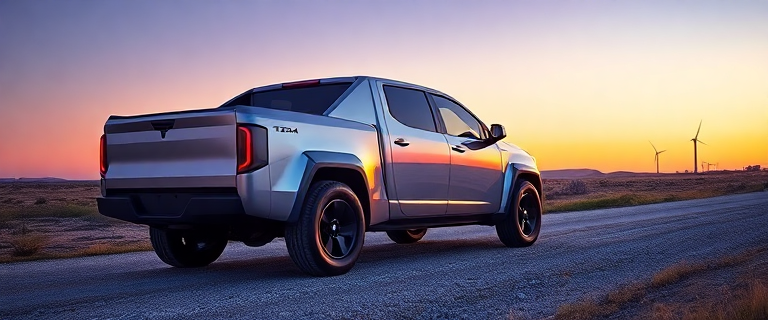
In terms of exterior construction, several observers noted the original “origami” aesthetic as provocative yet challenging to mass-produce, while others highlighted the potential for long‑term durability given the stainless steel shell. Critics and supporters alike have commented on the vehicle’s visual language as a deliberate departure from conventional pickup designs, accompanied by debates over pedestrian safety, repairability, and maintenance needs. The overall takeaway is that the Cybertruck blends substantial technical ambition with distinctive styling choices that invite both praise for engineering and scrutiny for practicality.
Why this matters: the design and manufacturing approach underpin the truck’s capability profile (range, power, and payload) and influence durability, ownership costs, and repair logistics. For buyers, understanding the structural approach helps interpret the stated performance figures and the potential long‑term reliability in real‑world use.
Powertrain, performance, and dynamic details
Tesla adopted a platform-based, standardized powertrain architecture across all Cybertruck variants. The base single-motor rear-wheel-drive (RWD) model uses a permanent magnet motor on the rear axle with up to 315 hp. The dual-motor all‑wheel-drive (AWD) configuration combines a rear permanent magnet motor (roughly 297 hp) with a front induction motor (about 303 hp) for a combined output near 600 hp. The tri-motor AWD arrangement places a permanent magnet motor at the front and two induction motors at the rear, delivering a peak combined output around 845 hp, with individual motor outputs approximately 276 hp at the front and 284 hp per rear motor. A quad‑motor option was considered in late 2021, though it did not reach end‑user release in typical market conditions.
Across trims, the Cybertruck’s final performance figures differ with configuration. EPA-estimated ranges vary depending on wheel/tire choice and cab size: the RWD Long Range is described as 331–362 miles, the AWD range is about 314–340 miles, and the Cyberbeast (tri‑motor) ranges roughly 301–320 miles. In practice, independent testing has shown a gap between EPA estimates and real‑world results, with some tests recording lower highway range than EPA figures predict.
The suspension strategy also varies by trim. Higher trims (Cyberbeast and Premium AWD) feature fully adjustable air suspension with substantial ground clearance, while the base Dual Motor AWD uses a coil-spring setup. The Cybertruck employs rear steering and steer-by-wire control with a 340° lock‑to‑lock range, plus four‑wheel steering that can allocate up to 10° of steering angle for the rear wheels to reduce turning radius. The combination of rear steering and steer-by-wire helps with maneuverability, especially in tight urban environments or off-road settings. Payload and towing capacities also scale with trim and tire selection, with maximum towing around 11,000 lb for the AWD variants (and a lower number for the base model). The cargo bed offers substantial volume, with a 6‑ft long by 4‑ft wide footprint and a bed volume reported in the neighborhood of 117–121 cubic feet depending on configuration, plus available underfloor storage in some trims.
Why this matters: the powertrain architecture defines not only acceleration and top speed but also torque delivery, efficiency, and how the vehicle behaves under load. The availability of V2L and V2H capabilities (vehicle-to-load and vehicle-to-home) across higher trims adds practical utility for outdoor work and emergency power needs, expanding the truck’s role beyond transport.
Range, charging, and energy use
The Cybertruck’s official EPA range estimates span 301–362 miles depending on configuration. The Long Range RWD variant is listed as 331–362 miles, while the AWD and the tri‑motor Cyberbeast variants show ranges within 314–340 miles and 301–320 miles, respectively. The 816‑V, 150‑Ah structural battery pack—composed of 4680 cells—powers the vehicle and weighs about 1,590 lb (720 kg). Tesla quotes a maximum charging rate up to 350 kW at compatible 800‑V DC charging stations. In practical terms, up to 128 miles (or 136 miles for the dual-motor version) of range can be added in 15 minutes of charging at 400‑V DC, though charging performance depends on the station and battery state of charge. The onboard AC charging accepts up to 11.5 kW at 240 V and 48 A. The battery pack is designed to be modular in a sense, with an 800‑V architecture that allows the charging system to dial into widespread high‑voltage fast‑charging networks.
Independent testing has highlighted a frequent discrepancy between EPA label range and real‑world mileage. Car and Driver reported highway-range results of 250 miles for both the RWD and the Cyberbeast in their 75‑mph highway test, underscoring the practical consideration that real‑world range can trail EPA estimates under highway cruising and load conditions. This gap between EPA estimates and real-world performance matters for daily planning, long trips, and resale expectations, making it essential for buyers to temper expectations with independent testing results when evaluating practical daily range.
At the same time, Tesla notes a Wade mode that enables water fording up to around 2.5 feet deep, aided by a “scuba pack” approach to keeping the battery enclosure watertight. This feature is positioned as a capability rather than a primary use-case, and buyers should view it as a limited utility rather than a primary off-road or marine substitute.
Why this matters: understanding the expected real‑world range helps buyers estimate daily driving feasibility, especially for long commutes or frequent highway trips. The gap between EPA estimates and independent highway testing is a critical practical consideration for those who rely on the Cybertruck for regular long-distance travel.
Range extender: promised too much or under-delivered?
During the initial reveal, Tesla proposed a range extender option: a 50 kWh module installed in the truck bed that would add roughly 120–130 miles of additional range, potentially taking the total to around 500 miles under ideal conditions. At the 2023 launch, Tesla started accepting a $2,000 deposit for the extender. By April 2025, the company had removed the extender from its website, and in May 2025 customers were informed by email that Tesla no longer planned to offer the range extender and that deposits would be refunded. This saga is a notable example of a promised capability that did not reach production, influencing buyers’ long‑haul utility expectations and Tesla’s credibility in this area.
Real-world ownership costs: safety, insurance, and warranty
Ownership cost considerations are central to any purchase decision. Insurance discussions surrounding the Cybertruck have noted higher premiums relative to typical trucks, with reports of about $1,000 higher annual premiums in certain policies. In 2025, Hanover Insurance reportedly terminated Cybertruck policies for some customers, illustrating a real‑world risk for owners concerned about ongoing coverage. Tesla also offers a warranty package that mirrors common industry practice: a four-year/50,000‑mile limited warranty, an eight-year/150,000‑mile powertrain warranty, and an eight-year/150,000‑mile battery‑components warranty. Complimentary maintenance is not included in Tesla’s warranty terms.
Additionally, the article’s safety and reliability narrative includes a mix of perspectives. Critics have highlighted build quality concerns and safety debates surrounding the vehicle’s angular design and stainless‑steel shell. Meanwhile, several outlets have offered positive assessments of the vehicle’s high‑tech capabilities and driving dynamics, with some recognizing the Cybertruck as a technically impressive platform despite its controversial styling and ownership costs. The insurance and warranty data above matter because they directly influence the total cost of ownership and the risk profile for potential buyers.
Safety and regulatory landscape
The Cybertruck has been the subject of ongoing safety scrutiny and regulatory considerations. By late 2024, NHTSA reported 26 complaints and seven recalls related to the vehicle. Safety experts raised pedestrian safety concerns due to the sharp edges and stiff stainless-steel exterior, with some caution about limited crumple zones. In the European regulatory context, the Cybertruck faced significant hurdles: it is not allowed on roads in the United Kingdom due to safety concerns and does not meet European Union pedestrian safety standards as a type, though individual registrations may be considered in some cases. Tesla has defended its design as capable of absorbing impact in a crash, while acknowledging difficulty in meeting EU pedestrian-safety standards. In Piedmont, California, a fatal crash highlighted a door-release accessibility issue for occupants who could not exit the vehicle promptly, emphasizing real-world safety trade‑offs. In Baytown, Texas, another high‑profile incident raised questions about battery safety in a crash scenario, with a family lawsuit alleging thermal runaway conditions and extreme heat exposure in a fire. By 2025, IIHS crash testing gave the Cybertruck a “good” rating for driver protection but issued mixed results across other rating categories, reflecting a nuanced safety picture rather than a simple verdict.
Elon Musk’s public commentary about water‑forging capabilities and the vehicle’s ability to serve briefly as a boat drew additional attention to marketing claims versus real‑world performance. Several documented water‑related incidents—such as a Cybertruck becoming stuck or submerged in water in various locations—underscore a broader mismatch that readers should weigh when considering the vehicle’s off‑road and expedition utility. In sum, the safety conversation for the Cybertruck combines regulatory concerns, real‑world incident history, and marketing claims, all of which influence ownership risk and decision-making for prospective buyers.
Sales, market performance, and production status
Sales data through 2024 positioned the Cybertruck as a top seller in the US electric pickup segment, with Kelley Blue Book estimating 38,965 units sold in 2024 and the vehicle leading in early 2024 sales for electric pickups. By the first three quarters of 2025, sales had fallen to roughly 16,000 units, contributing to a broader narrative of softness after the initial hype. In late 2024 and into 2025, reports highlighted price reductions and model updates designed to stimulate demand. The Cybertruck’s commercial reception drew scrutiny, with outlets labeling it an automotive flop in various terms and comparing its fate to historical market misfires, including the Ford Edsel in some analyses. The market narrative evolved over time as Tesla expanded into additional regions, including South Korea (2025) and the United Arab Emirates, Qatar, and Saudi Arabia (late 2025). By November 2026, CEO Elon Musk announced that Cybertruck production would end in mid-2027, with the Austin factory space repurposed for other product lines, hinting at broader strategic shifts for the company. In October 2026, Tesla also announced it would discontinue sales of the Cybertruck in Australia and New Zealand, marking a significant regional withdrawal after several years of deposits and pre-orders.
These market and production dynamics matter because they shape long‑term resale value, availability of aftersales support, and the confidence with which a buyer can plan for years of ownership. While the Cybertruck has drawn attention for its stainless-steel shell, high‑tech features, and dramatic design, it has also faced recurring questions about quality, reliability, price discipline, and the durability of a niche product when scaled to mass production and international markets.
Pricing history and which model to buy
Pricing evolved significantly from the original concept to production reality. Tesla initially announced a base price of $39,900 in 2019 with later updates lifting the base price to around $60,990 for the production trim lineup. Over time, price movements included the introduction of the Foundation Series at a premium, multiple price adjustments, and the temporary removal and later reintroduction of certain configurations. In 2023–2024, the base model was slated for release with a higher range and feature set, but actual market pricing for the various trims shifted, with the Long Range variant reappearing at roughly $69,990 in 2025 after a period of more limited availability. By late 2024 and into 2025, a pattern of price changes and trim adjustments continued, including the discontinuation of the base RWD option in mid‑2024 and the reorganization of trims around Dual Motor AWD, Premium AWD, and Cyberbeast configurations. Given the price volatility and the evolving feature set, a practical purchasing approach is to align a buyer’s needs with a trim that balances range, payload, and capability against price, considering how features such as adaptive air suspension, interior refinements, and available powershare options affect total cost of ownership.
For buyers seeking the best value, the Dual Motor AWD often represents a baseline in terms of price and capability, while the Premium AWD adds features, range, and improved ride comfort. The Cyberbeast, with its tri‑motor configuration and highest performance metrics, appeals to enthusiasts who prioritize acceleration and off‑road capability over maximum efficiency. The range extender option’s cancellation and deposit history are important cautionary notes for buyers calculating long‑distance practicality. In sum, the most prudent approach is to select a trim that matches your daily range needs, budget, and tolerance for interior and feature trade‑offs, while acknowledging that price and specifications can shift over time as Tesla updates its lineup.
Interior, cargo, and practicality
Inside, the Cybertruck offers a minimalist, tech‑forward cabin with seating for five and a pair of large screens aimed at delivering climate, media, and vehicle controls in a straightforward layout. The interior space is designed to maximize cargo flexibility, including a broad cargo bed and underfloor storage in certain trims. The bed dimensions are designed to be functional for work and recreational use, with a 6‑foot bed length and 4‑foot width, and bed volume reported around 117–121 cubic feet depending on trim and configuration. The frunk provides limited storage, with some configurations enabling more extensive interior cargo capacity when seats are folded. The rear seating area benefits from relatively generous headroom for a vehicle with a sharply sloped roofline, though taller passengers may experience a snug fit in the rear.
Infotainment combines a standard 18.5‑inch center stack with a rear‑seat display in higher trims, while Apple CarPlay and Android Auto are not included in the current Tesla lineup. Connectivity features include a built‑in Wi‑Fi hotspot and SiriusXM satellite radio, providing a modern multimedia experience, though the interface emphasizes vehicle controls and energy management over consumer smartphone integration.
Why this matters: real-world usability hinges on practical cargo space, interior comfort for passengers, and the availability of modern connectivity features. Buyers who plan to haul gear or use the truck as a work vehicle will weigh bed volume and payload against interior comfort and daily usability.
Safety, driver assistance, and warranties
Tesla positions Autopilot as standard with optional Full Self-Driving, though neither system currently provides fully autonomous driving. Standard safety features include adaptive cruise control, lane-centering assist, and blind-spot monitoring, with optional automatic lane changes and advanced parking features available on certain trims. For crash-test results and regulatory safety ratings, consult official sources such as the NHTSA and IIHS, which provide sector‑standard evaluation data.
Tesla offers a four-year/50,000‑mile limited warranty and an eight-year/150,000‑mile powertrain and battery warranty. There is no complimentary maintenance included in the standard warranty package. Given the vehicle’s safety history, engineering profile, and the ongoing regulatory discussions around pedestrian protection and curbside interaction, buyers should factor potential maintenance and repair costs into their ownership planning, along with any potential insurance premium variability noted earlier.
Notable incidents and market narrative: a synthesis
From its dramatic unveiling to its ongoing market journey, the Cybertruck has attracted a blend of praise for its engineering ambition and criticism for execution risks. Independent reviewers have highlighted the vehicle’s innovative 800‑V architecture, steer-by-wire system, V2L and V2H capabilities, and robust payload capability, while consumer and safety discourse has focused on build quality concerns, the vehicle’s polarizing aesthetics, and the challenges of meeting pedestrian-safety standards in Europe. The automotive press has compared the Cybertruck’s market performance to historic growth-and-hype cycles that did not translate into sustained mass adoption, with references to a broader category of “flops” in automotive history. Simultaneously, the truck’s ongoing international expansion—into markets such as South Korea and select Gulf states—reflects Tesla’s strategy of testing demand in diverse regulatory environments, even as production capacity in Texas shifts attention to alternative program allocations.
For readers evaluating the Cybertruck, the essential takeaway is that the vehicle blends groundbreaking technology with a controversial design language and a complex ownership proposition. The real-world tests and regulatory context described above matter because they shape both daily practicality and long‑term ownership costs, including insurance, warranty coverage, and potential resale value in markets that may or may not embrace the model.
Bottom line for buyers
The Tesla Cybertruck offers a unique combination of advanced powertrain technology, high torque potential, and unorthodox styling. It provides practical advantages such as V2L/V2H power delivery and a rugged, structurally integrated battery design, alongside a charging capability that supports fast DC charging. It also carries inherent risks, including real‑world range variability, notable price volatility, and ongoing safety/regulatory considerations, particularly in European markets and in regions with strict pedestrian-safety standards. The decision to buy should align with your daily range needs, your tolerance for potential maintenance and ownership-cost variability, and your appetite for a vehicle that remains the subject of intense public and media scrutiny. If your priorities are performance and utility with a bold design, the Cybertruck may be compelling; if value stability, mass-market reliability, or international accessibility are your primary concerns, you may wish to consider alternatives or to monitor how the model evolves through its remaining production window.
Notes for editors and readers: This article preserves core specifications, critical figures, and decision-relevant data drawn from production records, independent testing, and regulatory discussions available up to late 2026. Readers should verify the latest manufacturer statements and regulatory updates for any post‑publication changes to pricing, availability, and safety ratings, especially in markets outside the United States where regulatory status remains fluid.