
Halloween Candy: A Practical Guide for Trick-or-Treating, Parties, and Seasonal Fun
This guide helps you plan practical candy quantities, choose balanced assortments, and navigate allergy-aware options. It brings together bulk and variety-pack thinking, seasonal items, and display ideas so you can buy confidently, stock smartly, and celebrate safely.
How much candy should you buy? A practical planning approach
A reliable way to estimate is to start with neighborhood expectations and how many pieces you want each trick-or-treater to receive. A simple planning method follows four steps. First, set a traffic scenario you expect: a low-traffic night, a moderate evening with several dozen visitors, or a high-traffic night in a busy neighborhood. Second, decide how many pieces per guest you want to hand out. A common target is about 12 to 15 pieces per child, though you may choose more for large gatherings or adult parties. Third, multiply the expected number of trick-or-treaters by the pieces-per-visitor target to get total pieces needed. Finally, convert that total into shopping units by the typical piece count per bag or box you buy, and round up to whole bags to avoid running out.
Example: If you anticipate about 40 trick-or-treaters and plan on 15 pieces per child, you’re aiming for roughly 600 pieces. If you buy from bags that contain 60 pieces each, you’d plan for about 10 bags. If bags are 36 pieces each, plan for about 17 bags. This approach helps prevent overbuying or shortages and makes budgeting straightforward.
Why this matters: concrete planning reduces guesswork and helps you compare bulk boxes, variety bags, and seasonal packs by real consumption numbers rather than just by candy type. It also aligns with how shoppers on major grocery and bulk sites evaluate quantities: counts and weights drive the decision, not only taste.
Choosing what to buy: bulk boxes, variety bags, or seasonal items
Halloween candy comes in three broad formats, each with practical uses. Bulk boxes and large-count assortments provide the best price-per-piece and work well for high-traffic events, classrooms, or office bowls where you need consistent, economical coverage. Variety bags offer flexibility and simplicity when you’re short on time or want to accommodate a wide range of tastes with a single purchase. Seasonal or limited-edition products create excitement and can elevate a display or themed party, especially when paired with classic favorites.
In many shoppers’ carts, a balanced approach works best: a bulk box or two for steady supply, plus a few variety bags to cover diverse preferences, and a handful of limited-edition seasonal items to boost displays and gift bags. Examples of commonly seen seasonal items include pumpkin- and Halloween-themed shapes and flavors that appear in catalogs and retailer pages during the fall.
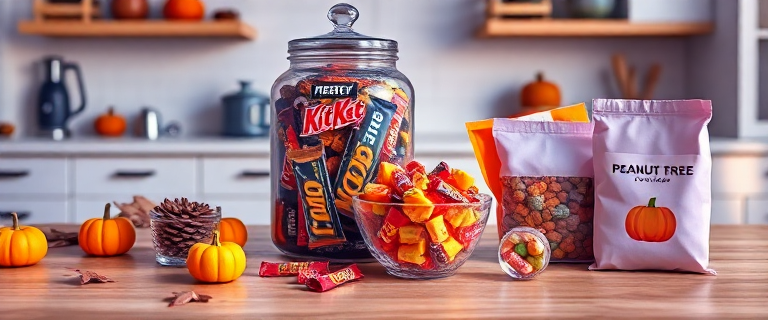
For reference, familiar chocolate options—such as Hershey’s, Reese’s, and Kit Kat—often appear in both bulk and variety formats and are reliable anchors for a crowd. Seasonal or limited-edition shapes and flavors can be added to treat bags, dessert boards, or buffet stations to create visual interest and a festive mood.
Allergy-aware treats: concrete options and safe planning
Families managing allergies benefit from concrete product suggestions and clear labeling guidance. When planning, include peanut-free and other allergy-conscious options, and maintain separate bowls or bags to minimize cross-contamination risks.
Examples of peanut-free candies and related options you can consider (and verify for current labeling before purchasing) include Airheads Peanut-Free Full-Size Chewy Candy Bars and Dual Candy and Gum Suckers that are labeled peanut-free, kosher, and gluten-free. For non-candy fillers that are still party-friendly, glow sticks, stickers, and small toys offer safe alternatives that pair well with wrapped candy.
Practical reminder: always re-check product labels, since formulations can change. If you’re considering a Teal Pumpkin Project-compliant approach, verify each item before including it as an allergy-aware choice.
Popular variety packs and ready-made assortments
To satisfy broad tastes without compiling dozens of different bags, many shoppers rely on popular variety packs. Examples of commonly seen formats include a Hershey’s/Kit Kat/Reese’s assorted Halloween candy bag, a 60-count bulk bag that combines M&M’s, Snickers, Skittles, and Twix, and a NERDS Core Winners Halloween variety bag. These packs are designed to cover chocolate lovers, fruity-chew fans, and a mix of textures in a single purchase.
When selecting variety packs, aim for a balanced mix that includes chocolate, fruity candy, gummies, and a few seasonal favorites. This helps ensure guests with different preferences can find something they enjoy while keeping the display cohesive.
Limited-edition seasonal products and release timing
Limited-edition Halloween candies often appear in late summer through October. Keeping a calendar or noting retailer pages helps you anticipate new releases and plan stocking strategies around sell-out patterns. When you do add seasonal items, verify their names and availability before publishing or promoting them to readers, so you don’t rely on outdated product information.
A practical approach is to reserve a small portion of your budget for limited-edition items each season, and to use them in treat bags, buffets, or dessert boards as accent pieces. This keeps displays fresh and inviting without compromising core candy coverage.
Candy buffets and displays: a concise planning checklist
If you’re hosting a party or stocking classroom bowls, plan a small buffet with four to six candy categories, using clearly labeled jars or bowls. Aim for roughly three to five pieces per guest, and include allergy-safe options so every guest can participate. A practical buffet also balances textures and colors, pairing chocolate with fruity and chewy varieties to create an inviting display.
For shopping, think about storage implications: choose items you can keep fresh in airtight containers, and consider the space you have for display-and-serve setups. A thoughtful buffet also accounts for wrappers and labeling to minimize handling and confusion during distribution.
Shopping strategy: where and when to buy
The best approach blends online bulk options with in-store availability. Online bulk buying can simplify planning and ensure you have a predictable price-per-piece, while in-store shopping can reduce shipping times and let you react to stock on hand. Stock up early on seasonal items to avoid sellouts, and compare current price/count data across retailers to maximize value.
A practical note: include a short shopping strategy in your plan. Compare online bulk options with in-store convenience, and prioritize limited seasonal items early so you don’t face last-minute shortages. Use current retailer information to confirm price and availability.
After Halloween: what to do with leftovers
Overbuying is common, so it helps to have a plan for leftovers. Possible options include donating unopened candy to local programs, participating in candy buy-back initiatives where available, and storing or freezing treats for later use. Verify eligibility and current programs in your area to choose the best path for reducing waste.
Safety and practical considerations
A quick safety check matters. Inspect wrappers for tears or holes, and avoid hard candies or gum for very young children who may have choking risks. Keep labeling clear and accessible, and rely on wrapper information to guide choices for groups and classrooms.
For trust and clarity, link to official public health guidance as you reference safety practices, and ensure all information reflects current product labeling and recommendations.
Quick action plan for a well-prepared Halloween candy setup
Before you shop, confirm your neighborhood traffic expectations, set a target for pieces per guest, and calculate total pieces needed. Decide how many bulk boxes and how many variety bags you’ll include, then add a handful of seasonal items for interest. Plan a simple allergy-aware section with peanut-free options and a few non-candy fillers. Finally, map out a small candy-buffet setup with four to six categories, labeled containers, and a distribution plan that keeps wrappers and labeling clear.
FAQ (concise guidance)
What is the best Halloween candy for trick-or-treating?
The best option is individually wrapped, easy-to-hand out candy that comes in an assorted mix with chocolate, fruity, and chewy treats to cover a range of tastes.
How much candy should I buy for Halloween?
Estimate based on neighborhood traffic and event size. Busy areas may require multiple large bags, while smaller households may need only one or two packs. Use the planning method described above to translate visitors into bags by piece count.
What candies are best for Halloween parties?
Variety packs, candy bars, lollipops, gummies, candy corn, chocolate candy and assorted Halloween candy are all suitable for party bowls and favor bags.
Are fun-size candies good for treat bags?
Yes. Fun-size candies are easy to portion, simple to pack, and ideal for party favors, classroom treats, and trick-or-treat handouts.
How can I create a balanced Halloween candy bowl?
Include a mix of chocolate, fruity candy, gummies, and lollipops, with a few classic brands so guests and trick-or-treaters have several choices.