
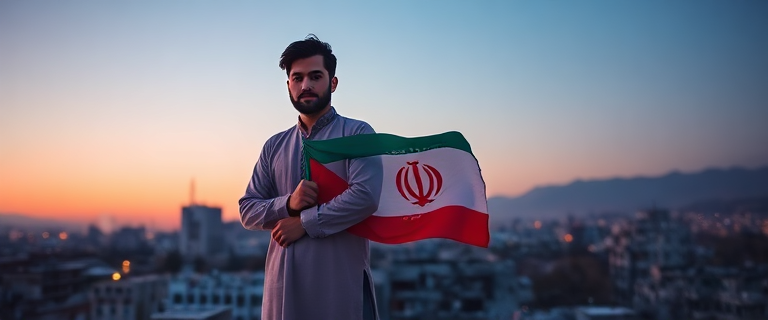
Iran in 2026: War, leadership, and the evolving landscape
Iran, officially the Islamic Republic of Iran, is a West Asian country with a long arc from ancient Persia to the contemporary state. Historically known as Persia in the Western world, the name shift to Iran was officially requested in 1935 by Reza Shah Pahlavi, a change that reflected a reclaiming of national identity rooted in Iran’s long history. Today, Iran identifies as a unitary, theocratic Islamic republic in which elections exist but many key offices—most notably the supreme leadership and military command—are not elected. The country sits at the center of a volatile regional dynamic, with a powerful state-led economy, a vast industrial base, and a highly strategic geographic position that makes its political choices felt across global energy markets and Middle East security. The 2025–2026 period has brought the most significant regional crisis in decades, including a multi-front war with the United States and Israel, a complex leadership transition, and intensifying domestic protests that continue to shape Iran’s external posture and internal governance.
The 2025–2026 war and diplomacy: a concise timeline
By early 2026, Iran faced a sustained confrontation with the United States and Israel, unfolding against a backdrop of diplomacy mediated by Qatar and Pakistan. The most consequential events included a February 28, 2026, joint strikes by the United States and Israel on Iranian targets, followed by the assassination of the country’s supreme leader, Ali Khamenei, and the elevation of Mojtaba Khamenei to the role of supreme leader on March 8, 2026, by the Assembly of Experts. These developments occurred amid an Iranian missile and drone retaliation campaign, U.S. strikes on strategic sites such as Qeshm Island, and Iran’s stated actions to block the Strait of Hormuz and respond to attacks on commercial shipping. The crisis also triggered a global oil-price shock and sparked mediation efforts aimed at reopening the Strait of Hormuz and stabilizing energy markets. As negotiations continue under Qatar and Pakistan’s mediation, the status of the war remains dynamic, with Iran insisting on a package of conditions tied to asset freezes, port blockades, and a staged return to the Straits’ normal operations.
Why this matters: in 2026, the war directly affects energy flows, regional security, and the stability of global markets. The outcome shapes Iran’s leverage in negotiations, its internal political order, and its future role in regional diplomacy. This section provides dated, factual milestones to anchor readers’ understanding of the ongoing crisis and the diplomacy surrounding it.
Geography and climate: mapping Iran’s physical context
Iran covers about 1,648,195 square kilometers, making it one of the largest countries entirely in Asia and the second-largest in West Asia. The country stretches from the Zagros and Alborz mountain ranges to the Caspian Sea in the north and the Persian Gulf and Gulf of Oman in the south, with a landscape that includes vast deserts such as the Kavir and Lut. Iran’s borders touch many neighbors, including Iraq, Turkey, and Afghanistan, and its coastlines along the Caspian Sea and the Persian Gulf connect it to major maritime routes. The terrain and climate are highly diverse, ranging from humid Caspian littorals to arid central basins, with seismic activity shaping development and infrastructure planning. Seismic vulnerability is a persistent concern, as is water scarcity across large swaths of the country. The UN and other observers have highlighted water scarcity as a critical human-security challenge in Iran today, underscoring why environmental pressures intersect with politics and energy policy.
Geography matters because it informs Iran’s security calculations, trade routes, and vulnerability to shocks in energy markets. It also helps explain why tensions around the Strait of Hormuz have such outsized influence on global oil and gas prices, given Iran’s positioning along major chokepoints and its capacity to influence maritime traffic.
Leadership and governance in 2026: structure and transition
Iran’s constitutional framework blends elected offices with unelected authority. The supreme leader (the Rahbar) wields ultimate authority over foreign policy, military leadership, and key security institutions, and the Guardian Council vets candidates and can block legislation. The president is head of government and handles day-to-day administration within the framework set by the Rahbar, while the Assembly of Experts elects and, in principle, can dismiss the Rahbar. The Supreme National Security Council shapes foreign policy and nuclear policy under the oversight of the president and Rahbar. Iran is officially a unitary state with a centralized system of provincial governance, and the Guardian Council holds veto power over laws and elections, reinforcing the unelected layer of political power.
Leadership in 2026 reflects a pivotal transition. Ali Khamenei was assassinated in February 2026 in a US/Israeli strike, with confirmation following on March 1, 2026. The Assembly of Experts elected Mojtaba Khamenei, son of Ali Khamenei, as Supreme Leader on March 8, 2026, in a unanimous vote. The presidency, as of 2024, was held by Masoud Pezeshkian, who was elected in July 2024 and remained the head of government into 2026, while ultimate sovereignty is described as vested in the Rahbar, who is not subject to popular vote. Iran’s political classification by some democracy indices places its system as electoral autocracy or authoritarian, underscoring the regime’s consolidated control over key levers of power despite ongoing formal elections and parliamentary processes.
To summarize the current officeholders (as of 2026): the supreme leadership is held by Mojtaba Khamenei; the presidency is Masoud Pezeshkian; the Guardian Council and Expediency Discernment Council continue to perform their respective constitutional roles. A concise view of these roles helps readers understand who makes the final decisions on defense, foreign policy, and national security, alongside who completes the formal electoral cycle for offices that are elected.
Nuclear program: tracing a high-stakes timeline
Iran’s nuclear program dates back to the 1950s, with a significant expansion in the 1970s under the shah and continued development after the 1979 revolution. The Joint Comprehensive Plan of Action (JCPOA) reached in 2015 between Iran, the P5+1 and the EU aimed to restrict enrichment in return for sanctions relief. In 2018, the United States withdrew from the agreement and reimposed sanctions, a move that prompted Iran to reduce compliance over time. By 2020, Iran announced that it would no longer observe the limits from the agreement, moving toward higher enrichment levels. By 2023–2024, enrichment up to 60% fissile content had been reported by international monitors and Iranian officials, prompting international concern that Iran had reached or was approaching a nuclear-threshold status.
As of 2025–2026, external observers and analysts described Iran as a de facto nuclear power by some standards, noting continued enrichment and autonomous fuel-cycle capabilities. The 60% enrichment level is widely cited as a marker of near-weapon-grade fissile material, which has fueled debates about thresholds, breakout timelines, and the need for continued diplomacy or deterrence. The 2025 non-compliance findings by the International Atomic Energy Agency (IAEA) and subsequent events intensified scrutiny and shaped the strategic calculus in Washington, Tehran, and allied capitals. This section presents the nuclear narrative as a core factor driving sanctions, regional security dynamics, and the broader political contest over Iran’s regional posture.
Human rights and domestic protests: context and recent developments
Iran’s human-rights situation remains a central element of its international relations and domestic legitimacy struggles. Since the 2022 Mahsa Amini movement, large-scale demonstrations and government crackdowns have continued to influence Iran’s political legitimacy and its relations with Western governments and international organizations. In 2025–2026, mass demonstrations and crackdowns persisted, with independent estimates of casualties and injuries reflecting the ongoing severity of the government’s response, including reported internet blackouts. International monitoring bodies have cited concerns about crimes against humanity and ongoing discrimination against religious and ethnic minorities.
In addition to protests, there has been ongoing international attention to the treatment of women, ethnic minorities, and religious groups inside Iran, including the Baháʼí community and LGBTQ individuals. The UN and other bodies have documented persistent restrictions on freedom of assembly and expression, and there are continual accounts of arrests and prosecutions in cases tied to political dissent and religious/minority status. The casualty figures from the 2025–2026 crackdown are estimates from independent sources, reflecting the challenges of independent verification in a highly controlled environment.
Economy in 2026: pressures, subsidies, and the war’s toll
Iran’s economy remains the region’s powerhouse in terms of energy resources, with substantial oil and gas reserves and a diversified manufacturing base. In 2024–2025, Iran’s economy was characterized by inflationary pressures, substantial energy subsidies, and a significant state role in major industries. The IRGC maintains a notable presence in economic sectors, including agriculture and strategic industries, and the energy subsidy burden has been a persistent fiscal challenge for the government. The war beginning in 2026 added further pressures—disrupting energy exports, complicating imports, and contributing to volatility in prices for ordinary Iranians.
Readers should understand inflation, the cost of living, and the impact of sanctions as direct drivers of domestic protest, migration, and Iran’s negotiating posture. The energy sector, including subsidies and domestic energy demand, shapes the broader macroeconomy, while sanctions and the war have amplified economic stress, particularly for households and small businesses. The government has pursued reforms aimed at diversifying the economy, privatization in some sectors, and efforts to expand biotechnology, nanotechnology, and pharmaceuticals, all within a framework of state influence and foreign-policy constraints.
Economic pressures: a concise snapshot
Inflation and high prices, especially for food and essential goods, have remained a core issue for ordinary Iranians. The state’s energy subsidies—estimated at substantial annual figures—have continued to shape household budgets and government deficits. The IRGC’s economic involvement complicates oversight and policy implementation. The 2026 war and related sanctions have worsened energy insecurity, added to public debt, and affected power supply and gas availability during winter months. These conditions help explain why protests and political impatience persist, influencing Iran’s willingness to engage in negotiations and its vulnerability to external pressure.
Foreign relations: aligning with partners and constraining adversaries
Iran maintains a wide network of regional and international relationships. It has no formal diplomatic relations with the United States or Israel, a longstanding position that shapes Tehran’s diplomacy and security calculus. Iran has fostered ties with Russia and China, reflecting shared strategic interests and economic cooperation, including energy and defense collaborations. Iran’s relationship with Saudi Arabia and Turkey has evolved over time, sometimes cooling and sometimes thawing, depending on regional dynamics and mediation efforts. Iran’s connections with Pakistan, Tajikistan, and other neighbors have also grown through security, economic, and energy channels. The Axis of Resistance, a coalition including Hezbollah in Lebanon, Iraqi and Yemeni proxies, and other allied groups, underscores Iran’s regional influence and its approach to deterrence and leverage.
In late 2024 and into 2025–2026, Iran’s foreign-relations posture also featured engagement within global blocs such as the SCO/BRICS framework and OPEC, highlighting Tehran’s intent to diversify partnerships amid Western sanctions and regional competition. The 2026 diplomatic track has focused on mediation efforts to manage the Strait of Hormuz and stabilize energy markets, while preserving Iran’s strategic options and its regional influence.
Demographics and culture: a broad profile
Iran is home to a diverse population and a rich cultural heritage that persists alongside political and economic upheavals. Ethnic composition and language use in Iran remain subjects of ongoing study; Persian is the official language, with a tapestry of regional languages and dialects. The country hosts a large Afghan refugee population and a sizeable minority religious communities, including Twelver Shia Islam as the state religion, with recognized minorities including Sunni Muslims, Christians, Jews, Zoroastrians, and others. The demographic profile—an often youthful population facing rapid urbanization—continues to shape social and political dynamics, education, health, and economic development.
Iran’s cultural heritage includes significant contributions in literature, architecture, music, weaving, and the arts. The nation’s 29 UNESCO World Heritage Sites (often cited as the 10th-highest in the world) reflect a continuity of civilization from ancient times to the modern era. Global attention to Persian poetry, carpet weaving, and religious and artistic traditions remains a meaningful backdrop to contemporary politics, even as current events dominate public discourse.
Tourism and travel considerations in a conflict context
Tourism in Iran has historically grown, with Isfahan, Shiraz, and Mashhad among the standout destinations. Arrivals surged before the COVID-19 pandemic and have shown resilience in subsequent years. However, in 2026 the war and regional tensions have affected travel advisories and safety perceptions. Travelers should consult official government advisories and realize that some travel plans may be disrupted by security developments, port restrictions, or regional confrontations tied to the broader conflict. Practical considerations include visa rules, safety advisories, and the current status of cross-border travel and flight operations.
Notes and context
The content above integrates historical background with the unfolding events of 2025–2026, presenting a cohesive profile of Iran as it stands during this period. Because events evolve rapidly, readers should treat the timeline as an evolving narrative and verify details against current reputable sources as needed. The sections on leadership, the nuclear program, and the 2025–2026 war are particularly time-sensitive and should be revisited for accuracy as events develop.
Further reading and authoritative references
For readers seeking deeper, authoritative coverage, consider established reference materials and reputable outlets that provide ongoing updates on Iran’s political structure, nuclear program, human rights context, and regional diplomacy. Given the dynamic nature of 2025–2026 events, look for analyses from international think tanks, press briefings from major news outlets, and official government statements for the latest developments.