
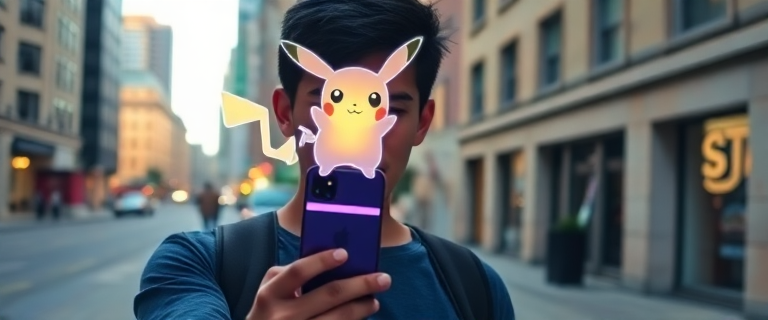
Pokémon GO in 2026: A practical guide to playing, costs, and changes under Scopely
Pokémon GO remains a freemium, location-based AR mobile experience that launched in 2016. By 2025 Niantic sold its gaming division to Scopely Explore, and the game has continued to evolve through 2026 with a growing roster of Pokémon, new raid formats, and ongoing live events. This guide explains what Pokémon GO is today, how it plays, what you can expect in 2026, and how to decide whether to start or return to the game.
What Pokémon GO is today (2026)
Pokémon GO is a free-to-play mobile game with in-app purchases, optimized for smartphones and GPS-driven gameplay. It uses a freemium model, where core play is accessible without spending, but optional purchases can accelerate progression, expand options, and unlock specific activities. By mid-2026, the game features a roster of 951 Pokémon, including regional variants, with new species regularly introduced. The game remains a community-driven live service, continually updated with events, raids, and limited-time features.
Player experience is shaped by where you live, the devices you use, and how you choose to participate in events or raids. The game’s location-based core—PokéStops and Gyms—drives both gameplay and social interaction, often creating different experiences in urban centers versus rural areas. While the game is designed to be playable without spending, many players report that costs, pacing, and access to remote features have shifted since the Scopely ownership began in 2025.
Key historical context still matters: the game introduced Buddy Pokémon in 2016, raised maximum player level over time (to 50 in 2020 and to 80 in 2025), and expanded features such as trading, gifts, and special Research. It also added Mega Evolution in 2020 and later expanded to Mega forms, with 40 Mega forms by 2024. Shadow Pokémon, Team GO Rocket, and Special Research have remained core PvE strands, while PvP has evolved through the Go Battle League since 2020. The shift to Scopely in 2025 continues to influence pricing, remote play options, and some gameplay pacing decisions.
How Pokémon GO plays: core loop and progression
The game’s core loop centers on exploring the real world to find and catch Pokémon, visit PokéStops for items, and battle at Gyms or in special Raid events. Catching is achieved by flicking Poké Balls at the target Pokémon, with success affected by capture rate, timing, and the type of Poké Ball used. After capture, players earn Candy and Stardust. Candy is used to level up or evolve Pokémon, while Stardust powers up a Pokémon’s Combat Power (CP). Evolution lines each have their own Candy types, and higher-CP Pokémon generally become harder to catch as players level up.
In the social and collection dimension, eggs hatch into Pokémon when you walk or use Incubators, and you can trade with friends to obtain regional variants or evolve Pokémon. Buddy Pokémon lets you select a buddy to earn Candy by walking a certain distance, with higher rewards for longer distances. The game also includes an Appraisal feature to evaluate a Pokémon’s strength and IVs. Community events like Community Day have long driven spawns and special moves for featured Pokémon, while evolving gameplay over time has added more ways to progress, collect, and socialize.
In 2026, several systems are still central to progression: Eggs and Incubators enable hatching; Trading and Gifts (including postcards) support social interaction; Field and Special Research tasks challenge players with long-term goals; and Mythical Pokémon appear through specific research tasks or events. The core loop remains about catching, evolving, and building a collection while balancing social play with solo progression.
Collection and social systems you should know
Eggs and Incubators let players obtain Pokémon by walking certain distances before incubation completes. Trading with friends, gifting, and postcard exchanges contribute to social progression and resource sharing. Gifts have a daily cap in some periods, and postcard albums let players exchange postcards as a social feature. Field and Special Research tasks drive long-term goals, including encounters with Mythical or Legendary Pokémon. Community activity, multiplayer raids, and events encourage player interaction and team-based play.
As of 2026, these core collection and social mechanics are still in place, with regional and event-based variations. The official app listings and community resources note that Eggs hatch through Incubators, and trading with other Trainers remains a documented channel for expanding one’s Pokédex and acquiring rare Pokémon. The combination of Eggs, Trading, Gifts, and Research remains central to normal progression and social play, not just a niche feature set.
Raids, battles, and endgame content (what’s current in 2026)
Pokémon GO’s raid system has evolved beyond the original Levels 1–5. The 2020s introduced Mega Raids with Mega Pokémon and, starting in 2022, Elite Raids offered in-person, high-challenge encounters that required a large coordinated group. In May 2023, Shadow Raids added a remote option, enabling teams to defeat a Shadow Pokémon either in-person or remotely; during battles, the Shadow Pokémon can become enraged, requiring purification with a Purified Gem. In February 2026, Super Mega Raids were introduced, adding a new tier with a shield-mechanic, Mega Pokémon, and larger team sizes for cooperative play. The raid ecosystem now includes Elite Raids (in-person, full-day prep), Shadow Raids (in-person or remote), and Super Mega Raids (remote-friendly with Mega mechanics). Remote participation has been supported for raids since 2025, with a widely reported limit of up to 10 Remote Raid Passes per day as of May 13, 2025.
Current raid formats vary by difficulty and participation mode. For a practical sense of scale, Gigantamax Battles—a separate, large-cooperation format—allow up to 100 players to join, split into teams of four or fewer. Dynamax Battles, inspired by related Pokémon games, use a currency called MP and permit up to four players to team up, with a Max Move mechanic tied to each Pokémon’s base type. These formats broaden the ways players can participate, including players with mobility constraints or those who cannot attend in person.
In addition to raids, trainer battles (PvP) have evolved since 2018. The Go Battle League, launched in 2020, supports three-on-three battles with CP-based formats such as Great League, Ultra League, and Master League. It enables online matchmaking and a world-spanning competitive scene, including qualification pathways for world championships. The 2026 landscape reflects ongoing balancing concerns discussed by the community, with updates and seasonal changes shaping each season’s structure and rewards.
Getting started: before you install and getting started in 2026
Pokémon GO is free-to-play and in-game purchases exist. The game emphasizes mobile play and GPS-based location information, with some caveats about device compatibility and battery usage. The official guidance notes that the game is optimized for smartphones and may not be fully compatible with tablets; a network connection is recommended for accurate location data. Background GPS can reduce battery life, and Adventure Sync records walking distance even when the app isn’t open, though this feature raises privacy considerations for some players. The 2026 landscape preserves these baseline expectations while noting that platform support includes iOS 15+ and Android 9+ as common requirements; the exact compatibility and tablet support may vary by device and region. This section helps you decide whether to install based on your device, network availability, and how you want to track walking distance or participate in remote activities like remote raids or Go Battle League.
Beyond technical requirements, the “before you install” mindset also involves understanding that Scopely-era pricing changes and remote participation options can influence how you pace your spending and how you plan your in-game activities. If you’re deciding whether Pokémon GO is right for you in 2026, consider your willingness to engage with location-based play, the level of social activity you want, and how much you value offline walking as part of the game’s core loop.
Cost and monetization in 2026
Pokémon GO operates as a freemium title with in-game purchases. PokéCoins are earned through gameplay and can be spent in the shop on items like remote raid passes, Incense, Lure Modules, and other boosts. Remote Raid Pass limits and pricing have been a focal point for readers and players since Scopely’s ownership began, with reports and reviews noting substantial price changes and the introduction of bundles in the web store. As of May 13, 2025, reports indicate that players could use up to 10 Remote Raid Passes per day to join Shadow Raids and Max Battles from anywhere, with bundles available in the Pokémon GO Web Store. Community sentiment around pricing has varied, with players noting that remote raid passes and postcard album pages started to require more payments, yet the game remains playable without mandatory purchases, albeit at a slower pace.
In short, Pokémon GO remains accessible to casual players who avoid monetization-heavy play, but a typical 2026 player who participates in remote raids or high-end endgame content will need to balance free-to-play pacing with occasional purchases. The exact costs can vary by region and by the post-Scopely pricing decisions, so players should verify current shop offerings and remote pass rules in-game.
To help decision-makers, a succinct 2026 cost and monetization section provides clarity on how PokéCoins are earned, representative shop costs, remote pass limits, pacing under free-to-play play, and pricing changes following the Scopely transition. This approach keeps monetization facts distinct from sentiment and clarifies how spending translates into in-game advantage or pacing.
Location, accessibility, and safety considerations in 2026
Pokémon GO is inherently location-based, so play quality varies by geography. Urban environments typically offer more PokéStops and Gyms, while rural or suburban areas may experience sparser spawns and fewer nearby activities. Moderators and researchers have documented rural disadvantages and distribution gaps in minority neighborhoods, which can influence enjoyment and progression. To help players plan, the article now includes a subsection explaining how location affects play, including how to mitigate gaps through community play, events, remote raids, and PokéStop submissions, while acknowledging the practical limitations of real-world geography.
Accessibility remains a critical concern. Players with mobility challenges or other disabilities report that baseline interaction radii, remote participation options, and alternative accessibility disclosures vary between platforms and updates. The 80-meter interaction radius—the baseline in several pandemic-era adjustments—was reinstated as a standard baseline during 2021, with ongoing discussions about accessibility features. The in-game and platform-wide accessibility disclosures may not list every feature, so players should verify which accessibility options Niantic/Scopely currently advertise for their devices. If you rely on Adventure Sync or other background features, be aware of privacy trade-offs and how location-sharing prompts are handled in your region.
Safety concerns have appeared in several contexts since launch, including warnings from police and safety authorities about inattention while playing, trespassing, and choosing safe locations for activities like raids. The game’s social and public-space footprint has also generated debates about where PokéStops and Gyms are placed, and how to responsibly enjoy in public spaces. Prospective players should approach play with awareness of their surroundings and local rules, particularly when playing near roads, crossings, or restricted areas.
What changed under Scopely ownership (high-level summary for players)
In 2025, Scopely acquired Niantic’s gaming division, including Pokémon GO, for roughly $3.5 billion, with the deal closing in May 2025. This shift introduced staffing changes and a shift in publishing and monetization decisions, while the game continued to operate with official updates, events, and ongoing content. Scopely’s ownership also brought Campfire and Wayfarer under its umbrella as part of the broader transaction. Players should expect continued evolution in pricing, remote play options, and delivery of new raid types and events as the platform adapts to this ownership change. The 2026 guide reflects these ongoing changes and emphasizes verified facts about monetization changes, remote play rules, and new raid formats as they become officially announced and validated.
Events, tracking current activities, and staying informed (2026)
Events are a central reason players return to Pokémon GO. The game has historically hosted Community Day events, Safari Zone events, and a range of in-game live and in-person activities. To track current events in 2026, players should check the in-game News, official Pokémon GO channels, and community tools that summarize verified events. The official guidance emphasizes checking the News section for new events and features, and community resources highlight that verified schedules and event details are preferable to relying on historical descriptions alone. When planning participation, keep in mind that event types can vary and schedules may evolve—so rely on current, official announcements to confirm what’s happening now and what’s coming next.
Trainer privacy, battery life, and Adventure Sync in 2026
Adventure Sync, a feature that records walking distance in the background to hatch Eggs and earn Buddy Candy, has been a consistent element of the game but raises privacy considerations for some players. Players should review the current privacy disclosures and decide how much data they are comfortable sharing. In addition, enabling background GPS can affect battery life, especially on devices with extended play sessions. The app’s notes about compatibility emphasize GPS-based location data and networking requirements, and ongoing feedback from players highlights the importance of understanding permission prompts, battery impact, and the trade-offs involved with Adventure Sync.
Verdict by player type (2026)
For casual players who enjoy outdoor activity and social meetups, Pokémon GO remains a compelling option with regular events, new Pokémon, and evolving raid formats. For players who value PvP, the Go Battle League continues to offer online competition with ongoing balance discussions, season structures, and rewards. For devoted collectors and social explorers, the combination of eggs, trades, gifts, field and special research, and social raids offers broad progression, though pacing and monetization changes under Scopely should be considered. For players who rely on remote participation or who live in areas with limited public spaces, the updated remote raid rules and Gigantamax/Mega formats can help bridge gaps, while still requiring awareness of location-based limitations. In short, Pokémon GO in 2026 rewards active exploration, social play, and strategic planning, but readers should weigh their local context, device readiness, and comfort with monetization and remote features when deciding whether to start or return.
Notes on accuracy and ongoing updates
This guide integrates information from official sources and widely reported community updates up through 2026. Exact numbers, dates, and feature details can shift with new patches and corporate changes, so players should verify current platform requirements (iOS 15+ and Android 9+), current remote raid rules (including the maximum number of Remote Raid Passes per day), and the present roster size and raid lineup when planning their gameplay. The article’s aim is to provide a practical, decision-focused view that helps new and returning players understand what Pokémon GO offers in 2026, how it plays, and what to expect from monetization, endgame activities, and location-based experiences.