
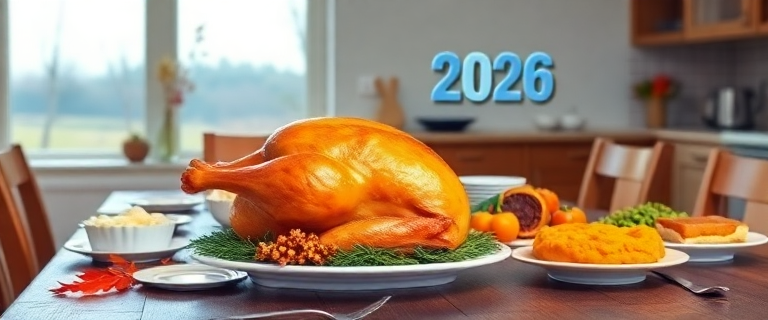
When is Thanksgiving 2026? Date, rules, and planning guidance
Thanksgiving in the United States for 2026 falls on Thursday, November 26. The date is not fixed to a single day every year; instead, it follows a specific rule: Thanksgiving is celebrated on the fourth Thursday of November. This rule has evolved over time and was officially fixed by federal law in 1941.
How the date is determined
The modern practice is straightforward: Thanksgiving is observed on the fourth Thursday of November. This convention was codified by federal law in 1941 to prevent confusion in years when November contains five Thursdays. The period before 1941 was messier: in 1939, President Franklin D. Roosevelt moved Thanksgiving to the next-to-last Thursday in November to extend the shopping season, an approach colloquially known as “Franksgiving.” That experiment sparked controversy and political debate, and by 1941 Congress settled on the current rule: the fourth Thursday of November. Under this rule, Thanksgiving will always fall between November 22 and November 28. For 2026, that fourth Thursday is November 26.
Why this matters: knowing the rule helps families plan not just for 2026, but for future years as the date shifts within a narrow range. It also explains why the holiday’s calendar is anchored to late November rather than a fixed calendar date.
Historical context and milestones behind the date
The modern Thanksgiving has deep roots in both national events and longstanding harvest traditions. The practice of a national thanksgiving date began to take shape during the Civil War era when Abraham Lincoln proclaimed a national Thanksgiving Day in 1863. Lincoln’s proclamation followed a concerted effort by editor and reformer Sarah Josepha Hale, who championed a unified Thanksgiving as a patriotic, family-centered national holiday. The late-18th century roots trace back to George Washington’s 1789 proclamation, which expressed gratitude and the desire to establish a national observance. Over the 19th and early 20th centuries, Thanksgiving evolved from regional harvest celebrations into a nationwide observance, with the date ultimately fixed as the fourth Thursday of November in 1941 to standardize the calendar for government offices and the economy alike.
Planning your 2026 Thanksgiving
Beyond noting the exact date, practical planning considerations can help you organize a smoother holiday. A popular modern variation is Friendsgiving—a pre-holiday gathering with friends that requires its own coordination and invites a more casual menu. If you’re hosting, consider building a planning timeline, assembling a shopping list well in advance, and coordinating with guests early to avoid last‑minute shortages.
It’s worth planning ahead for travel as well. Thanksgiving weekend is one of the busiest travel periods of the year, so booking flights, trains, or road trips early can save time, reduce stress, and secure better options.
For those who want a different start to the day, Turkey trots—community road races held on Thanksgiving morning—are a popular tradition in many areas and can be a fun family activity.
If you’re planning a meal, be inclusive: vegetarian and vegan options are increasingly common. Alternatives such as plant-based roasts (e.g., tofurky) and hearty vegetable mains can fit a turkey-centered menu or provide a complete vegetarian feast.
In addition to the meal and travel, many households also plan around post‑Thanksgiving shopping days. In common discourse, Black Friday and Cyber Monday are well known, but readers should also be aware of other days tied to the holiday season, such as Small Business Saturday, Native American Heritage Day, and Giving Tuesday. Brown Friday has appeared in some discussions, and the broader shopping season continues beyond Cyber Monday.
Traditions, culture, and observances
Thanksgiving traditions span food, faith, and community. The quintessential menu typically includes turkey with sides like mashed potatoes, stuffing, cranberry sauce, green beans, squash, and pumpkin pie. Many families also incorporate regional dishes that reflect local histories and tastes, and there is growing recognition of dietary diversity within holiday meals.
Traditional observances often include charitable dinners, religious services, and parades or football games. Parades—most famously the Macy’s Thanksgiving Day Parade in New York City since 1924—are a hallmark of the national pageantry surrounding the holiday. Football has become an integral part of the day for many families, just as charitable giving and community service are for others.
The holiday’s legacy is complex. A Note on the Holiday’s Complex Legacy highlights that National Day of Mourning and other criticisms reflect important perspectives from Native American communities. Acknowledging these views adds depth and authenticity to any complete account of Thanksgiving’s history.
Thanksgiving around the world
While the United States observes Thanksgiving on the fourth Thursday in November, other countries observe Thanksgiving or similarly themed harvest celebrations on different dates. Canada celebrates on the second Monday in October, Liberia observes on the first Thursday of November, and Norfolk Island (an Australian territory) marks Thanksgiving on the last Wednesday of November. This broader view helps readers understand how Thanksgiving fits into diverse cultural traditions and timing.
Vegetarian and vegan options for Thanksgiving
Many households now incorporate vegetarian or vegan dishes alongside or in place of turkey. Plant-based mains and sides—such as stuffed vegetables, mushroom gravies, and plant-based roasts—offer practical alternatives that align with diverse dietary preferences.
Post-Thanksgiving observances and shopping period
The period after Thanksgiving extends into a busy shopping season, with events and days that shape consumer activity and charitable giving. Black Friday marks the start of major retail sales, Cyber Monday emphasizes online deals, and Giving Tuesday focuses on charitable giving. Other notable days in the season include Small Business Saturday, Native American Heritage Day, and Brown Friday, which reflect a broader range of shopping and community priorities.
Fun facts and quick context
The scale of Thanksgiving is evident in historical and contemporary figures: for example, 40 million turkeys were consumed on Thanksgiving Day in 2019. In 2024, estimates suggested that about 276 million Americans would dine on turkey, with turkey-related spending approaching $983.3 million. These figures illustrate how deeply the holiday resonates in American life, cuisine, and the economy.
Frequently asked questions
When is Thanksgiving 2026? Answer: Thursday, November 26, 2026.
Why is it on the fourth Thursday? The fourth‑Thursday rule was established by federal law in 1941 to standardize the date; prior to that, the date varied and was sometimes moved for practical reasons, such as economic concerns during the Great Depression.
Is Friendsgiving still common in 2026? Yes. Friendsgiving is a pre-holiday gathering with friends that many people plan in addition to the traditional family Thanksgiving.
Should I plan for travel early? Yes. Thanksgiving weekend is one of the busiest travel periods of the year, so early planning is advisable.
Notes on authenticity and depth
This guide strives to present a balanced view of Thanksgiving, including both traditional narratives and critical perspectives. It acknowledges that Native American communities observe National Day of Mourning and other viewpoints about the origins and meanings of the holiday. Including these discussions provides a more complete picture and helps readers understand the holiday’s layered history.