
NYC Village Halloween Parade 2026: How to Watch, Join, and Plan Your Visit
Overview: date, timing, route, and what’s new in 2026
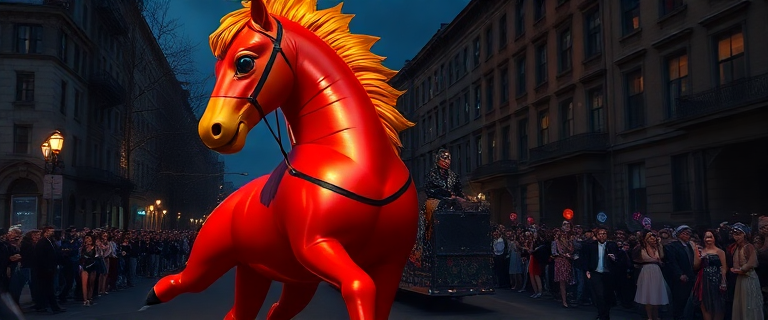
The Village Halloween Parade in Greenwich Village is a long-running, world‑famous spectacle that takes place on Halloween night. The 2026 edition marks the parade’s 53rd annual celebration. The theme for 2026 is Body & Soul, with a special emphasis on celebrating the Year of the Horse. The event is led by a prominent new Firehorse performance—a puppet spectacle commissioned by a MacArthur “Genius” and master puppeteer Basil Twist, choreographed by Julie Atlas Muz, and produced by Tandem Otter Productions. The Firehorses are intended to clear a path for thousands of costumed participants and to invite audiences and marchers alike into a shared moment of joy and creativity. Joey Arias—legendary performance artist and Downtown icon— serves as this year’s Grand Marshal. The banner behind the Grand Marshal’s float was created by artist Richard M. Prouse. The parade travels along Sixth Avenue, from Canal Street up to 16th Street, a route roughly 1.4 miles long (with a small extension from Canal Street to Spring Street adding about 0.2 miles). The gathering point is at 7:00 PM, and the procession often continues through the night, with the main wave of marching taking place after the opening gathering and extending for several hours. The parade is typically described as lasting two to three hours, though the exact pace and duration can vary by year. The official parade site notes that the event runs rain or shine, and that attendance is open to all in costume.
Beyond the spectacle, the parade has a deep history and cultural significance rooted in New York City’s communities. It has roots in New York’s queer community and has long served as a space for queer expression and activism, as documented by historians and coverage over the years. The event has also endured and adapted through significant challenges, including dramatic moments after 9/11, Hurricane Sandy, the 2017 truck attack, and the COVID-19 pandemic, underscoring the parade’s role as a resilient city tradition.
Participation: spontaneous viewing vs organized contingents
There are two distinct ways people engage with the Parade. You can join spontaneously by arriving in costume at the designated gathering point along Sixth Avenue and joining the general march. Alternatively, you can participate as part of an organized contingent, such as Thriller NYC, which requires upfront registration, mandatory rehearsals, and adherence to group rules.
Organized groups like Thriller NYC have strict processes. Registration opens October 1 and tends to sell out quickly. New participants must attend both indoor and outdoor rehearsals, and there is an age restriction (participants typically must be at least 15 years old). A costume or ticket arrangement is involved as part of the registration, with the understanding that Thriller NYC operates as a long‑term, community project rather than a one‑night event. For 2026, registration information indicates that some groups are already closed to new participants, so interested readers should verify current status as soon as possible.
For readers planning to march or join a group, it’s important to distinguish between spontaneous participation (anyone in costume can join the general march from the gathering point) and organized contingents (groups such as Thriller NYC that require advance registration, rehearsals, and have their own rules). This distinction helps readers align their expectations with what they want to experience and how much time they can commit.
Getting there: transportation, street closures, and viewing spots
The parade starts on Sixth Avenue, running from Canal Street to 16th Street, with the broader route continuing to 15th Street. For attendees, practical planning should include transit choices and awareness of street closures. Sixth Avenue will be closed to some traffic from Canal Street up to 16th Street on the parade evening, so plan travel routes accordingly and allow extra time for crowds.
Recommended subway options to reach the viewing areas include the A, C, E or B, D, F, M lines to West 4th Street; the 1, 2 or 3 trains to 14th Street; the L train to 6th Avenue; and the 4, 5, 6, N, Q, R or W lines to 14th Street-Union Square. If you’re aiming for specific viewing points along the route, be aware that crowds tend to cluster around popular stretches, and the area between Bleecker Street and 14th Street is historically among the most crowded. If you arrive early, you’ll have more flexibility to choose a vantage point; if you arrive later, consider alternatives north of 14th Street or south of Bleecker Street to optimize your experience while staying mindful of crowd density and safety considerations.
When mapping your timing, note that the official gathering time is 7:00 PM, and the procession typically begins a bit later, around 9:00 PM. The main body of the parade extends over several hours, so plan to stay for a viewing that matches your comfort with crowds and your schedule. Some external listings report a broader 7:00 PM to 11:00 PM window with the procession beginning at 9:00 PM; readers should rely on official parade communications for the most precise timings as the event date approaches.
Family-friendly alternatives: the Children’s Parade
Families seeking a lighter, earlier option can consider the separate Children’s Halloween Parade held in Washington Square Park. Historically, this afternoon event was linked to Greenwich Village activities and provided a more relaxed environment for younger children. If you’re planning family outings, this option offers an accessible alternative that still captures the festive spirit of the Halloween season in New York City.
History and resilience: a quick context
The Village Halloween Parade is more than a spectacle of costumes and puppets. It is a cultural touchstone with roots in New York’s queer community, reflecting a history of activism and expression. The parade’s narrative includes moments of collective resilience: after the September 11 attacks in 2001, the parade helped symbolize renewal with emblematic puppets like the Phoenix rising from the ashes; the 2012 parade faced cancellation following Hurricane Sandy, with community fundraising enabling a return the next year; and in 2017, the parade proceeded on the same day as the city’s truck attack, with leaders marching in solidarity. The COVID-19 pandemic led to a cancellation in 2020, underscoring the community’s commitment to public celebration when conditions allow. In 2024 the parade reached broad participation, continuing to affirm the event’s place as a defining New York City ritual.
Key figures and elements to watch for in 2026
The 2026 edition centers on Body & Soul and the Year of the Horse, highlighted by Firehorse puppetry created for this year’s celebration. The Firehorses are designed to embody energy, joy, and authenticity as they lead the procession. Grand Marshal Joey Arias brings a storied presence to the event, and the banner behind the Grand Marshal’s float—created by Richard M. Prouse—contributes to the visual identity of the opening moments. The route features thousands of costumed participants, giant puppets animated by volunteers, and the contribution of more than fifty marching bands. The parade remains a showcase of spontaneous creativity as well as organized performances, with a spectrum of artistic expression throughout the Sixth Avenue corridor.
Practical tips for a smoother experience
To maximize enjoyment, arrive early to secure a comfortable viewing spot, especially around the stretch between Bleecker Street and 14th Street. If you attend with children or prefer quieter vantage points, consider viewing areas south of Bleecker or north of 14th Street. Monitor official communications for any updates on schedule changes, street closures, or group registration statuses. If you’re considering joining a group like Thriller NYC, be prepared for the commitment of rehearsals and group guidelines, and verify current registration status for 2026. For spontaneous participants, wear comfortable shoes, bring water, and keep an eye on weather conditions as the event proceeds rain or shine.
Frequently asked questions (concise guide)
When does the parade start gathering, and when does the main procession begin? The official gathering time is 7:00 PM, with the main procession typically forming and moving along Sixth Avenue around 9:00 PM, lasting several hours. How can I participate? You can show up in costume to join the general march, or you can participate with an organized contingent such as Thriller NYC, which requires advance registration and rehearsals. Is there a family-friendly option? Yes—the separate Children’s Halloween Parade in Washington Square Park offers an afternoon alternative for families with younger children. Can I watch from anywhere along the route? Crowds tend to concentrate between Bleecker Street and 14th Street, so plan accordingly or choose viewing areas north of 14th Street or south of Bleecker Street to balance crowd levels. What transportation should I use? Subways including A, C, E (West 4th Street), 1, 2, 3 (14th Street), L (6th Avenue), and 4, 5, 6, N, Q, R, W (14th Street-Union Square) provide access to viewing areas, with sixth Avenue closures in effect during the event. For group participation specifics, check the latest Thrilling NYC or other contingents’ guidelines and status for 2026.