
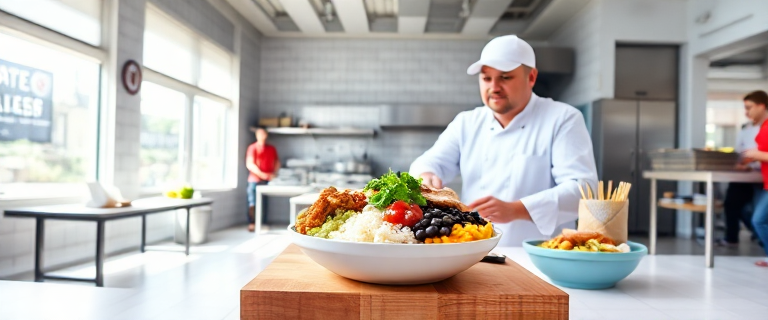
Chipotle Mexican Grill: A Comprehensive Brand Profile
Chipotle is a United States-based multinational fast-casual chain known for bowls, burritos, tacos, and other customizable Mexican-inspired fare. This profile traces its history, business strategy, marketing, labor and sourcing realities, safety record, and global expansion, with attention to current promotions, technology, and notable challenges.
Overview and Core Philosophy
Chipotle operates as a high-volume, front-of-house service model that emphasizes freshly prepared ingredients, customization, and a narrative around “Food with Integrity”—a sourcing philosophy that stresses natural, responsibly raised ingredients and dairy without added hormones. The brand has pursued a technology-forward approach, including digital ordering, drive-through-style pickup through Chipotlanes, and automation initiatives intended to improve efficiency while maintaining product quality. As of 2025, the company reported approximately 4,042 locations, revenue of about 11.9 billion USD, a net income around 1.54 billion USD, and a workforce of roughly 130,301 employees. These figures anchor Chipotle as a large, vertically integrated operator with a worldwide growth agenda that blends company-owned operations with international partnerships and joint ventures.
Chipotle’s name derives from a smoked and dried jalapeño chili pepper (chipotle) and signals its California-influenced, Cal-Mex menu identity. The brand has historically balanced rapid expansion with a focus on a narrow core menu—burritos, bowls, tacos, quesadillas, and salads—so it can execute at scale while preserving quality. This focus, combined with a willingness to experiment in adjacent concepts, underpins both its successes and its missteps in the broader corporate portfolio.
History and Milestones
Chipotle was founded by Steve Ells on July 13, 1993, in Denver, Colorado, motivated by a desire to serve fresh ingredients quickly after exploring taquerias in San Francisco’s Mission District. The first restaurant quickly demonstrated profitability, and expansion followed through Colorado and beyond. A pivotal development came in 1998 when McDonald’s became an investor, enabling rapid growth to more than 500 locations by 2005. McDonald’s fully divested in 2006, allowing Chipotle to pursue its own growth trajectory as a public company; the initial public offering occurred on January 26, 2006, after which the company used the proceeds to fund new store openings.
In the ensuing years, Chipotle expanded in the United States and abroad, opening its first location outside the U.S. in Toronto in 2008 and progressively broadening its geographic footprint. The company also undertook leadership transitions and corporate realignments, including Monty Moran’s ascent to co-CEO in 2009, followed by Ells assuming sole CEO responsibilities in 2017 after Moran stepped down from the position. A headquarters move occurred in 2018, with the corporate HQ relocating from Denver to Newport Beach, California, and later leadership changes continued through 2024, culminating in Scott Boatwright serving as CEO from November 2024.
Chipotle’s international strategy has combined direct ownership with strategic joint ventures and franchise-like arrangements to enter new markets—most recently in parts of Asia, the Middle East, and Latin America. Notable milestones include collaborations with Alsea for Mexico expansion and with SPC Group for the South Korea and Singapore markets, as well as a Kuwait/UAE entry via a partner network. The company has also pursued a portfolio of ancillary concepts (such as ShopHouse, Soul Daddy, Pizzeria Locale, Farmesa, and Tasty Made) to test diversification, though most of these have been discontinued or dissolved as of the mid-2020s. These historical episodes reveal Chipotle’s appetite for experimentation and the challenges of translating its core model across formats and geographies.
Business Model, Menu Philosophy, and Key Technologies
Chipotle’s business model hinges on ownership of its restaurants, a centralized service approach, and a streamlined menu designed for speed and consistency. Every restaurant is company-owned, with a field-support system that guides restaurant operations, training, and expansion. The menu concentrates on burritos, bowls, tacos, quesadillas, and salads, with proteins including chicken, carnitas, barbacoa, steak, sofritas (tofu-based), and vegetarian options. Toppings such as rice, beans, salsas, fajita vegetables, sour cream, cheese, and lettuce are typically included without extra charge, while extras such as guacamole may incur surcharges. The brand emphasizes Cal-Mex flavor profiles rooted in California and Mexican-inspired cuisine, while framing itself as a creator of fast, fresh, and customizable meals.
In practice, the majority of ingredients are prepared fresh at the restaurant level, with some items—beans and carnitas—being produced at a central kitchen location. The company famously does not use freezers, microwaves, or can openers in its restaurants, reinforcing a perception of freshness and a hands-on, preparation-forward model. To maintain speed and efficiency, Chipotle has introduced a variety of technology-enabled solutions: Chipotlane for mobile-order pickup, the Chipotle-branded drive-through-like lane that prioritizes pickup rather than in-store order placement; Chippy, an autonomous kitchen assistant developed by Miso Robotics to support tortilla production and other prep tasks; and Autocado, an automated avocado processing system developed in collaboration with Vebu to accelerate guacamole prep. By 2024-2025, the company’s automation initiatives were framed as a way to address labor constraints, sustain quality, and improve throughput as the footprint expands.
Beyond its core restaurant operations, Chipotle continues to pursue digital growth through its rewards program and a growing online ordering share. In 2023, roughly 37.4% of revenue was generated through online channels and delivery services, reflecting a substantial shift toward digital engagement and contactless experiences. The company’s branding campaigns—particularly those tied to its Food with Integrity promise—play a central role in marketing, while sponsorships and partnerships help extend its cultural reach outside the restaurant walls.
Marketing, Advertising, and Cultural Impact
Chipotle has built a reputation for marketing that blends social relevance with bold creative concepts. Notable campaigns—such as Back to the Start, The Scarecrow, and Cultivating Thought—have been recognized for their storytelling and cultural resonance. The brand has also engaged in sponsorships and partnerships, including collaborations with Roblox and the Haas F1 Team, to extend its consumer reach beyond traditional advertising channels. These efforts contribute to Chipotle’s identity around sustainable sourcing, innovation, and a modern take on fast casual dining.
In practice, marketing is used not only to promote new products and promotions but also to reinforce the core narrative of responsible sourcing and fresh ingredients. The company has experimented with guerilla-style product debuts and time-limited collaborations to keep its brand fresh and relevant in a fast-moving consumer environment.
Current Promotions and Loyalty
As part of sustaining customer engagement and driving traffic, Chipotle routinely introduces promotional offers and limited-time menu items. A recurring promotional framework has included a rewards program—Chipotle Rewards—designed to reward loyal customers and incentivize repeat visits. Recent examples of current and upcoming promotions include: a limited-time offer for a $6 entrée on a specified date, a promotion described as “JOIN CHIPOTLE REWARDS FOR A $6 ENTRÉE ON 10/31*” (US-only, with details and terms hosted on chipotle.com). In addition, the company has announced all-new menu pairings, such as Pollo Asado with Chili Lime Chips, described as a pairing that brings together freshly grilled chicken with hand-seasoned chips and a bright, bold flavor profile. These promotions are framed as timely, in-restaurant experiences to drive on-site traffic and digital ordering uptake.
Current menu innovations and promotions are typically framed as “Current Menu Innovations & Promotions” in the company’s communications, and they reflect the brand’s effort to balance value, freshness, and culinary curiosity in a way that resonates with a broad audience of diners.
Labor, Workplace, and Unionization Realities
Chipotle has faced a range of labor challenges over the years, including high-profile unionization efforts and regulatory inquiries. Specific events include store-level closings tied to union campaigns, as well as National Labor Relations Board (NLRB) actions and investigations. In particular, workers at Augusta, Maine, attempted to unionize, a store closing was reported in 2022 amid staffing challenges, and a subsequent NLRB complaint raised questions about corporate conduct during those disputes. In Lansing, Michigan, a restaurant became the chain’s first location to vote to unionize with the International Brotherhood of Teamsters in 2022. The company has also navigated immigration-related audits and enforcement actions, most notably in 2010-2011, when ICE conducted audits across multiple markets and Chipotle took steps to respond with legal and compliance support.
Together, these events illustrate ongoing tensions between growth ambitions, labor practices, and worker organizing, shaping investor and consumer perception of the company’s human capital strategy. The company has responded with workforce expansion plans, training investments, and compliance measures aimed at balancing growth with fair labor standards.
International Expansion and Global Footprint
Chipotle’s international strategy has leaned on a mix of joint ventures and partnerships designed to adapt its model to local markets while maintaining brand integrity. Notable milestones include a Kuwait-based franchise arrangement with Alshaya Group for the Middle East; a joint venture with Alsea to enter Mexico in 2026; and a joint venture with SPC Group to enter eastern Asia, with initial locations in South Korea and Singapore planned for 2026. By 2025-2026, Chipotle’s international portfolio already included footprint growth in Canada, the United Kingdom, and select European and Middle Eastern markets, with continued exploration of franchise-like partnerships to accelerate growth in regions outside the United States.
In North America, Chipotle expanded beyond the U.S. into Canada (with locations starting in 2008 in Toronto) and has pursued selective European entry through markets like the United Kingdom and France, among others. The brand’s international architecture emphasizes adapting to local tastes while preserving its core service model and ingredient standards.
Failed Concepts and Diversification Attempts
Beyond its core concept, Chipotle explored several diversification attempts that ultimately did not persist. These included ShopHouse Southeast Asian Kitchen (an Asian fast-casual concept), Soul Daddy (a short-lived soul-food concept connected to a TV show), Pizzeria Locale (a pizza concept), Tasty Made (a burger concept), and Farmesa (a California-inspired bowls concept). While these ventures allowed Chipotle to experiment with different cuisines and formats, most were discontinued or dissolved by the mid-to-late 2010s and early 2020s, underscoring the challenge of extending the Chipotle model beyond its foundational offerings.
In 2011-2016, Chipotle also invested in various media and promotional activities through executive involvement and strategic partnerships tied to broader branding and product development efforts. The lessons from these experiences illuminate the company’s willingness to test, learn, and occasionally prune non-core ideas to preserve focus on its primary brand mission.
Food Sourcing, Sustainability, and Controversies
Chipotle’s Food with Integrity narrative has been central to its brand promise, emphasizing naturally raised meat, organic produce where feasible, and dairy without added hormones. This narrative has been challenged by a series of controversies and settlements that test the limits of sustainable sourcing at scale. For example, the Coalition of Immokalee Workers (CIW) led a long-running campaign from 2006 to 2012 over tomato wages and Fair Food principles; Chipotle initially resisted committing to a state-wide tomato wage premium but later entered into an agreement with the CIW to improve working conditions in 2012. In 2019, Chipotle faced a $6.5 million settlement related to a false GMO-free labeling claim, highlighting tensions between marketing claims and supply-chain realities. The company has also pursued a policy of antibiotic-free and hormone-free beef and has stopped using genetically modified corn and soybeans in its foods, positioning itself as a leader in certain sustainability and animal-welfare initiatives, even as debates and investigations continue.
At the same time, the company has faced ongoing sourcing challenges and investigations into animal welfare practices and supplier conduct. These issues influence reader perceptions of the brand’s credibility and the feasibility of scaling its sourcing promises across a growing number of restaurants and suppliers.
Food Safety, Quality, and Outbreak History
Chipotle has publicly acknowledged a higher exposure to food-borne illness risk due to its use of fresh ingredients and minimal reliance on automation. A sequence of outbreaks between 2008 and 2018 tested the brand’s safety protocols and prompted significant operational changes. Notable incidents include a March–April 2008 hepatitis A outbreak traced to a La Mesa, California location; an April 2008 norovirus outbreak in Kent, Ohio; a July 2015 E. coli outbreak linked to a Seattle location; an August 2015 Salmonella outbreak in the Minneapolis area tied to tomatoes; an October 2015 STEC O26 outbreak in the Northwest; a December 2015 norovirus outbreak near Boston College; a 2017 norovirus incident in Virginia; and a 2018 Clostridium perfringens outbreak in Powell, Ohio. In response to these events, Chipotle implemented enhanced safety protocols, closed stores for training, and adopted more rigorous sanitation standards, including measures like Pascalization for ingredient pre-treatment and stronger handwashing and produce sanitation procedures.
When discussing safety, the company also notes that its approach prioritizes freshness and traditional cooking methods, which can entail heightened vigilance but also aligns with consumer expectations for high-quality, minimally processed foods. The 2016–2017 data breach and 2019 GMO-related claims further shape the broader conversation about data security and labeling accuracy in relation to product sourcing and marketing.
Data Security and Digital Reach
Chipotle’s data security landscape includes a notable 2017 data breach that affected 2,250 restaurants across 47 states, with subsequent investigations into payment-card security and related lawsuits. In 2019, customers also reported account breaches associated with mobile ordering, prompting the company to respond with security communications and system improvements. These events illustrate the importance of robust data protection for a business expanding its digital ordering and loyalty programs, especially as online revenue grows.
Nutrition, Dietary Options, and Allergen Considerations
Chipotle offers a range of vegetarian options (including rice, beans, fajita vegetables, salsa, guacamole, cheese and queso, and plant-based options like sofritas). The company markets itself as offering a variety of dietary options, including vegetarian and vegan choices, with gluten-containing ingredients limited largely to tortillas. The nutrition discussion has included concerns about calories in burritos, with debates comparing burrito content to other fast-food items, and references to independent nutrition analyses and third-party health rankings. The brand’s approach to customization means customers can tailor portions and ingredients to meet different dietary needs, weights, or nutritional goals.
Portion Size and Perceived Value
In mid-2024, a Wells Fargo analysis ordered identical Chipotle bowls from multiple locations and found substantial variation in portion sizes, ranging roughly from 14 to 27 ounces with a median around 21.5 ounces. This controversy—often discussed on social media and in financial analyses—highlights a core operational challenge: delivering consistent value across a large, dispersed restaurant network while controlling costs and maintaining customer trust in portion size and price. Chipotle has publicly faced these concerns as it scales, making it a critical factor in evaluating the brand’s long-term value proposition for customers and investors alike.
Leadership, Governance, and Corporate Management
Chipotle’s leadership has evolved through multiple transitions. Steve Ells served as founder, chairman, and CEO for many years and remained a guiding figure until stepping down from the chairmanship in 2020. Brian Niccol replaced Ells as CEO in 2018, with Ells later departing the board, and the board appointing interim and then permanent leadership over time. In 2024, Scott Boatwright was named interim CEO and later became permanent CEO in November 2024. As of January 2026, Chipotle’s management team includes Boatwright as CEO, Adam Rymer as CFO, and other senior leaders overseeing strategy, technology, operations, and food safety. The company emphasizes a governance structure with committees focusing on audit, compensation, and nominating and corporate governance.
Operations, Architecture, and Brand Experience
All Chipotle restaurants are company-owned, with no franchising in the traditional sense. The brand emphasizes a consistent architectural aesthetic—industrial, modern interiors with finishes such as corrugated metal, stainless steel, and white ceramic tile—and a signature approach to dining that centers on fast, fresh, customizable builds. The brand has explored solar energy adoption (plans to add solar panels to a subset of locations) and has invested in a range of design innovations, including a distinctive counter layout with an emphasis on an open, customer-facing food prep area. In addition, Chipotle has faced ADA-related legal challenges, notably the Ninth Circuit ruling regarding wheelchair access to the “Chipotle Experience.” The company has since pursued design adjustments to ensure accessibility in affected locations and to guide the development of future restaurants.
Narrowing the Focus: What It Means for Readers
Chipotle’s brand narrative blends a strong commitment to fresh ingredients and responsible sourcing with an aggressive growth strategy, robust digital platforms, and ongoing operational challenges. Readers seeking a comprehensive understanding of the brand will find a detailed chronology of leadership, a clear outline of the business model, and an honest accounting of the issues related to portion control, labor relations, and sourcing controversies. The company’s marketing prowess, long-running experimentation with new restaurant concepts, and strategic international partnerships add depth to the profile, even as they underscore the complexities of sustaining a large, global fast-casual operation.
Financial Performance and Ownership Context
Chipotle presents a history of increasing revenue and growing assets, with a sizable asset base and a substantial employee footprint. The company’s ownership is largely institutional, with the largest holders including major asset managers. The financial performance narrative covers many years of revenue growth, net income fluctuations, and expanding total assets and staff as the restaurant base grows. The financial table below captures the key trends across the cited years, illustrating the long-term scale and scope of Chipotle’s operations.
| Year | Revenue (USD millions) | Net income (USD millions) | Total assets (USD millions) | Employees | Locations |
|---|---|---|---|---|---|
| 2009 | 1518 | 127 | 962 | 22,250 | 956 |
| 2010 | 1836 | 179 | 1122 | 26,500 | 1,084 |
| 2011 | 2270 | 215 | 1425 | 30,940 | 1,230 |
| 2012 | 2731 | 327 | 2009 | 37,310 | 1,410 |
| 2013 | 3215 | 327 | 2009 | 45,340 | 1,595 |
| 2014 | 4108 | 445 | 2527 | 53,090 | 1,783 |
| 2015 | 4501 | 476 | 2725 | 59,330 | 2,010 |
| 2016 | 3904 | 23 | 2026 | 64,570 | 2,250 |
| 2017 | 4476 | 176 | 2046 | 68,890 | 2,408 |
| 2018 | 4865 | 177 | 2266 | 73,000 | 2,481 |
| 2019 | 5586 | 350 | 5105 | 83,000 | 2,622 |
| 2020 | 5985 | 356 | 6653 | 88,000 | 2,748 |
| 2021 | 7547 | 653 | 6653 | 97,660 | 2,956 |
| 2022 | 8635 | 899 | 6928 | 104,958 | |
| 2023 | 9872 | 1229 | 8044 | 116,068 | |
| 2024 | 11314 | 1534 | 9204 | 130,504 | 3,726 |
| 2025 | 11926 | 1536 | 8994 | 130,301 | 4,042 |
Ownership and Governance
Chipotle is primarily owned by institutional investors, with the top holders including major asset managers. The governance framework includes a board of directors and an executive team responsible for strategy, operations, finance, and compliance. Over the years, leadership has evolved through strategic changes—Ells’ tenure as founder and longtime leader, and the transition to new CEOs and board leadership. The company has also reorganized its corporate headquarters and management structure to support a broader, multi-market growth plan.
Conclusion: The Chipotle Trajectory
Chipotle remains a defining player in the fast-casual landscape, anchored by its Food with Integrity narrative, a scalable service model, and a digital-first growth trajectory. Its strengths lie in a detailed operational history, leadership transitions, and a clear articulation of its sourcing philosophy coupled with technology-driven efficiency gains. The brand’s ongoing challenges—portion-size perceptions, labor relations, and the complexity of sourcing at scale—require careful navigation as it expands into new international markets and tests next-generation automation. When the evidence clearly favors a particular strategic path, the company tends to lean into that direction, balancing growth with brand credibility and customer trust.