Is Your Kayem or Affiliated Brand Product Recalled? What to Look For and What to Do
As of October 2026, Kayem Foods Inc. is recalling roughly 1.58 million pounds of ready-to-eat meat and poultry products that may have been stored at unsafe temperatures. The U.S. Department of Agriculture’s Food Safety and Inspection Service (FSIS) classified the recall as Class I, its highest risk category, but, crucially, there have been no confirmed illnesses reported to date. The recall covers products sold in grocery stores and those sent to restaurants and other foodservice customers, with production dates spanning approximately March 31 to October 7, 2026.
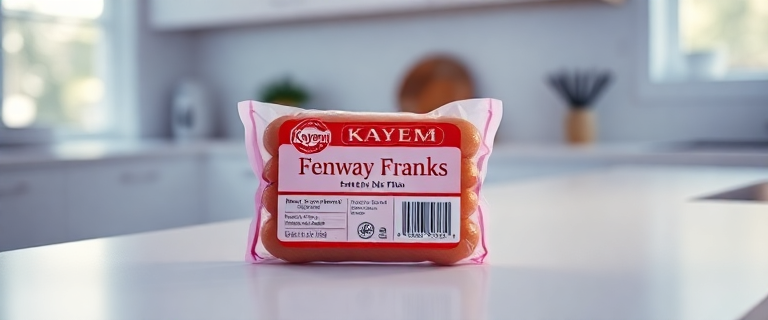
The recall announcement notes that the problem began with a retail customer complaint about warm product temperatures at delivery on October 1. Kayem subsequently found temperature deviations in a warehouse cooler where various products had been stored, and the FSIS notice does not name a specific contaminant. Notable recalled items include Fenway Franks, cocktail franks, ham, turkey breast, and bacon varieties such as thick-cut and applewood-smoked; this is not a complete list, and readers should verify against the official FSIS product list. The recall also includes hot dogs and franks in beef and other varieties, as well as deli meats and sausages produced under several brand names including Al Fresco, Deutschmacher, Essem, Jordan’s, Kayem, McKenzie, Triple M, and Winnisimmet. The total figure mentioned by outlets has been reported as 1,584,361 pounds, with product types exceeding 45 categories. Always cross-check a package against the FSIS-provided product list and not merely rely on a date range or appearance.
How to identify if your item is recalled
Begin with the establishment numbers inside the USDA mark of inspection. Recalled products bear one of three establishment numbers: EST. M/P 7839, EST. P 20935A, or EST. M 9520. A concrete example from the recall list helps illustrate why this matters: McKenzie’s black forest uncured ham appears with EST. 9520, and McKenzie’s hickory smoked turkey breast appears with EST. P-20935A. A package that does not display one of these three establishment numbers is not covered by the recall as announced, and a package that does display one should be cross-checked against the FSIS product list to confirm coverage. This cross-checking step—matching EST numbers to the official list—is essential because relying on the EST alone can be misleading if the product line or date range doesn’t align with the recall scope.
Next, verify the UPC and the production and expiration dates shown on the package. FSIS has published product labels and UPC codes, and the UPC printed under the barcode is the most straightforward matching item. The corresponding production and expiration dates are listed for each item in the FSIS documentation. It’s important to note that dates on their own can be misleading because Kayem’s own window for storage and shipping runs roughly from June 7 to October 14, 2026, while FSIS presents production dates generally spanning March 31 through October 7, 2026. Therefore, rely on the FSIS product list in addition to dates printed on the package. If you purchased products that also went to foodservice customers—such as items used in delis or cafeterias—there is a separate possibility that an item could be recalled even if it lacks a consumer-facing label. FSIS notes it will post retail distribution lists when they become available, which can help identify products found outside retail packaging.
There is also an important caveat for items that may have been bought unpackaged or purchased from a deli counters. In those cases, you cannot use a UPC or EST check. Instead, refer to the FSIS recall page for any posted retail distribution lists as they become available and ask the store or deli operator whether they received recalled product. Do not eat any suspected item. FSIS’s recall notice highlights that retail distribution lists will be posted when they are available, which is a key verification pathway for unpackaged or deli-sold items.
What to do if yours is recalled
If a package is identified as recalled, the FSIS guidance is clear: do not eat the product and either throw it away or return it to the place of purchase. The agency is particularly concerned that some recalled product may still be in consumers’ refrigerators. As of October 2026, there have been no confirmed illnesses, but taking prompt action remains important. If you are worried about a possible exposure or illness, contact a health care provider for guidance.
For consumer questions or issues related to Kayem products, you can reach Kayem’s customer service at 800-426-6100 or via email at info@kayem.com. For general food safety questions or to report problems with meat, poultry, or egg products, contact the USDA Meat and Poultry Hotline at 888-674-6854 or MPHotline@usda.gov. You can also submit concerns through FSIS’s online Electronic Consumer Complaint Monitoring System.
For those who need a direct path to verify requirements, visit the FSIS recall page for the official notice and the FSIS product list. The recall notice itself provides the formal scope and the exact itemization of affected products and UPCs, and it is the primary reference point when determining whether a specific item in your possession is included in the recall. In addition, the FSIS product list is the authoritative companion resource you should consult to confirm coverage beyond EST numbers.
In a deli or foodservice context, operators should segregate any potentially recalled items, document the action taken, notify suppliers, and communicate clearly with staff to ensure customers are informed and safe. If you are a consumer who bought a deli item or a product without packaging, ask the store or deli operator whether they received recalled product and consult the FSIS recall page for any posted retail distribution lists before disposing of or returning items.
Where to find authoritative guidance and contact options
The official sources to confirm recall details include the FSIS recall notice, the FSIS product list linked within the notice, and Kayem’s customer service channels. For immediate questions, the Kayem contact options are the most direct, but FSIS provides a federal resource network for reporting concerns or suspected illnesses and for accessing the recall product list. In practice, cross-checking the EST numbers on your package with EST. M/P 7839, EST. P 20935A, or EST. M 9520, then validating against the FSIS product list and the UPC codes, remains the most reliable verification path. If you lack packaging or if the product came from deli service, rely on the FSIS recall page for retail distribution lists and inquire with the retailer or deli operator about receipt of recalled lots.
Official resources and contact points include:
Kayem Foods customer service: 800-426-6100 or info@kayem.com; the USDA Meat and Poultry Hotline: 888-674-6854 or MPHotline@usda.gov; and FSIS’s Electronic Consumer Complaint Monitoring System for reporting problems with meat, poultry, or egg products. For up-to-date recall details and the full product list, follow the FSIS recall page link provided in the official notice.
Bottom line for readers
To determine whether your Kayem-affiliated hot dog, bacon, or deli product is part of the October 2026 recall, look for one of the establishment numbers inside the USDA mark of inspection—EST. M/P 7839, EST. P 20935A, or EST. M 9520—and then cross-check against the FSIS product list and UPC codes. Remember that a date range on its own is not enough to establish recall status; the UPC and the FSIS list are required for accurate verification. If you purchased items that were sold unpackaged or through a deli counter, rely on FSIS retail distribution lists as they are posted and confirm with the store or deli operator. Immediate actions for recalled items are straightforward: do not eat them and either discard or return them, following Kayem’s customer-service guidance and FSIS instructions. As a point of context, notable recalled products include Fenway Franks, cocktail franks, ham, turkey breast, and various bacon varieties, among others, with certified coverage across brands like Al Fresco, Deutschmacher, Essem, Jordan’s, Kayem, McKenzie, Triple M, and Winnisimmet. The recall’s Class I designation signals a serious risk if consumed, even as no illnesses have been confirmed at this time. For clarity and safety, rely on the official FSIS product list and the recall notice as the definitive reference.
Operationally, foodservice and retail operators should segregate and document any affected items, inform suppliers, and communicate with staff about the recall status and the proper next steps, including how to dispose of or replace recalled products. If you need to verify a specific item, use the EST numbers in combination with the official FSIS product list and UPCs, and consult the recall page for any posted retail distribution lists as they become available. For consumers, act quickly to avoid consuming recalled items and contact Kayem or the FSIS hotline with any questions or concerns. Announced October 17, 2026, with updates through late October, the recall remains a time-sensitive matter, so checking the latest FSIS notices is essential before making any decisions about items you suspect may be affected.