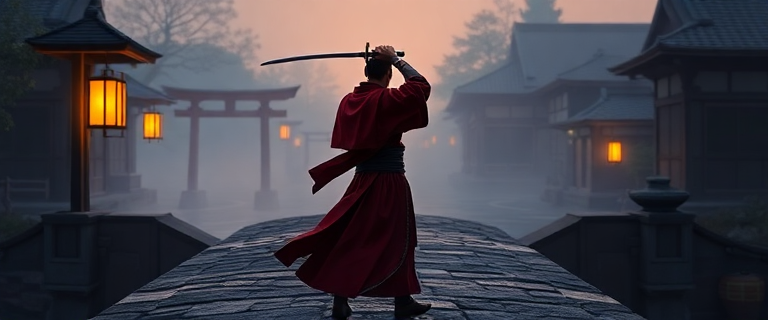
Capcom’s 2026 revival channels classic samurai action through a focused, story-driven campaign. The game emphasizes timing-based combat, a linear narrative path with meaningful exploration, and a modern take on the Onimusha formula that’s deliberately not a Soulslike.
Who should play this
If you enjoy character-driven action games and timing-based swordplay, this title is a strong fit. It’s designed to be accessible while remaining challenging for experienced players, offering a roughly 20-hour linear adventure with deliberate combat pacing. It’s less suitable for players who want a non-linear open world, or for those who prefer fast-paced arcade action over methodical defense and counterplay. In short: fans of precise, blade-focused combat will likely feel right at home, while players seeking a sprawling open-world or ultra-rapid combat may want to temper expectations.
Release date and platforms
Onimusha: Way of the Sword released for PlayStation 5, Windows, and Xbox Series X/S on September 4, 2026, moving up three weeks from its original date of September 25. A Nintendo Switch 2 version was announced later in June 2026, signaling further platform availability and optimization for the new hardware.
Combat system and soul economy
The core loop centers on Musashi’s Oni Gauntlet, which consumes the souls of defeated enemies to power a range of abilities. Souls come in different colors with distinct purposes: yellow souls heal health, red souls act as currency to upgrade skills, and blue souls power Oni Armaments—special weapon attacks that deal heavy damage. Using Oni Armaments in turn yields more yellow souls. A nuance many players notice early is that Break Issen—an execution-style finish unlocked through successful timing—offers a choice between massive damage or collecting more souls, rather than an instant knockout against all foes.
Defense and timing form the backbone of battles. In addition to standard blocking, Musashi can dodge, parry, or deflect incoming blows. Each option has a trade-off: dodging is reliable for escaping danger and fueling a reflex mechanic; parry drains stamina but opens up further punishment opportunities; deflects consume a large amount of stamina but can exploit armored enemies’ weaknesses. A unique mechanic is the Clash, which occurs when attacks collide and requires pressing the opposite button to win, forcing players to read both their opponent and the timing of the clash.
The parry and stance system ties into a broader risk-reward structure. Landing a parry or a deflect stacks the Blazing Gauge, a meter that sets Musashi’s sword aflame and temporarily increases attack damage. The Issen remains the defensive pinnacle: execute it by timing an attack to match the opponent’s swing, and Musashi dodges into a counterattack that deals significant damage and drains the enemy’s stamina. If timed perfectly, successive Issens can dramatically thin crowds or devastate bosses, but a mistimed Issen leaves Musashi open to punishment, so precision is essential.
Several additional elements shape combat. Deflects are powerful against armored foes but cannot be used to counter grabs. The Reflex Dodge mechanic, activated by a perfectly-timed dodge, fills a separate meter that, when fully charged, unleashes a Reflex Combo—an extended sequence that can erase weaker foes and dent tougher enemies. The system rewards players who balance offense with careful defense and adaptation to each encounter’s rhythm.
Visual feedback reinforces the feeling of mastery. Parries and deflections are rendered with precise, believable animation, making each clash feel like a genuine exchange between skilled swordsmen. Players will encounter Oni Armaments and Break Issen across regular combat as well as boss fights, keeping the action varied and demanding quick thinking and adaptability.
In addition to swordplay, Musashi can use the environment—tables, barricades, and other objects—as improvised shields or tactical advantages, adding a layer of environmental interaction to battles. A third soul type appears later in the game, but details are not provided here to avoid spoiling the experience for new players.
Soul economy and progression
Three soul types drive the system: yellow souls restore health, red souls unlock upgrades, and blue souls fuel Oni Armaments. Souls earned from defeating enemies flow back into Musashi’s arsenal to extend his combat options. Break Issen on a regular foe yields a decisive kill and rubs off souls, while on bosses it leads to choice-driven outcomes that influence how you approach later stages.
Upgrades come through a skill tree and equipment improvements. Players can earn upgrades and cosmetic rewards that affect sword damage, health, and the soul-collection mechanics themselves. The game blends these upgrades with collectible-driven exploration across Kyoto’s districts, rewarding players who explore to strengthen Musashi’s gear and abilities.
The combat system also emphasizes balance: certain moves consume stamina, so players must manage resources to survive longer fights and capitalize on openings. The overall design invites players to develop a personal rhythm—parry, read, and counter while weaving in Issen and Oni Armaments to maximize damage during critical windows.
Exploration and side content
Way of the Sword is largely linear with open areas that invite exploration. Side quests are a meaningful part of the experience, with some quests building upon one another to tell a larger narrative across several smaller stories. Notable optional content includes Lady Murasaki’s story quests and Shizuka’s Oni Portal quests, which illuminate more of the world and unlock additional tiers in Musashi’s skill trees. Collectibles like Lion Dogs provide light storytelling and mythology retellings that enrich Kyoto’s atmosphere. Side content is well-considered and integrated with the main campaign’s pacing, rewarding curiosity without breaking the forward momentum of the narrative.
Playtime, difficulty, and replayability
The campaign is designed to run in about 20 hours, with replayability supported by New Game Plus and a Carnage mode unlocked after the campaign’s completion. These features provide extended challenges for players who want to test their mastery and timing in tougher conditions.
Performance and pricing (buying options)
The game runs on Capcom’s RE Engine and generally offers solid performance across platforms. The Switch 2 version has been highlighted for its visual fidelity on the new hardware. Pricing follows standard AAA conventions, and bundle options may be available on platform stores, though specific prices and bundles vary by region and storefront.
Reception
Onimusha: Way of the Sword gathered generally favorable reviews across major outlets. Metacritic aggregates show high scores across platforms (NS2 89/100; PC 83/100; PS5 85/100; XSXS 83/100), with OpenCritic at a 94% recommend rate. Individual outlets offered strong impressions, including Eurogamer (4/5), Game Informer (8/10), GameSpot (8/10), GamesRadar+ (3.5/5), Giant Bomb (4/5), Hardcore Gamer (4.5/5), IGN (10/10), Nintendo Life (9/10), and Nintendo World Report (9/10), among others. Overall, critics describe the game as a well-crafted, accessible action title that pairs tight combat with a character-driven story set in a stylized feudal Japan.
Note: the game has been described as not being a Soulslike, with a focus on accessibility and deliberate, timing-based combat that still challenges players who seek precision and mastery. This distinction is a key part of the reception, positioning Way of the Sword as a more forgiving samurai epic compared to some peers while still rewarding careful play.
Notes
Some players and reviewers highlighted the strong voice acting in the Japanese version, with Yoshimasa Hosoya as Musashi and Aya Endō as Shizuka receiving praise. Opinions on English localization varied; several players found the Japanese VO preferred for authenticity. The title also features cinematic motion capture and a focus on authentic-feeling swordplay, which reviewers appreciated as a fresh nod to classic samurai cinema within a modern action framework.
Origins and development highlights
Capcom positioned Way of the Sword as a cinematic return to the Onimusha series, designed to modernize the core mechanics while preserving the franchise’s distinctive blade-based combat. The game was greenlit in early 2020 after a period of resource expansion for Capcom’s RE Engine, with developers noting that the title was designed to be accessible yet challenging for experienced players. Capcom emphasized realism in combat through consultation with real swordsmen and historical advisors, aiming to deliver a grounded-feeling feudal Japan, even as Genma threaten Kyoto. The project was publicly revealed at The Game Awards in December 2024, and it subsequently released on PS5, Windows, and Xbox Series X/S on September 4, 2026; a Switch 2 version followed the mid-2026 reveal.
A note on the soul types
A third, story-related soul type appears later in the game, but the specifics are not described here to avoid spoiling the experience. This keeps the focus on how yellow, red, and blue souls drive the core systems while acknowledging there is more depth for players who reach that point in the campaign.