What Kevin Warsh Said at Jackson Hole: Inflation, AI, and a Quieter Fed
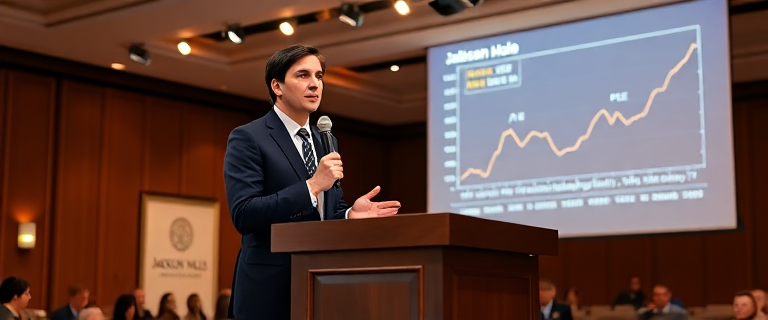
The Jackson Hole Economic Policy Symposium continues to be a crucial barometer for Federal Reserve thinking and market expectations. In his first high‑profile address as chair, Kevin Warsh presented a cautious, data‑driven path for monetary policy that centers on how inflation evolves, how the economy demonstrates resilience, and how the Fed communicates with markets. The core message is clear: inflation remains above the 2% target, the economy shows surprising strength in many areas, and Warsh argues for a quieter, more information‑driven approach to policy rather than relying on explicit forward guidance.
Warsh’s Core Message: Inflation Above Target, Economy Resilient
Warsh focused on the Fed’s central challenge: price pressures are not yet clearly returning to the 2% goal. He noted that while inflation readings have cooled from their earlier peaks, the underlying trends have not shown meaningful improvement. That reality shapes the Fed’s mandate—to deliver price stability while supporting maximum employment.
Digging into the data, the Fed’s preferred long‑run gauge—PCE inflation over 12 months—stood at 3.7%. Over the prior six months, PCE inflation clocked in at 4.1%. These figures underscore that price pressures remain well above the target, even as some components ease. On the labor side, Warsh pointed to robust economic activity, healthy business investment, and a labor market that has cooled from its pandemic peak but remains resilient. The unemployment rate hovered around 4.1%, a level many economists would regard as near or at full employment depending on the broader context.
Beyond headline numbers, Warsh emphasized the goal of underlying inflation—the rate of price changes stripped of idiosyncratic swings. He argued that it must move toward the 2% objective in a clear and timely way. “We must be confident that underlying inflation is moving to our objective, clearly and at sufficient speed. Otherwise, we have work to do.”
The Fed’s Stance on Forward Guidance
One of Warsh’s most debated positions is his skepticism about forward guidance. He argues that explicitly signaling future policy decisions—especially across the cycle—can hinder the Fed’s ability to respond to evolving conditions. In his Jackson Hole remarks, he described forward guidance as a practice that served during crises but has overstayed its welcome in normal times.
He defined forward guidance as a public commitment about the future path of policy and warned that “oversharing policy deliberations and overcommitting to future decisions can lead markets, businesses, and households astray.” He warned of a hall‑of‑mirrors effect, where market expectations drift away from the economy’s actual dynamics, raising the risk of policy mistakes. Warsh urged a shift toward clearer, unfiltered market signals—price levels, credit conditions, asset prices, and other real indicators—so the Fed can interpret the stance of monetary policy in the current cycle without being tethered to a fixed forecast or rulebook.
Practically, Warsh urged humility about forecasts and credibility in the Fed’s objective. He reaffirmed that the primary tool remains short‑term interest rates and that policy should stay flexible enough to respond to new information rather than promising a rigid future path. In his own words, he advocated moving away from fixed projections toward robust analysis, flexible response, and transparent, data‑driven judgment. He also highlighted the importance of a quieter Fed—one that communicates with purpose rather than preannouncing the next move.
AI as a New Production Factor
A defining thread of Warsh’s discourse is treating artificial intelligence as a new production factor with profound implications for investment, productivity, and monetary policy. He described AI as a catalyst for a new phase of capital investment and raised questions about how it could reconfigure the economy’s supply and demand balance over time.
On the investment side, Warsh noted that AI accounts for more than half of the 9% quarterly growth in capital expenditures, meaning AI deployment is a major driver of firms’ investment in equipment and intangible assets. The long‑run impact of AI on productivity remains uncertain. Key questions include whether AI usage will be complementary or substitutive to labor, whether models will push firms toward greater capital intensity, and how the broader market structure will capture value from AI innovations—whether the gains accrue to AI labs, chipmakers, cloud providers, or to businesses and consumers.
From a policy perspective, these developments matter because AI‑driven productivity could influence the pace of output growth, inflation dynamics, and the level and volatility of capital spending. The Fed will need to assess how AI affects demand, supply, and inflation over time. Warsh stressed that, while AI’s long‑term effects remain uncertain, the rapid deployment of capital‑intensive AI suggests policymakers should vigilantly monitor investment signals, asset prices, and the evolving market structure for shifts that might influence inflation and employment.
Current Inflation Landscape
To ground the discussion, Warsh offered a data‑heavy snapshot of inflation and its trajectory. The takeaway remains that inflation sits above target, but readings have improved enough to deserve careful watching rather than complacency.
PCE inflation remains elevated at 3.7% on a 12‑month basis, with 6‑month inflation at 4.1%, indicating ongoing price pressure even as some components slow. Looking at the breadth of price increases, the PCE basket shows that over the past 12 months, 54% of goods and services rose by more than 3%. In the last six months, 49% of items exceeded a 3% price gain. While these shares have come down from their post‑pandemic peaks, they remain meaningfully higher than pre‑pandemic norms. Inflation expectations and inflation compensation embedded in swaps markets have remained anchored, offering some reassurance that self‑fulfilling inflation dynamics are not currently destabilizing the outlook.
Crucially, Warsh reminded audiences that headline inflation improvements do not by themselves confirm a durable move toward the 2% target. The Fed’s emphasis should be on underlying inflation—the persistent, generalized trend in prices that better captures the inflation risk the central bank seeks to mitigate.
Labor Market and Consumer Spending
The labor market has long been a pillar of the economy, and Warsh emphasized that it remains robust even as hiring cools from the ultra‑heated pace after the pandemic. Key signals include a jobless rate near 4.1% and initial claims close to decade‑low levels, signaling ongoing demand for workers. Real spending has remained resilient, rising by more than 2% over the last four quarters, while private domestic final purchases (PDFP) have grown at roughly 3% year to date. Labor supply dynamics show a slower growth path, reflecting a large rematching wave from the pandemic; in turn, monthly job gains tend to be more modest, even as many workers stay employed.
Taken together, these signals point to a labor market that can support continued consumer spending and business investment, but the inflation challenge remains the more delicate and persistent issue policymakers must manage.
Credit Conditions and Financial Market Signals
Credit conditions and financial signals matter for policy because they shape borrowing costs, investment choices, and the broader demand trajectory. Warsh highlighted several contemporaneous indicators: spreads on corporate bonds and leveraged loans have sat near the lower end of historical ranges, signaling relatively favorable financing conditions for borrowers. The Senior Loan Officer Survey indicated that commercial and industrial loan standards were easier than usual, supporting stronger capital expenditure and investment activity. The Fed also monitors a wide range of market signals—asset prices, Treasury yields, exchange rates, and commodity prices—to gauge financial conditions and prospective inflation pressures.
While financing conditions have remained accommodative, Warsh warned that evolving financial conditions could tighten or loosen in response to policy actions or external shocks. The balance between AI‑related investment and the risk of financial tightening remains a critical policy channel to watch.
Policy Implications and Potential Rate Moves
Warsh signaled openness to higher rates if underlying inflation does not move toward the target quickly enough, but he framed this within a data‑driven, flexible decision framework rather than a mechanical rule. The central question remains whether underlying inflation accelerates or simply fluctuates.
Rates continue to be the Fed’s primary instrument for achieving the dual mandate. Warsh cautioned against overreliance on unconventional tools except in genuine crises and urged a disciplined, flexible approach to rate decisions informed by current data. He resisted laying out a fixed reaction function or an explicit forecast path, noting the limits of forecast accuracy amid geopolitics, global supply chains, and rapid technological change.
The decision framework Warsh envisions centers on monitoring market signals, assessing underlying inflation, evaluating the labor market, and then determining policy moves. This approach prioritizes data in real time over a preset script. The practical upshot for businesses and investors is straightforward: if inflation does not move decisively toward 2%, rate hikes remain plausible; if a clearer path to the target emerges, near‑term tightening may be less likely. Markets will respond to incoming data, and the Fed’s mindset will be guided by the balance of inflation progress, employment stability, and financial conditions.
Key Takeaways for Businesses and Investors
From Warsh’s Jackson Hole remarks, several actionable implications emerge for corporate strategy, investment decisions, and market positioning. Firms should maintain capital allocation flexibility as AI‑driven capex remains a meaningful driver of investment in AI infrastructure, software, and related workforce transformations, while staying prudent about the pace and scale of deployment. Financing conditions are supportive now—watch borrowing costs and credit signals closely, since even a modest shift in inflation momentum can tighten financial conditions quickly. Track inflation trends beyond headline numbers, focusing on underlying inflation indicators and expectations to anticipate policy shifts and adjust pricing, wage negotiations, and procurement strategies. Finally, prepare for a more data‑driven policy environment: a quieter Fed, less focused on public commitments, means market participants should rely on broad indicators—market prices, credit conditions, and real‑time activity—to assess the policy outlook.
In short, the path forward hinges on AI’s productivity effects and the pace at which inflation converges to 2%. A flexible planning mindset, prudent financing, and disciplined risk management will be rewarded as the Fed places emphasis on underlying inflation and reacts to incoming data rather than following a fixed trajectory.
FAQ: Quick Answers to Common Questions
Q: What is the Fed’s stance on forward guidance?
A: Warsh argues that forward guidance can distort policy and markets in normal times. He favors a quieter, more data‑driven approach, relying on market signals and inflation data rather than committing to a fixed rate path.
Q: How is AI expected to affect productivity?
A: AI is a major driver of new capital expenditure, accounting for about half of the current 9% quarterly capex growth. Its long‑term impact on productivity, labor, and market structure remains uncertain and will depend on how labor and capital interact with AI technologies.
Q: What are current inflation levels?
A: Inflation readings show 12‑month PCE inflation at 3.7% and 6‑month inflation at 4.1%. Core measures—PCE and CPI components—remain elevated but are easing from post‑pandemic peaks.
Q: What is the state of the labor market?
A: Unemployment sits around 4.1%, with claims near decade‑low. Hiring growth has cooled from peak pandemic levels, but the labor market remains capable of supporting consumer spending and investment.
Q: What is the Fed’s dual mandate?
A: The Fed aims for price stability (2% PCE inflation) and maximum employment. Warsh emphasizes that these goals are not in conflict and that inflation poses broader harms to prosperity.
Inflation (PCE): 12‑month 3.7%; 6‑month 4.1%
Unemployment: 4.1%
Real GDP capex growth (latest four quarters): ~9% with AI driving >50% of that capex
Credit conditions: Spreads near low historical range; loan standards easier than usual
Policy takeaway: Inflation remains above target; policy should be data‑driven with a quieter, more flexible approach rather than a fixed forward guidance path
For readers seeking a concise anchor to the discussion, Warsh’s framing suggests a thoughtful balance: acknowledge inflation’s persistence, value AI‑driven productivity while guarding against overheating, and communicate with purpose rather than through rigid promises. The 2% target remains the compass, but the route there is being recalibrated toward flexibility, market signals, and disciplined analysis.
External context: For readers seeking the official policy reference, the Federal Reserve’s communications and policy framework offer the formal articulation of the tools and objectives discussed here. See the Federal Reserve’s materials on monetary policy and the role of interest rates as the primary instrument for the dual mandate (provided by the Fed’s official channels).